
An Election Desk Analysis on Classes, Special Elections, and Tie Rules
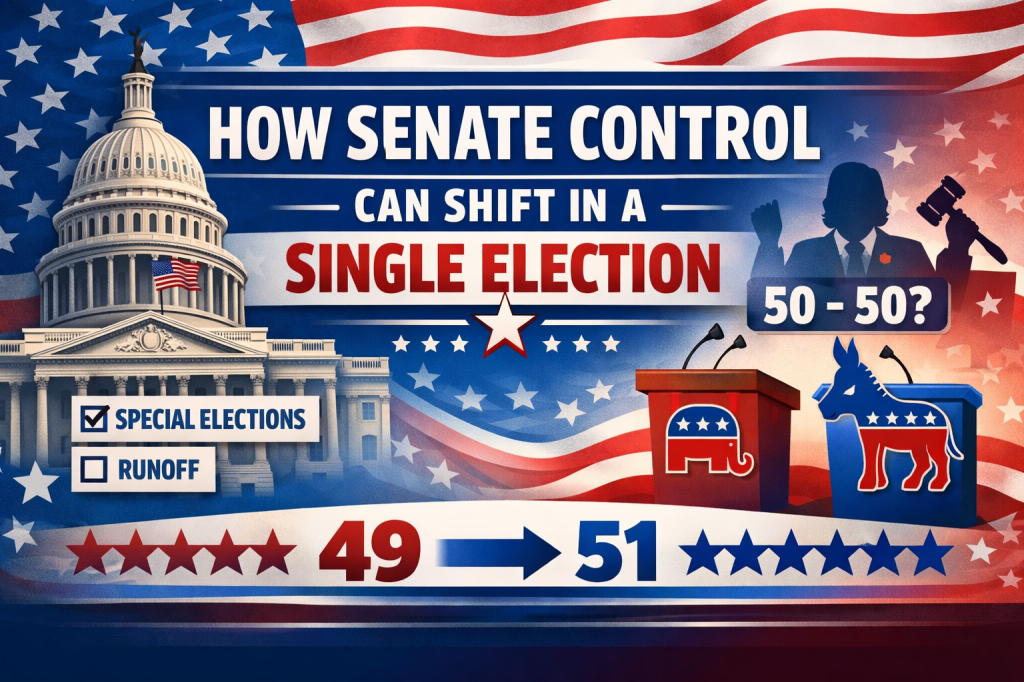
In the United States, control of the Senate—a chamber of 100 members—is one of the most consequential outcomes of any federal election cycle. Whether a party has a working majority affects not just who leads the chamber but also what laws get passed, how judicial nominees are confirmed, and how the executive branch’s agenda is implemented. Here’s how Senate control can change in a single election year, and how nuances like Senate classes, special elections, and tie-breaking rules can influence the balance of power.
The Structure of the Senate: Classes and Staggered Terms
Unlike the House of Representatives, where all 435 seats are up for election every two years, the Senate operates on a system of staggered six-year terms. The framers of the Constitution divided the Senate into three groups, or classes, so that approximately one-third of the seats are contested every two years.
- Class I Senators face election in years like 2024 and 2030.
- Class II Senators face election in years like 2026 and 2032.
- Class III Senators go to voters in years like 2028 and 2034.
This staggering is designed to promote continuity: two-thirds of the Senate remains in place after each election. Because only a subset of seats is open in any given cycle, shifts in control must often come from strategic gains in the class that is up for election.
Regular vs. Special Elections
Regular Elections
During a standard election cycle, voters choose senators for the seats in one class. If a party aims to capture control of the Senate in a regular cycle, it must secure a net gain of seats in that class beyond what’s needed to flip the chamber. For example, if Democrats hold 51 seats and Republicans hold 49, Republicans would need to net at least two additional seats from the Democrats to secure a simple majority of 51.
Special Elections
Senate seats can also change hands through special elections, which occur outside of the normal six-year cycle. These are triggered by vacancies such as resignations or deaths. Under the Seventeenth Amendment and state laws, many states allow governors to appoint temporary replacements until a special election is held, but timelines and procedures vary. A senator elected in a special election serves only the remainder of the original term.
Special elections can be highly consequential. If a seat becomes vacant shortly before or during a pivotal election year, it may be filled in a special contest that effectively adds an extra seat to the battleground list—an added opportunity for a party seeking to flip control.
What Happens in a Tie?
Control is typically determined by which party has at least 51 seats. But what if each party holds 50 seats?
In the event of a 50-50 split, the Senate does not remain deadlocked indefinitely. The U.S. Vice President, serving constitutionally as the President of the Senate, has the authority to cast the tie-breaking vote on routine matters before the chamber. This means that the party of the sitting vice president effectively controls the Senate majority in a 50-50 split.
For example, from 2021 to 2023, the Senate was split 50–50. With Vice President Kamala Harris able to break ties, the Democratic Party exercised functional control of the chamber. This tiebreaker also affects leadership positions, committee assignments, and agenda setting.
Why Changes Can Be Dramatic in a Single Year
Several features of the Senate make control shifts possible even when only one-third of seats are normally in play:
- Competitive Seats in a Class: If a disproportionate number of closely held seats up for election in a given class belong to one party, opponents can make significant gains.
- Special Elections: Vacancies can introduce additional contests outside of the standard class cycle, expanding the number of seats that could flip.
- Runoff and Fixed State Rules: Some states (like Georgia) require runoffs if no candidate achieves a majority, extending contests into January and potentially altering control once results are certified.
- The Vice President’s Role: In tight margins, securing or losing the vice presidency can tip the effective majority even if Senate seats are evenly split.
Final Takeaway
Shifts in Senate control hinge on a combination of structural rules and electoral dynamics. While staggered terms mean only a portion of seats are contested in any cycle, a well-timed campaign strategy—and sometimes an unpredictable special election—can flip the chamber. And within razor-thin margins, the constitutional authority of the vice president to break 50-50 ties plays a decisive role in which party holds power.
Understanding these mechanisms helps clarify why even a few seats can make all the difference in the balance of federal power after an election.
 Election Desk
Leave a comment