- Court challenges
- Lawsuits
- Certification disputes
- Redistricting
- Election administration
- Deadlines and procedures
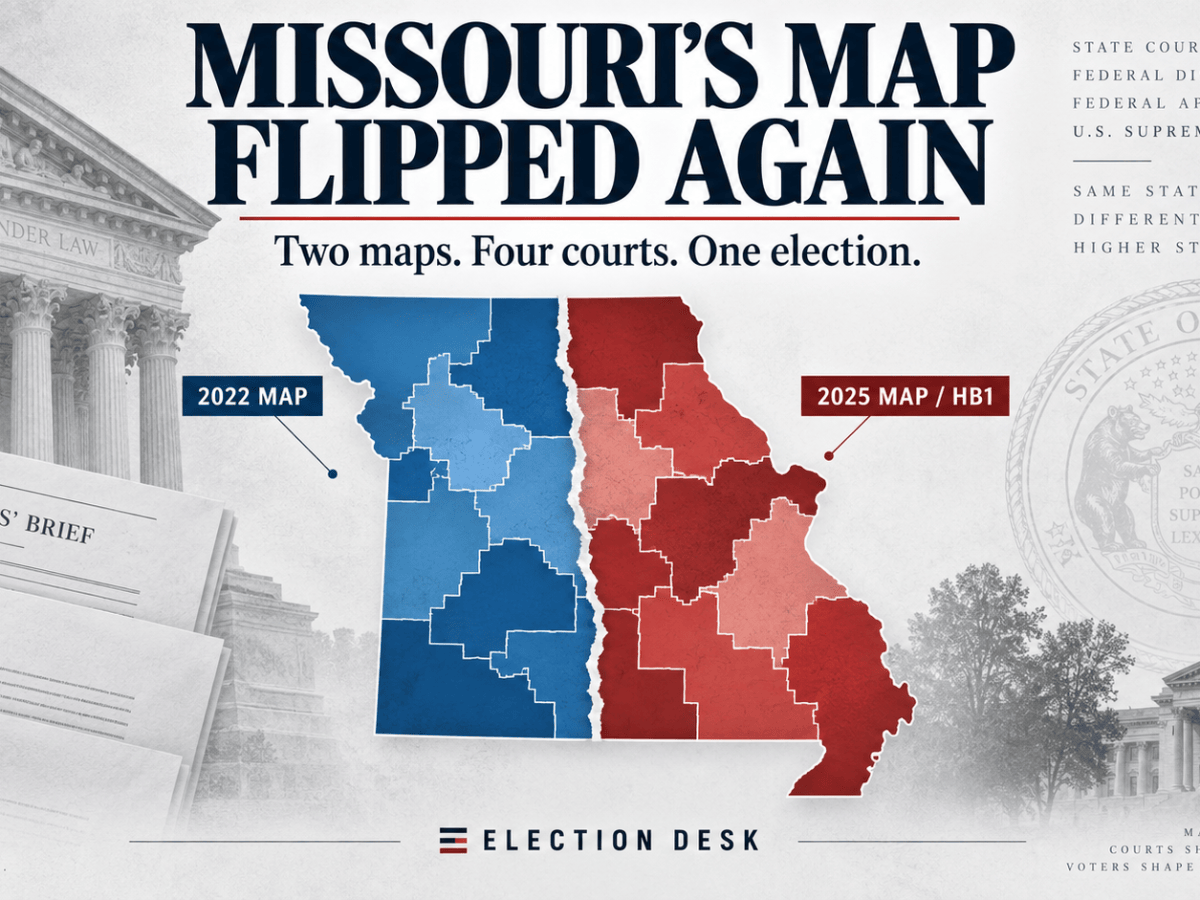
Missouri’s Congressional Map Just Flipped Again — Here’s Why
A federal appeals court has mandated Missouri to adopt a Republican-drawn congressional map for the upcoming November election but paused the order for a week, maintaining the current map for now. This legal battle reflects ongoing tensions over gerrymandering in Missouri, impacting voter representation and election integrity.

Who Teaches Election Law — and Does It Shape What Happens in Court?
A recent Public Interest Legal Foundation report reveals a significant ideological imbalance among election law faculty at U.S. law schools, with 76 left-leaning professors for every 12 conservative ones. This disparity may influence the pipeline of election litigators and shape court outcomes, raising concerns about legal representation in election matters.
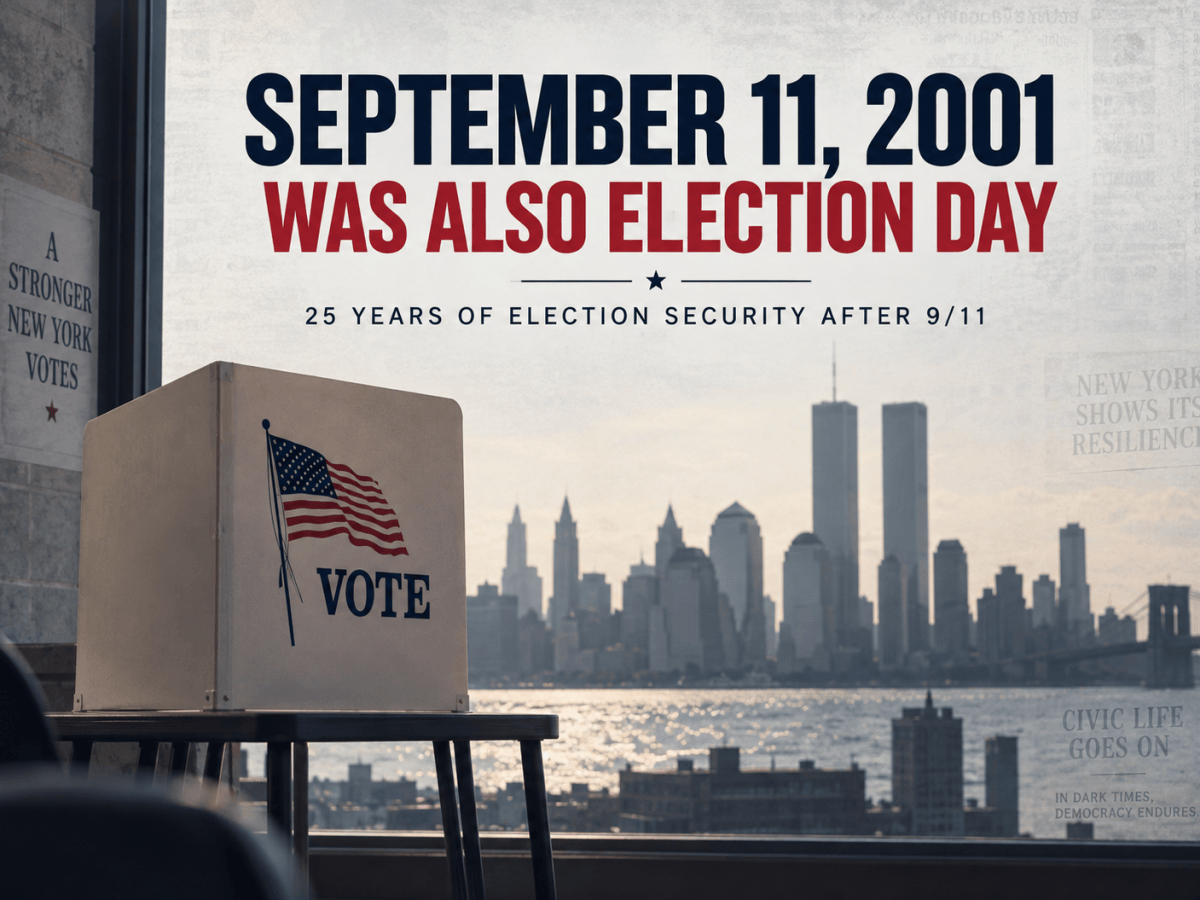
The Building Nobody Voted For: How 9/11 Became the Architect of American Election Security
Twenty-five years after September 11, 2001, reflections mainly address war and security, overshadowing its role as election day in New York City. The day’s events reshaped election security laws, linking them to national security. Subsequent legislation and the formation of DHS aimed to enhance election security, now facing challenges amidst political strife.
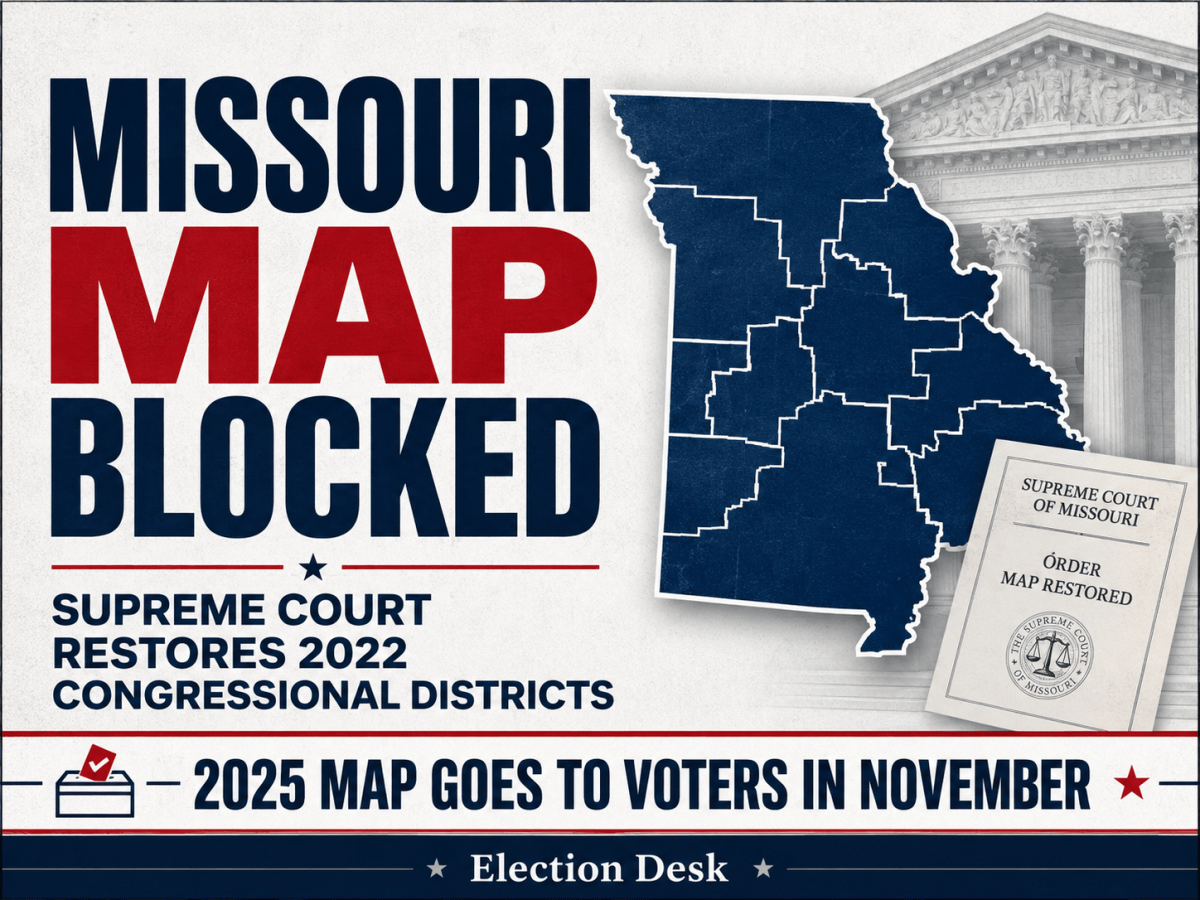
Missouri Supreme Court Orders 2022 Congressional Lines Restored, Sends Redistricting Map to November Ballot
The Missouri Supreme Court unanimously ruled on September 3 that the state’s congressional redistricting plan from 2025 cannot be used in the upcoming general election, reinstating the 2022 district lines while a voter referendum proceeds. The decision emphasizes constitutional provisions allowing a referendum on redistricting and addresses Secretary of State Denny Hoskins’s delayed actions.
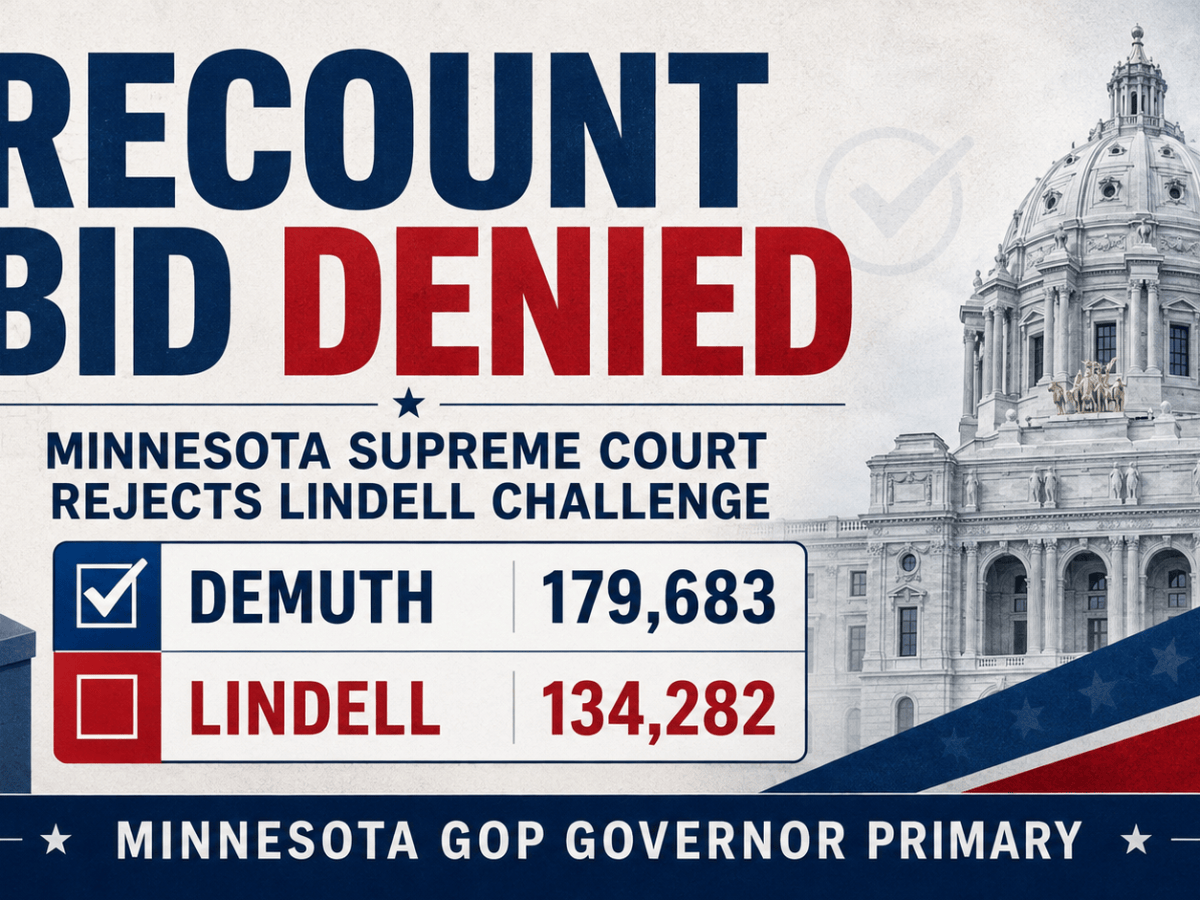
Minnesota Supreme Court Denies Lindell’s Bid for Expanded Recount in GOP Governor Primary
The Minnesota Supreme Court denied Mike Lindell’s petition for a recount in the Republican primary for governor, affirming the recount plan’s compliance with state law. Lindell, who finished second, claimed vote anomalies but did not formally request a recount by the deadline. Demuth’s victory is upheld as Minnesota prepares for the general election.
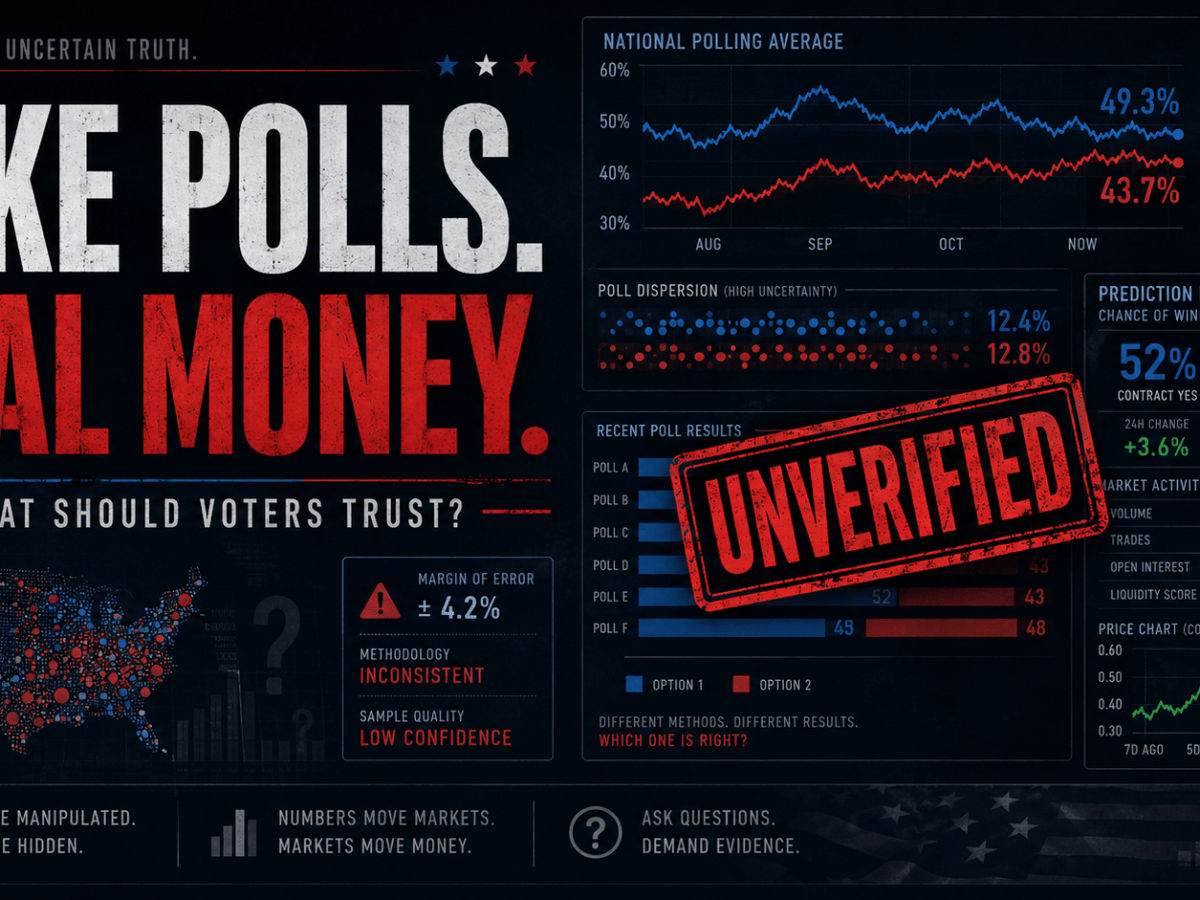
Fake Polls, Volatile Markets: What Voters Should — and Shouldn’t — Trust Ahead of November
The credibility of polling and prediction markets ahead of the 2026 midterms is under scrutiny following incidents of fabricated polls and undisclosed funding. Median Strategies and The Public Sentiment Institute faced criticism for their practices. Despite these issues, polling and markets continue to play a significant role in shaping election forecasts.
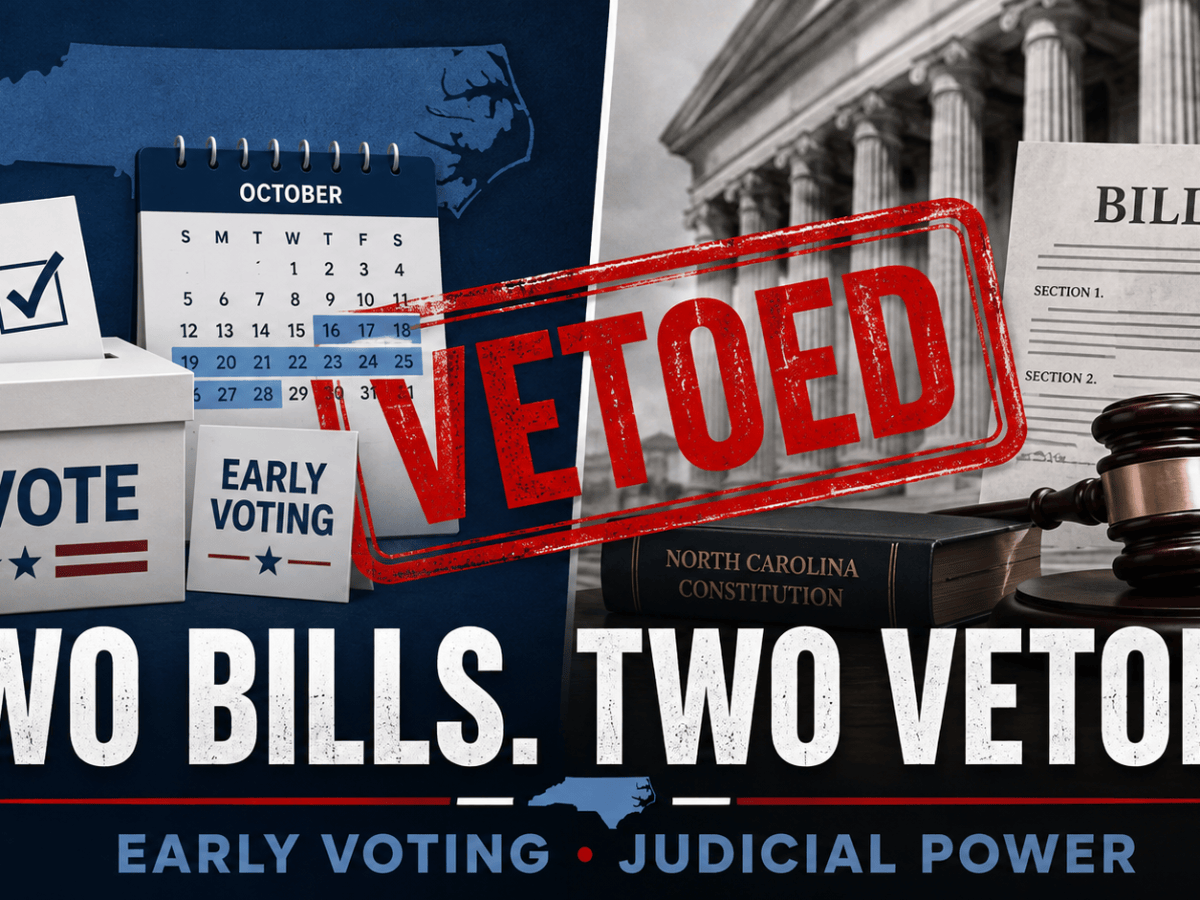
Stein Vetoes Bills Cutting Primary Early Voting, Expanding Chief Justice’s Power Over Judges
North Carolina Governor Josh Stein vetoed two bills aimed at altering election procedures and the authority of the Supreme Court’s chief justice. House Bill 958 seeks to shorten early voting and allow ballot challenges, while House Bill 377 grants chief justice suspension powers over judges. Both vetoed bills will return to a legislature unlikely to…
The 2028 Field Is Forming Without a Frontrunner — Here’s How the Process Actually Works
As the 2028 presidential election approaches, no major candidates have officially launched campaigns, marking the first time since 1884 that consecutive elections will occur without an incumbent. Current discussions revolve around candidate speculation and polling, with actual campaign activity expected to ramp up after the 2026 midterms.
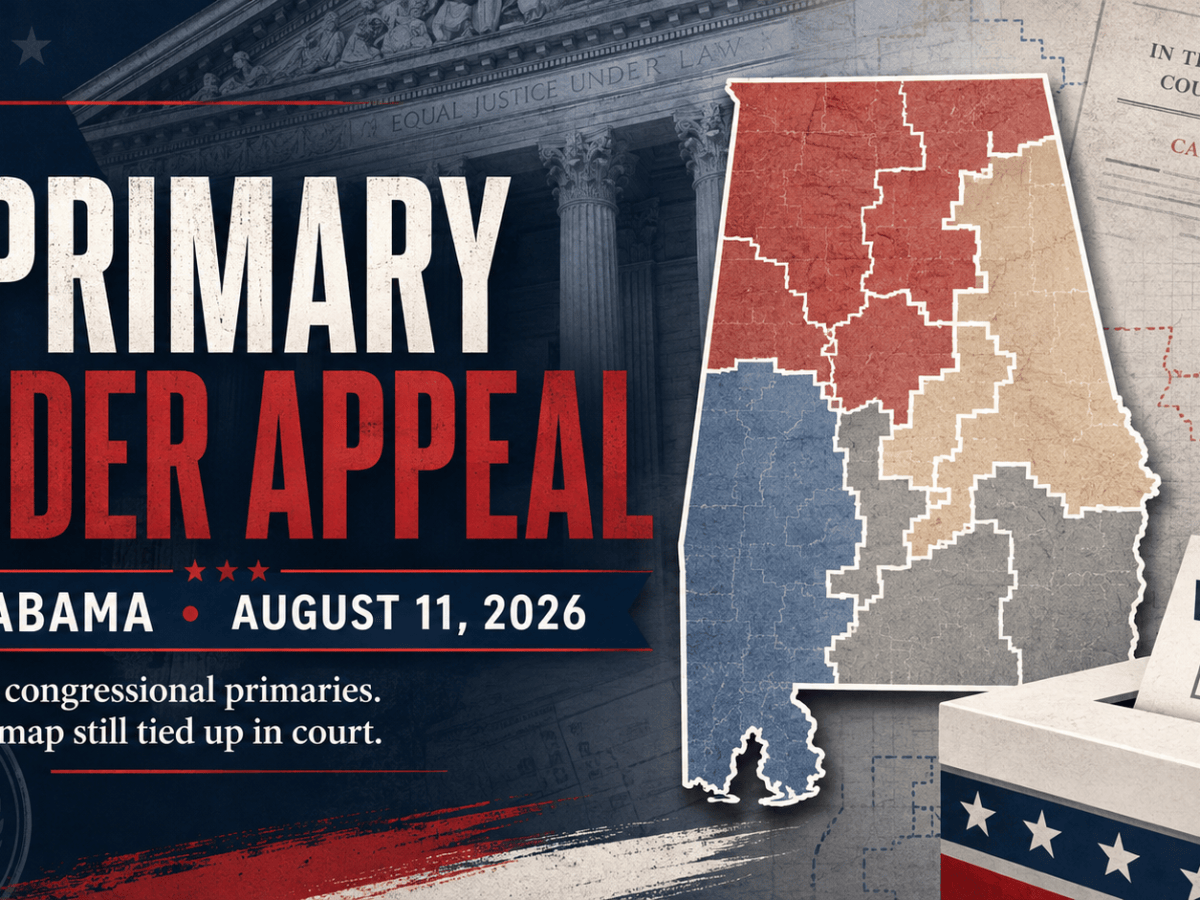
Alabama Holds Congressional Primaries Under a Map Still Tied Up in Court
Alabama voters participated in special primaries for four congressional districts amid ongoing federal litigation over the state’s congressional map. Turnout was historically low due to confusion from rapid election timelines. The 2023 map, criticized for racial discrimination, alters Democratic representation, while the legal outcome will ultimately determine election validity.
Federal Judge Expands Nationwide Block on Trump Mail-Ballot Order as Supreme Court Weighs Two Requests to Lift It
A federal judge in Boston, Indira Talwani, has broadened a previous injunction against a Trump executive order restricting mail-in ballots to apply nationwide, citing urgent election concerns. This ruling comes amid ongoing Supreme Court deliberations regarding the order. It blocks the USPS from enforcing specific sections of the order before the November elections.
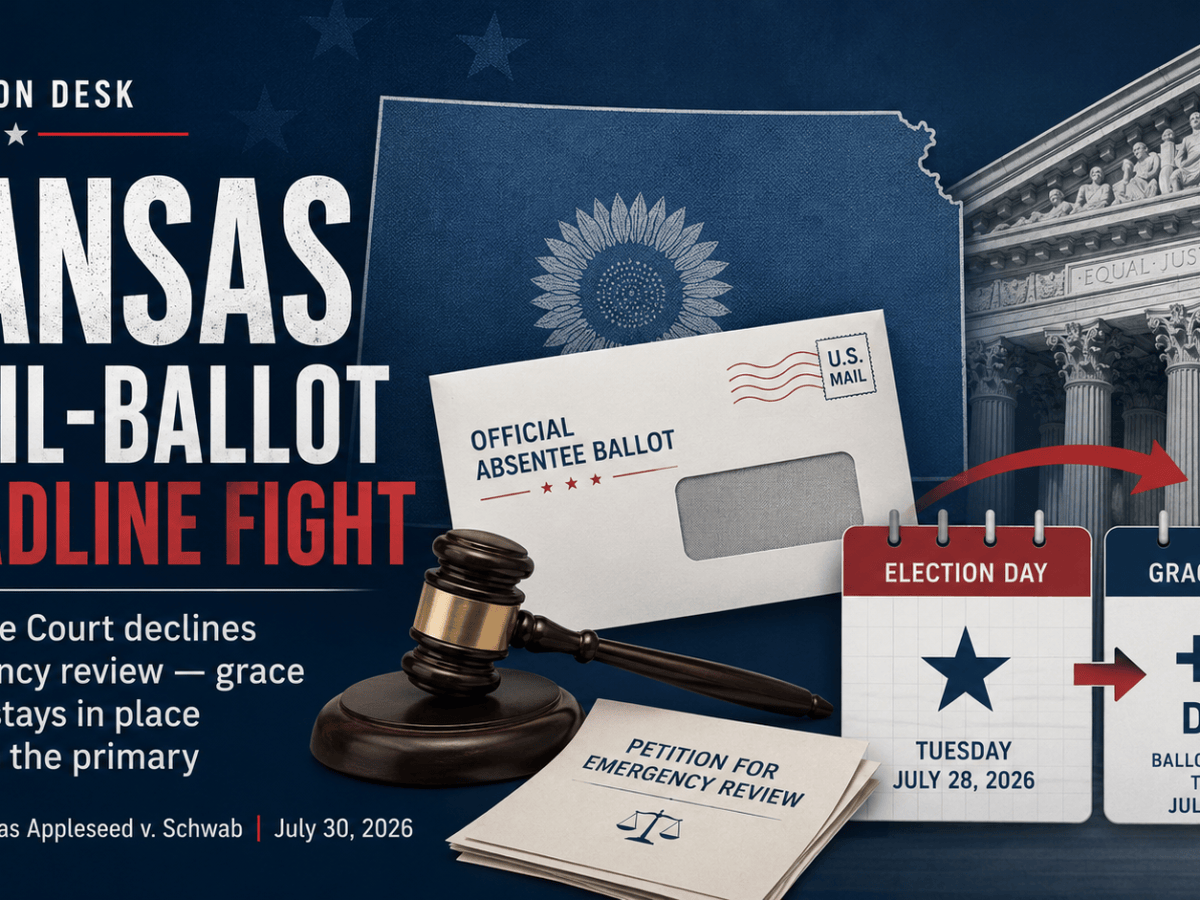
Kansas Supreme Court Declines Emergency Review of Mail-Ballot Grace Period Case, Leaving Injunction in Place Through the Primary
The Kansas Supreme Court declined an emergency appeal from Secretary of State Scott Schwab, upholding a district court’s injunction that reinstates a three-day grace period for mail ballots ahead of the August 4 primary. The case’s constitutional issues regarding Senate Bill 4 remain unresolved as it continues in the Court of Appeals.
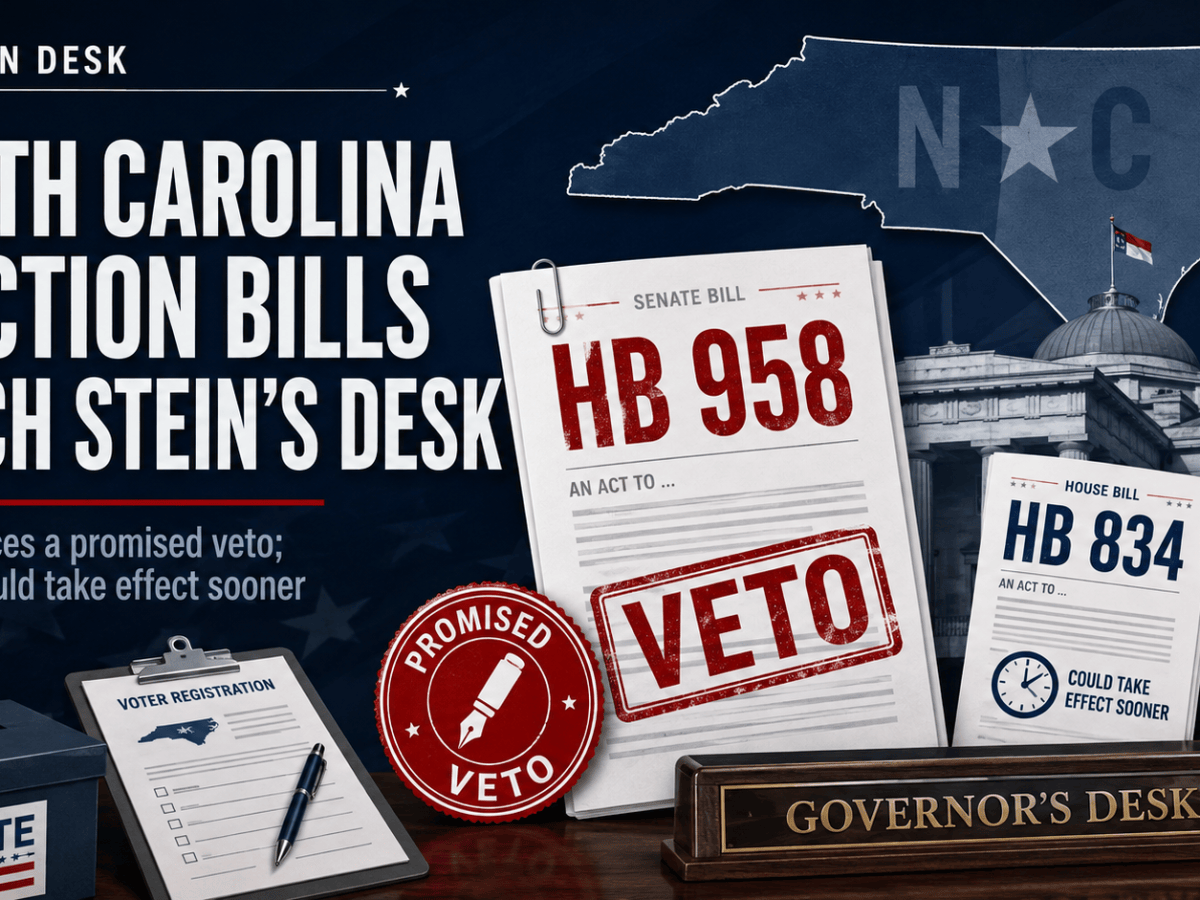
North Carolina Lawmakers Send Two Election Bills to Stein’s Desk; Governor Signals Veto of the Larger One
On August 4, North Carolina’s General Assembly approved two election bills, HB 958 reducing early voting and HB 834 focusing on administrative changes. Governor Josh Stein plans to veto HB 958, citing voter access concerns, while HB 834 faces no veto threat. Most of HB 958’s provisions will start in 2027.
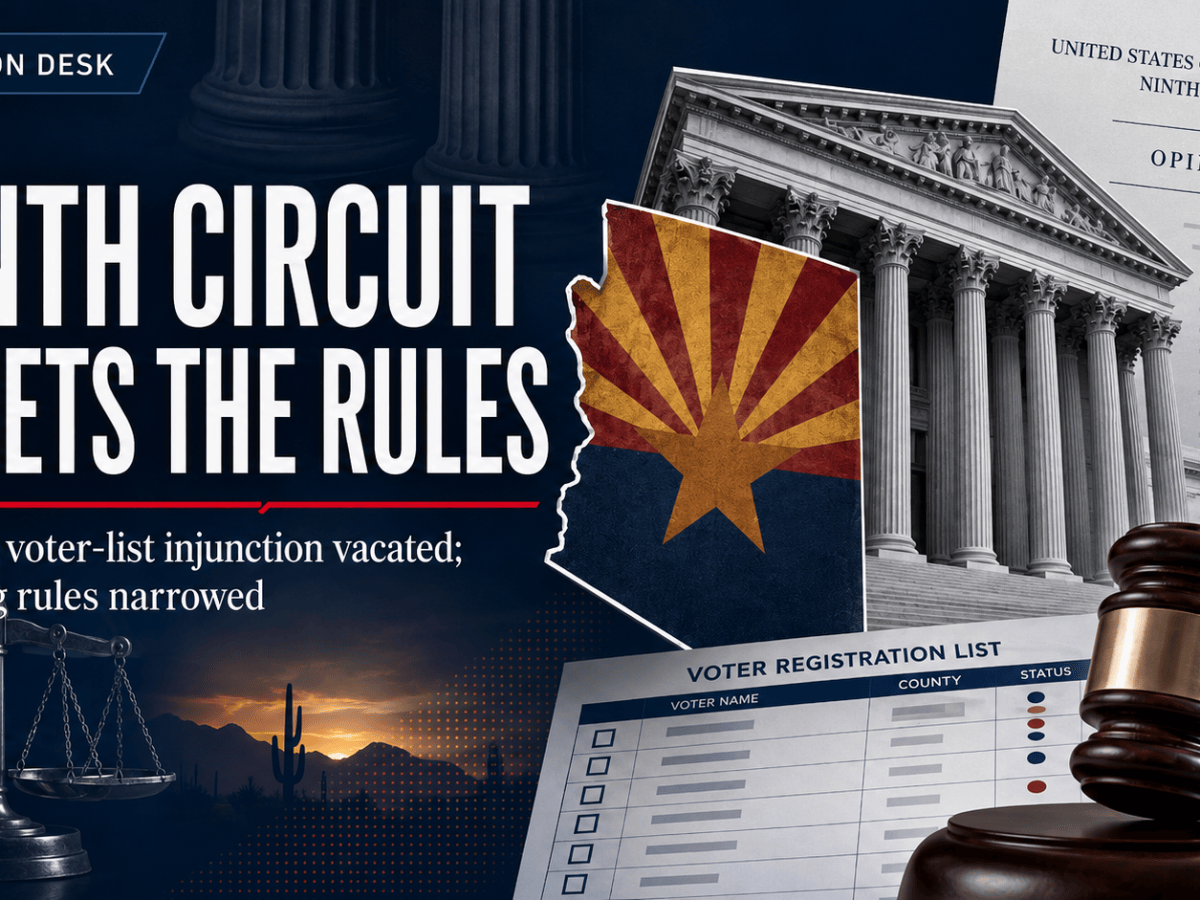
Ninth Circuit, Sitting En Banc, Vacates Injunction on Arizona Voter-List Provisions, Narrows Standing Rules
The Ninth Circuit Court ruled that Arizona’s lower court incorrectly blocked provisions of a 2022 election law regarding voter registration. The court found that advocacy organizations lacked standing to challenge one provision but had standing for another, resulting in different outcomes. Precedent related to organizational standing was overruled, impacting future litigations.
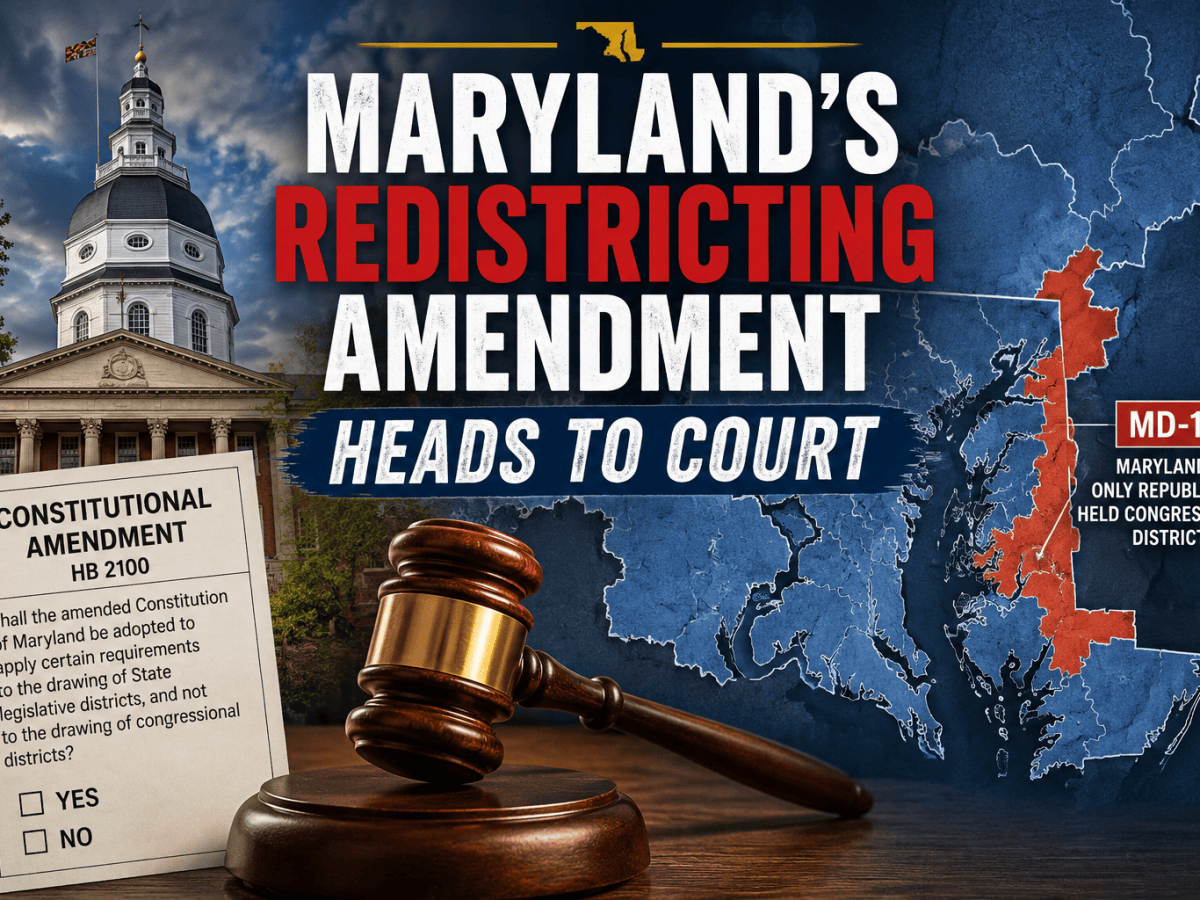
Maryland’s Redistricting Amendment Faces a Ballot-Deadline Lawsuit — Here’s the Case Being Made on Both Sides
A lawsuit in Maryland aims to remove a congressional redistricting amendment, HB 2100, from the November ballot, claiming the General Assembly missed its certification deadline. While the timing is disputed, the amendment would change the rules for congressional map-drawing, potentially benefiting the Democratic majority before 2028 elections.
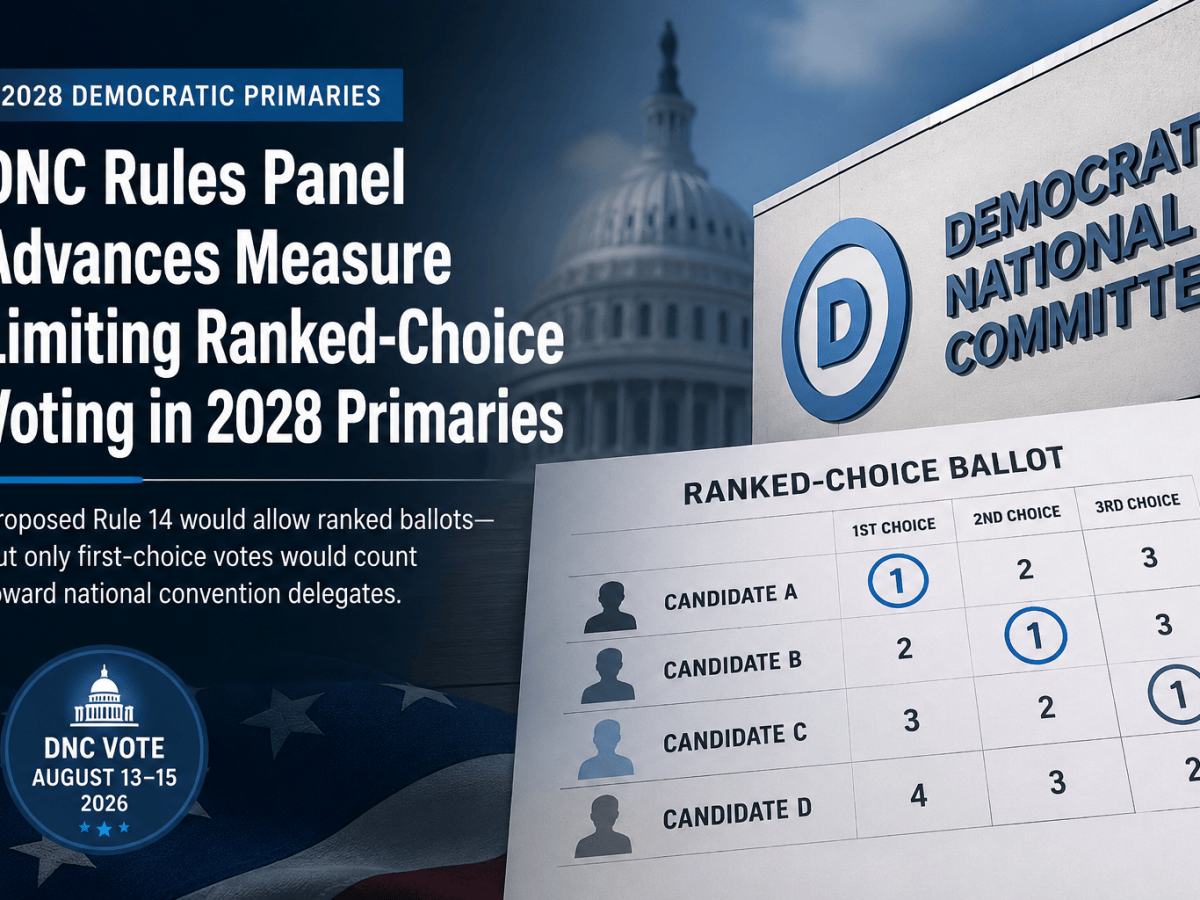
DNC Rules Panel Advances Measure Limiting Ranked-Choice Voting in 2028 Primaries
The Democratic National Committee’s Rules and Bylaws Committee aims to prevent ranked-choice voting from impacting delegate allocation for the 2028 presidential primary, despite state requirements. The full DNC will consider this recommendation at an upcoming meeting, with implications for states like Maine and Washington, D.C., that mandate ranked ballots.
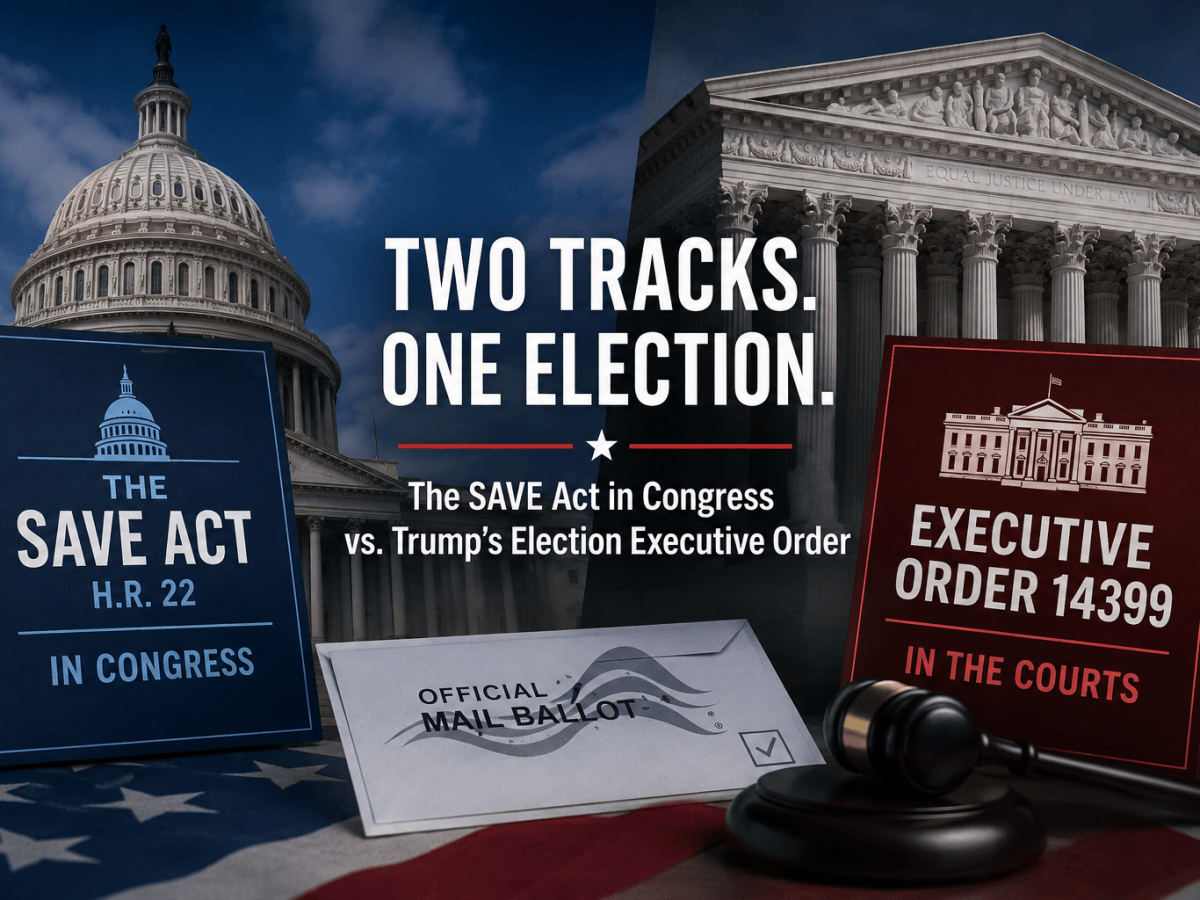
How the SAVE Act Would Actually Change Voter Registration — And Why It’s Not the Only Citizenship Fight in Court
The article discusses two approaches to citizenship verification for voter registration in Washington: the SAVE Act, a stalled bill in Congress aimed at requiring documentary proof of citizenship, and a presidential executive order affecting mail ballots, currently under legal scrutiny. Both efforts seek to ensure only citizens vote, but operate through distinct legal pathways.
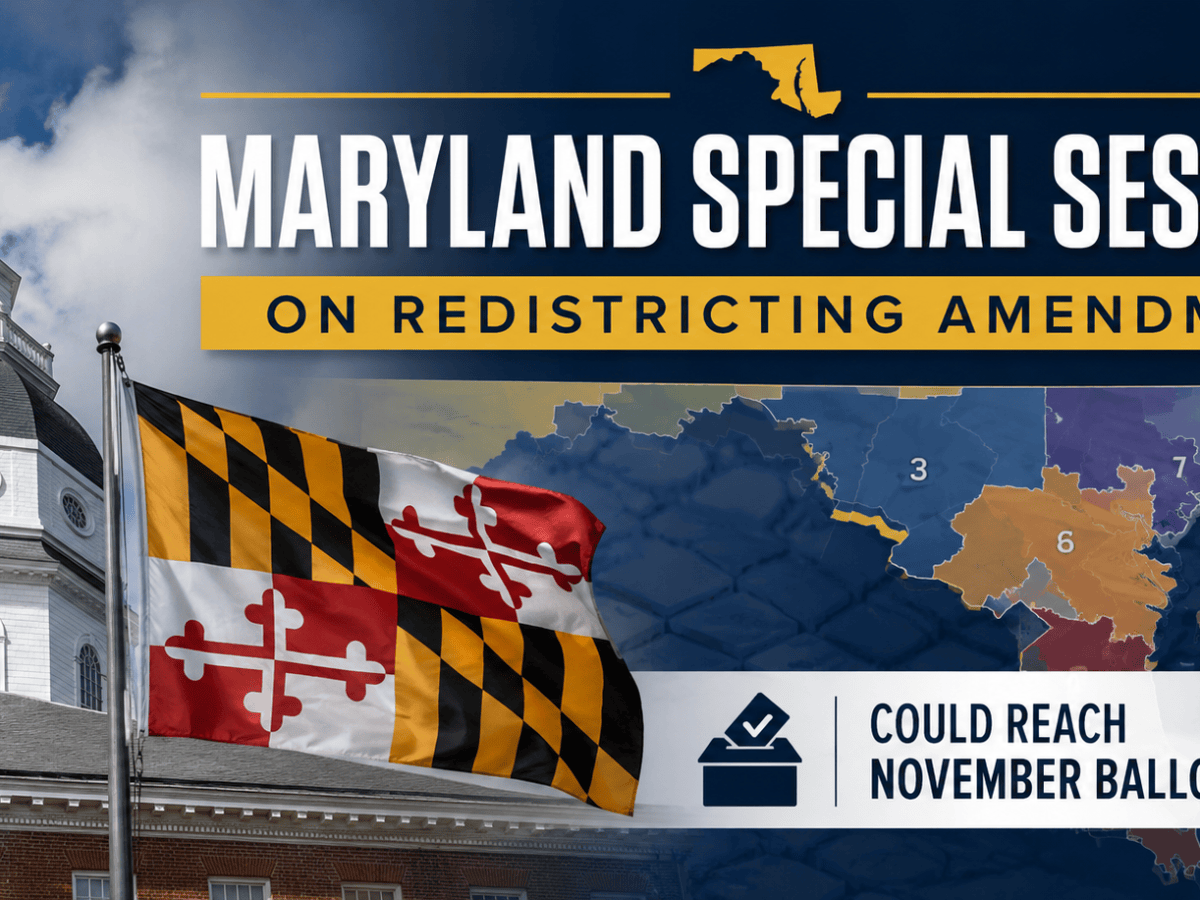
Maryland Lawmakers Convene Special Session Monday on a Constitutional Amendment That Could Reach the November Ballot
Maryland’s General Assembly begins a special session on August 3 to consider a proposed constitutional amendment affecting future congressional redistricting standards. While no new map will be drawn, the amendment aims to clarify legal frameworks governing redistricting and potentially expedite judicial review of disputes. Voter approval is sought for the ballot in 2026.
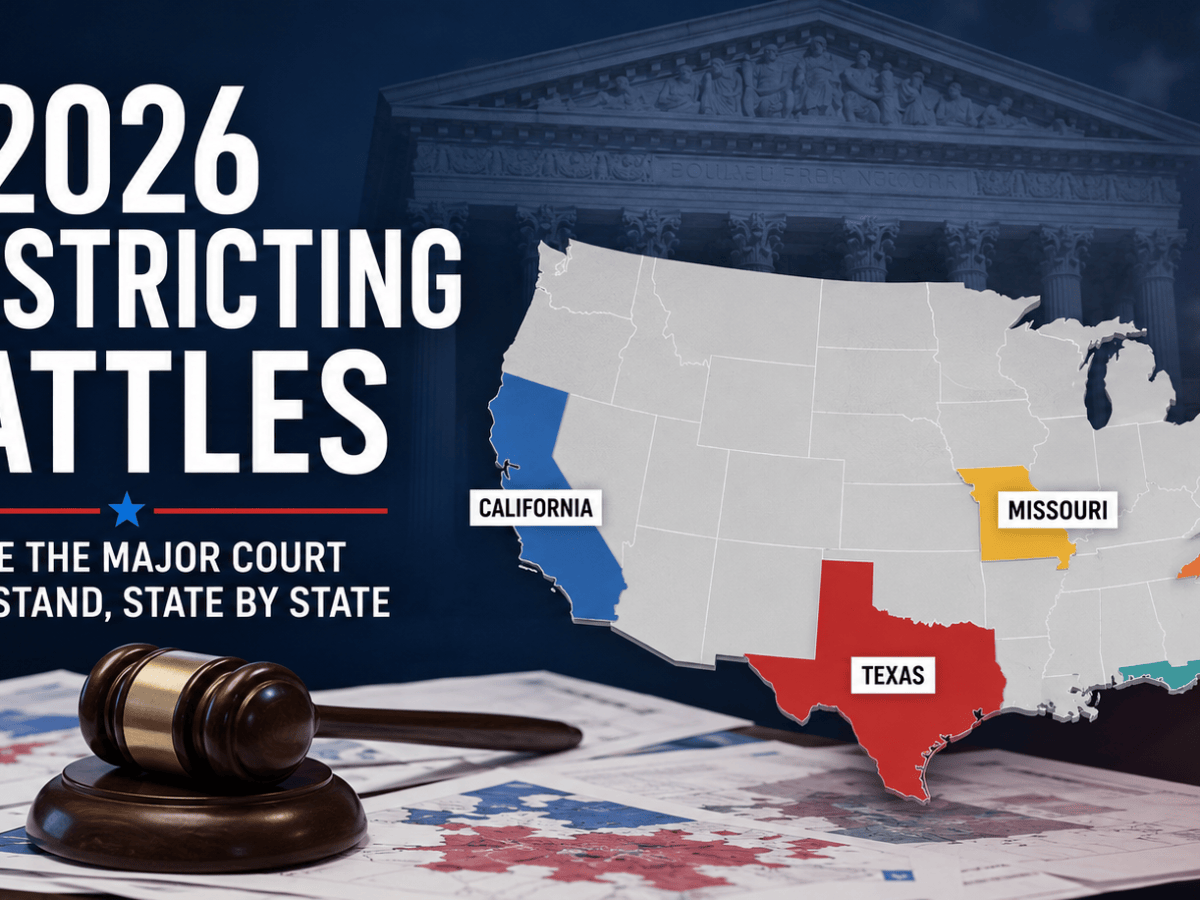
Where the 2026 Redistricting Battles Stand, State by State
Mid-decade redistricting has affected more states recently, prompting legal disputes related to congressional maps as the 2026 elections approach. Key developments include Texas and California’s map adjustments passing legal scrutiny while North Carolina and Missouri face ongoing challenges. The Supreme Court’s recent ruling on Louisiana’s map may impact future gerrymandering cases.
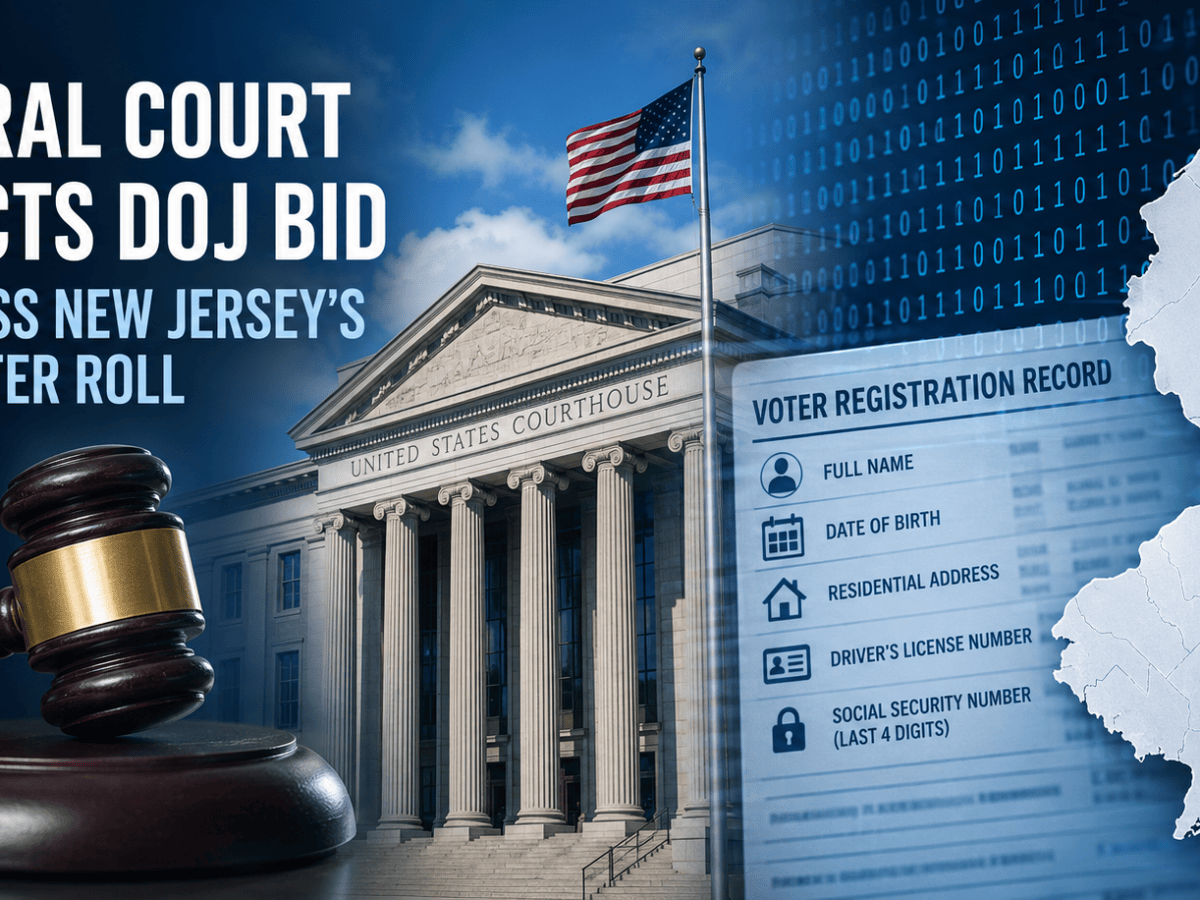
Federal Court Rejects DOJ Bid to Access New Jersey’s Full Voter Roll
A New Jersey federal judge dismissed the DOJ’s lawsuit for the state’s unredacted voter registration list, stating the federal law cited does not permit such requests. This ruling highlights legal limits on federal access to voter data, impacting similar cases across the nation as the DOJ continues its efforts to obtain voter information.
Vermont House Passes Bill Criminalizing Election Interference
The Vermont House of Representatives approved bill H. 541, aimed at strengthening protections against voter and election official interference. Sponsored by Representatives Ian Goodnow and Kate Nugent, the legislation expands criminal prohibitions, imposing penalties for intimidation and obstruction. It now moves to the Senate for further review and potential amendments.
Alabama House Advances Bill to Strip Phone Numbers from Voter Rolls
The Alabama Legislature passed House Bill 67, altering voter registration data handling by removing phone numbers from official lists and capping access costs at $1,000. The bill, aimed at protecting voter privacy and reducing robocalls, allows voters to opt in for phone number inclusion. It now goes to the Senate for consideration.

Pennsylvania Lawmakers Propose Election Protection Bill to Guard Voter Data and Shield Election Workers
A bipartisan group of Pennsylvania legislators has introduced the Protecting Voter Privacy and Pennsylvania Elections from Political Interference Act. This bill aims to secure voter privacy, state control over election systems, and shields election officials from political intimidation. It seeks to restore public confidence in elections amid ongoing debates about election integrity.
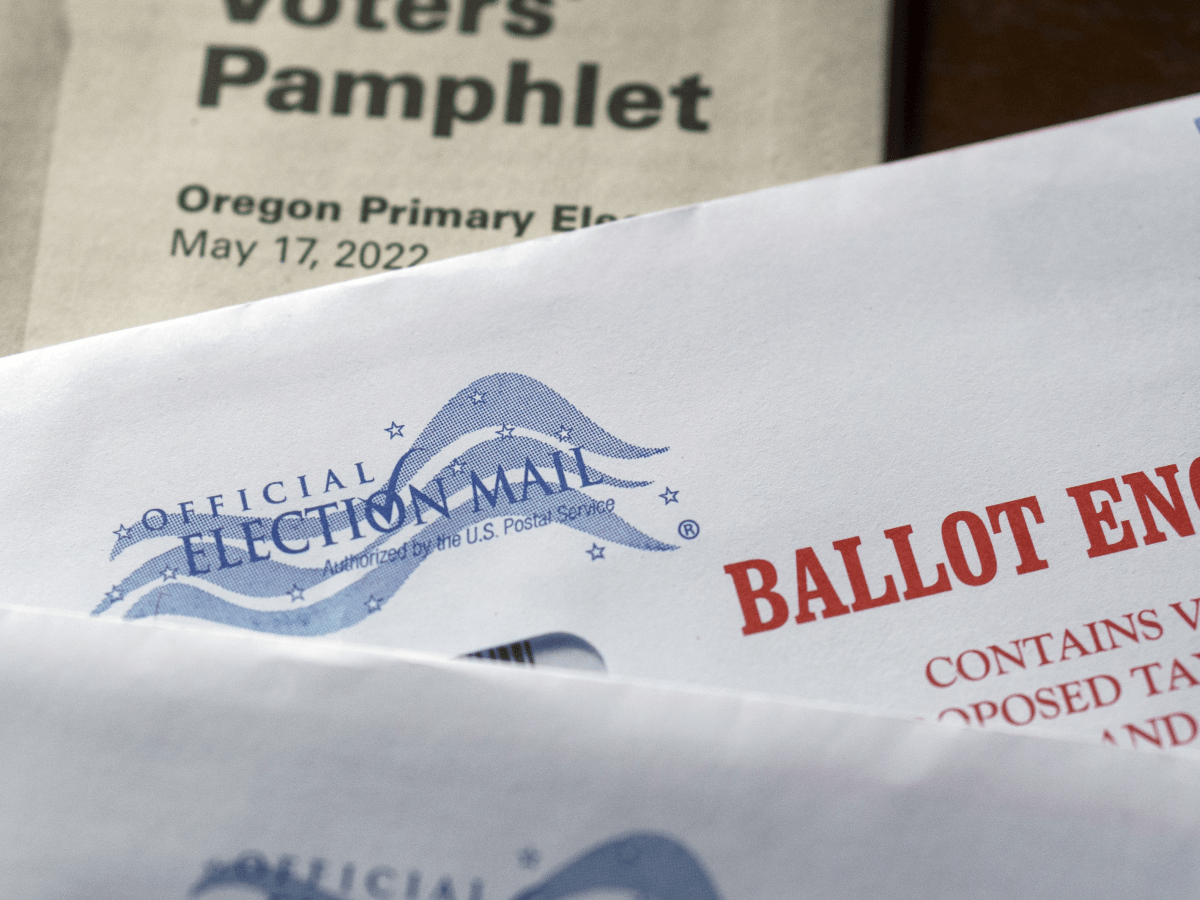
Oregon Lawmakers Debate Proposal to Open Primary Elections to All Voters
Oregon’s Legislature is considering a proposal to shift from a closed primary system to an open primary structure, allowing all registered voters, including nonaffiliated ones, to participate in candidate selection. Supporters argue it enhances voter participation and competition, while opponents worry about diminishing party control and potential voting confusion.
Maryland Lawmakers Advance Bills Targeting Election-Related Deepfake Deception
Maryland lawmakers are proposing legislation, House Bill 145 and Senate Bill 141, to limit deceptive AI-generated media in elections, addressing concerns over misleading “deepfake” content. The bills prohibit knowingly creating or sharing synthetic media intended to mislead voters while protecting free speech. They aim to address potential rapid misinformation in election cycles.
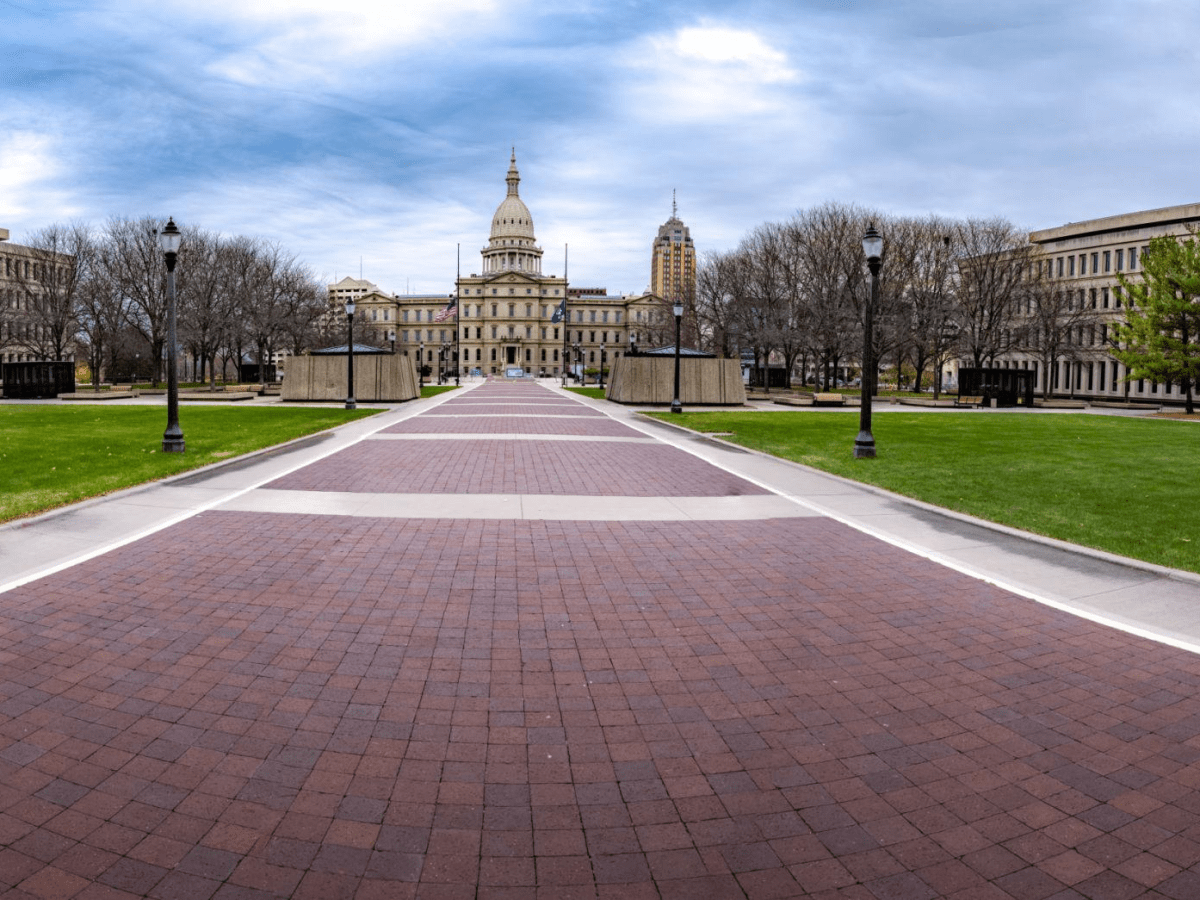
Michigan Group Claims Enough Signatures to Put Citizenship, Voter ID Question on 2026 Ballot
A conservative group in Michigan, Secure MI Vote, has gathered enough signatures for a proposed constitutional amendment to appear on the 2026 ballot. The amendment requires proof of U.S. citizenship and photo ID for voting. Supporters believe it enhances election security, while opponents fear it may restrict access and invite legal challenges.
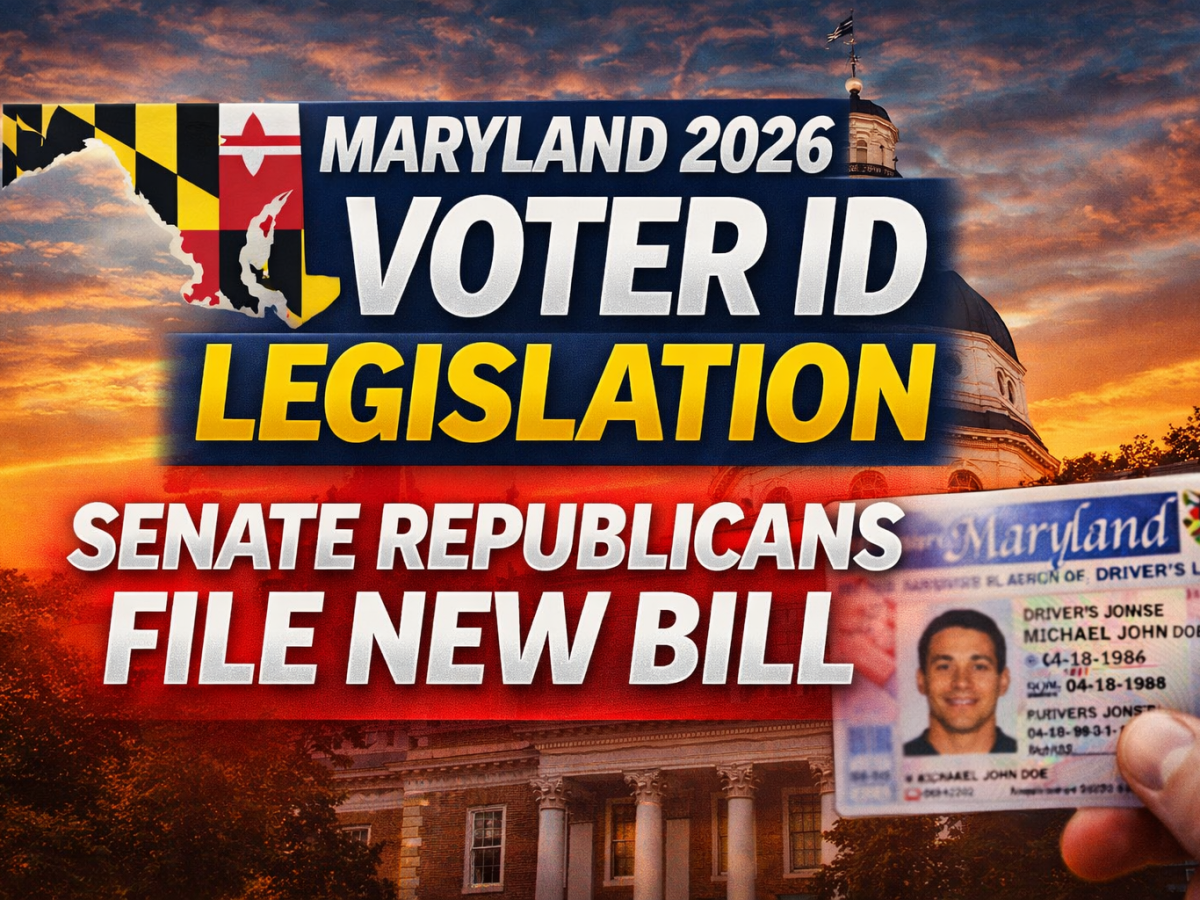
Maryland Voter ID Debate Returns as Republicans File New Bill
Maryland’s current voting laws do not require photo ID for most voters, but a new Republican proposal seeks to change this by mandating government-issued identification before voting. Supporters argue it enhances election security, while critics warn it may disenfranchise marginalized voters. The bill awaits further legislative action.
Virginia Democrats Unveil Aggressive 10–1 Congressional Map as Courts Weigh Redistricting Authority
Virginia Democrats have proposed a “10–1 map” to reshape congressional districts, aiming to secure 10 of 11 House seats. This proposal comes amid legal uncertainty as Virginia’s courts question their role in redistricting. The outcomes may significantly influence the 2026 elections and future redistricting processes nationally.
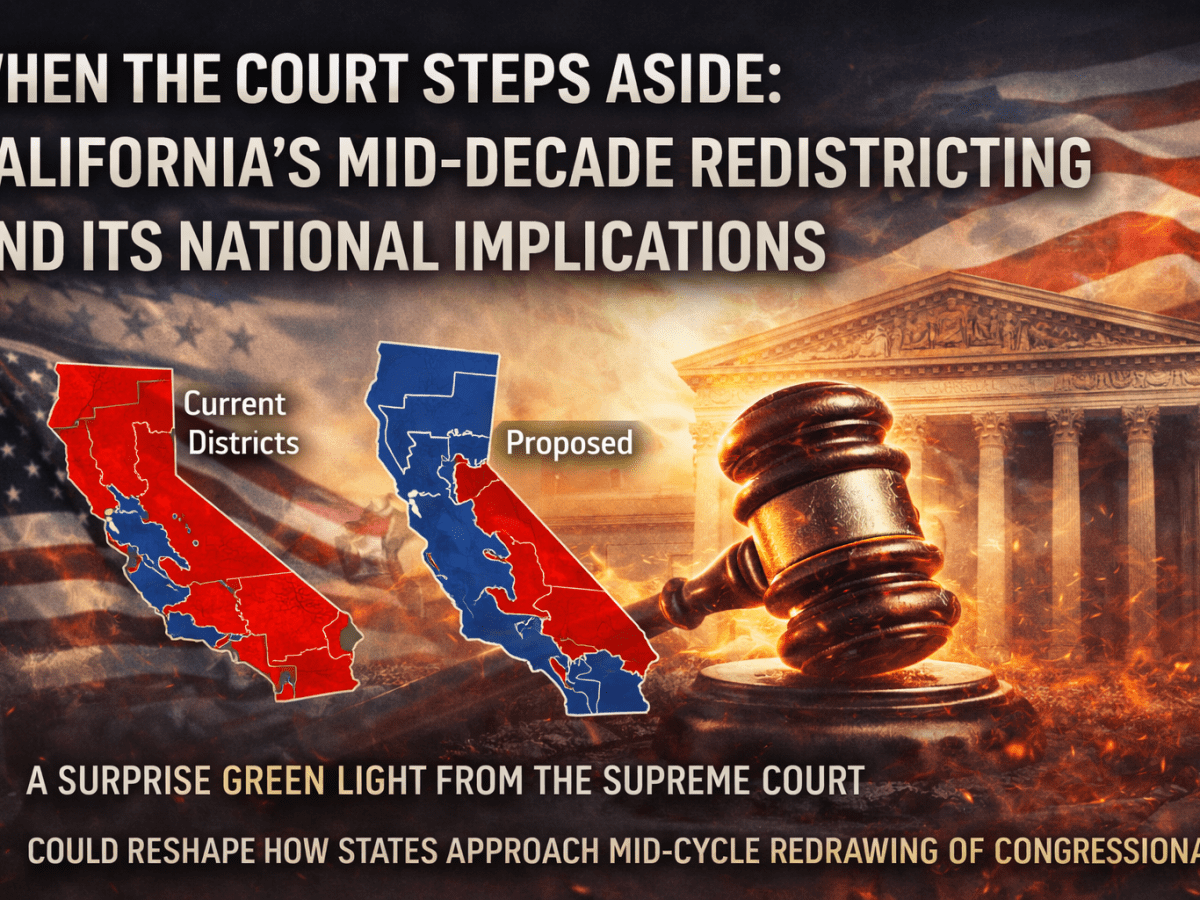
When the Court Steps Aside: California’s Mid-Decade Redistricting and Its National Implications
The U.S. Supreme Court allowed California’s revised congressional map to take effect for the 2026 elections, highlighting ongoing issues in redistricting. While it declined to rule on mid-cycle redistricting’s constitutionality, the decision may encourage other states to explore similar changes. Future challenges will likely focus on concrete violations rather than partisan motives.
Iowa Election Law “Tweaks” Advance Through State House Amid Broader 2026 Legislative Activity
A bill proposing changes to Iowa’s election laws has advanced in the House, aiming to streamline candidate petition processes by shifting responsibility to county auditors. Advocates emphasize efficiency and integrity ahead of the 2026 elections, while critics express concerns about the political implications. The proposal still requires further legislative approval.
Florida Lawmakers Move to Add Citizenship Verification to Voter Registration
Florida legislators are advancing House Bill 985, which mandates citizenship verification for voter registration and introduces stricter ID requirements. Proponents argue it ensures election integrity, while opponents view it as unnecessary and potentially suppressive. This measure reflects national trends on voter eligibility, emphasizing the ongoing debate between election security and access.

