In the United States, the administration of elections is primarily a state and local responsibility. While federal law sets certain baseline standards, the states—and within them, a mixture of executive, legislative, and administrative actors—set most of the detailed rules and procedures for conducting elections.
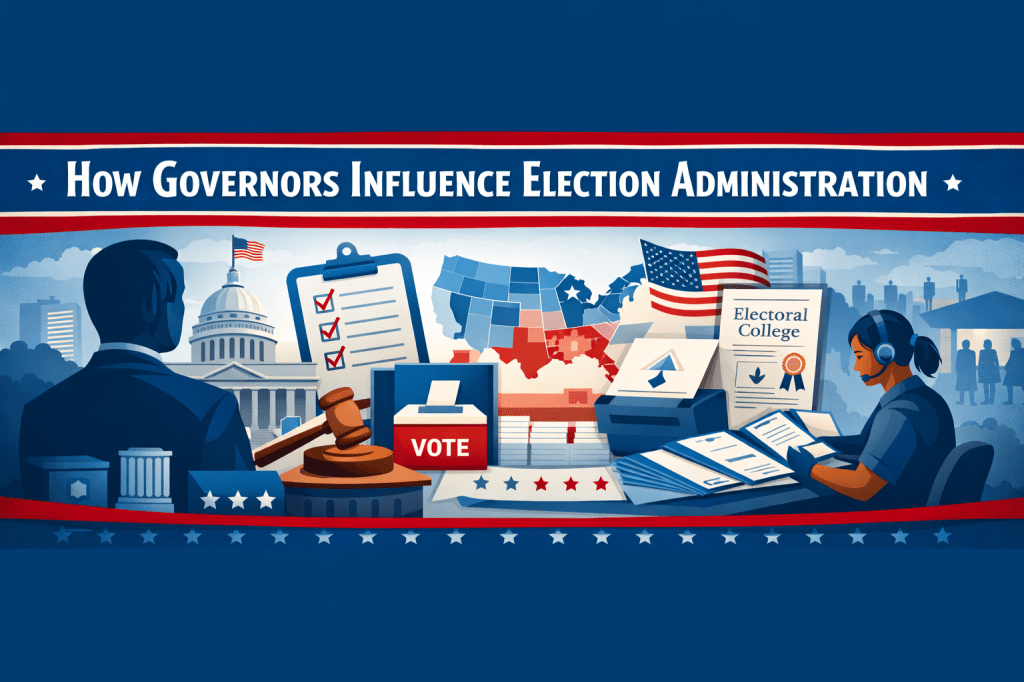
Governors, as the chief executives in their states, have a range of formal and informal roles that can shape how elections are administered. The specifics vary significantly across states due to different constitutional structures and statutory frameworks, but several common mechanisms exist through which governors can influence election administration:
1. Appointment Powers
In many states, governors have the authority to appoint key election officials or members of election boards and commissions. These officials often play central roles in setting election policies, overseeing compliance with law, and implementing procedures during election cycles. In states with election boards or commissions, gubernatorial appointment authority can determine the balance of decision-makers on those bodies and, by extension, influence the administration of elections.
Where states designate a chief election official (often the secretary of state), governors may either directly appoint that official or influence appointments to bodies that choose the official. In some states, legislative or bipartisan structures limit direct gubernatorial control, but governors still exert influence through their appointee choices within the elected executive branch.
2. Executive Oversight of Election Administration
Governors are responsible for implementing and enforcing state laws, which includes overseeing executive branch agencies involved in election administration. Through executive leadership, governors can set administrative priorities, direct interagency coordination, and shape how laws are interpreted and applied. This can affect areas such as voter registration systems, polling place operations, cybersecurity support, and emergency election planning.
3. Legal and Policy Leadership
Governors often play a public policy role in debates over election law changes. They can propose legislation, use their platform to articulate positions on election rules, and veto or sign bills that alter election administration. While governors do not unilaterally create election laws, their legislative engagement and recommendations can significantly influence state election policy.
4. Role in Certification and the Electoral College
In presidential elections, state executives including governors typically have formal duties related to post-election procedures. For example, governors may be responsible for preparing and transmitting certificates of ascertainment identifying the state’s chosen presidential electors under federal law. These procedural duties are part of the state’s constitutional and statutory authority to manage its participation in the Electoral College process.
5. Coordination with Local Officials
Most election administration occurs at the county or municipal level. Governors and state election officials often coordinate with local election boards, providing guidance, training, and resources. While local officials handle the nuts and bolts of registering voters, staffing polling places, and counting ballots, state executive leadership can influence statewide consistency and support for local administration.
Variation Across States
The exact influence governors have varies widely: in some states the governor’s office has significant appointment authority and oversight over election agencies; in others statutory or constitutional arrangements limit direct control. Some states vest election administration primarily in independently appointed bipartisan commissions or in elected officials such as secretaries of state.
 Election Desk
Leave a comment