The Federal Bureau of Investigation has quietly invited election officials across the United States to join a nationwide briefing later this month on preparations for the 2026 midterm elections. The outreach, confirmed in a letter reviewed by ABC News, has quickly become a flashpoint in an increasingly fraught debate over federal involvement in state-run elections.
What Happened
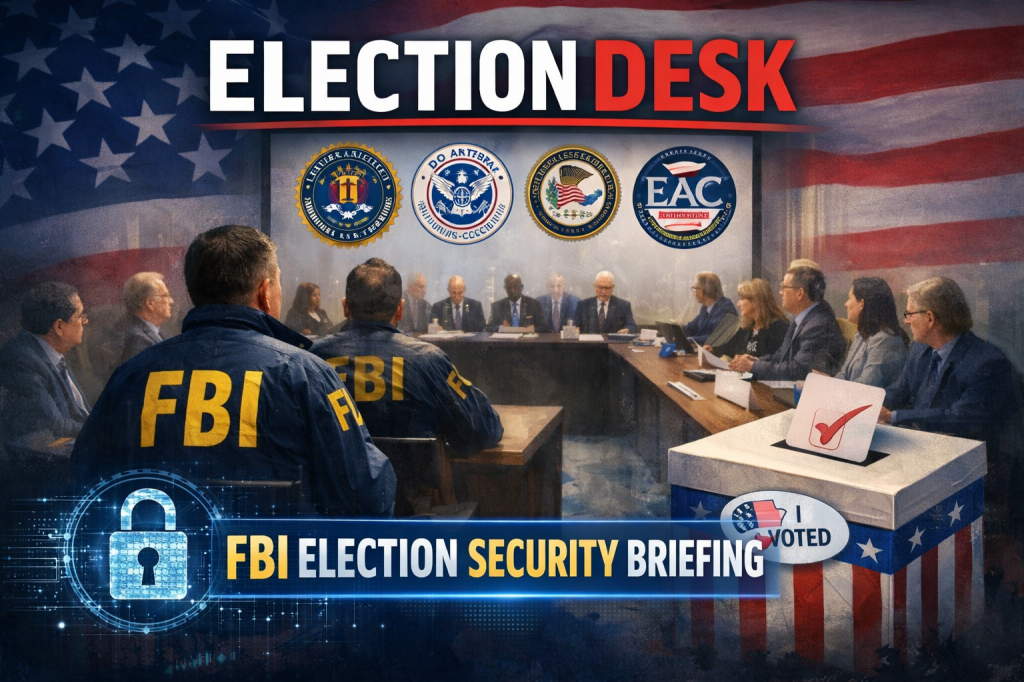
According to the invitation, FBI leadership — together with representatives from the Department of Homeland Security, the Department of Justice, the United States Postal Inspection Service, and the Election Assistance Commission — will host a coordinated briefing with state and local election officials on February 25. The stated purpose is to discuss “preparations” for the 2026 U.S. midterm elections and offer updates and resources to jurisdictions nationwide.
The letter was signed by Kellie Hardiman, identified as an FBI election executive, and reportedly sent to officials in most states, including offices such as Arizona’s secretary of state and Utah’s lieutenant governor. Federal authorities said the outreach is part of usual election-security coordination.
Federal Coordination Is Not New — But This Timing Is Unusual
Federal agencies have regularly engaged in election security dialogues with state officials for years, particularly around cybersecurity, foreign interference threats, and logistical preparations for major elections. However, election officials and observers describe this latest nationwide call as unusual in its scale and context.
Colorado Secretary of State Jena Griswold publicly expressed skepticism about the outreach, signaling concern among state officials about federal engagement so far ahead of November’s midterms. While coordination isn’t inherently controversial, the ongoing political climate has heightened sensitivity to any federal contact with election administrators.
The Broader Political Context
The FBI’s invitation comes at a time of mounting tension around federal roles in elections. Former President Donald Trump continues to promote false claims that the 2020 election was marred by fraud, and has urged that future elections be “nationalized” — interpretations that critics say would erode traditional state authority over election administration.
Adding to the contentious backdrop is the widely reported FBI raid on a Fulton County, Georgia, elections office in late January, during which federal agents executed a search warrant and seized 2020 election materials. That operation drew sharp reactions from state officials and election observers, who described it as an unprecedented escalation with potential implications for public confidence in election integrity.
The proximity of that raid to the scheduling of this nationwide briefing has intensified scrutiny of federal motives. Some state election administrators and voting rights advocates worry that such outreach — even if framed as preparatory — could signal an expanded federal footprint in areas traditionally managed by states under the U.S. Constitution.
Legal and Public Trust Implications
Election law experts note that while federal agencies may legally provide guidance and security support, any perceived federal pressure or oversight can have chilling effects on public trust, particularly in a polarized environment where claims of voter intimidation and interference are prominent. Federal law prohibits voter intimidation and coercion, and officials must navigate these legal boundaries carefully.
Meanwhile, ongoing Justice Department lawsuits seeking voter roll data from multiple states have already strained relationships between state election offices and federal authorities, contributing to an atmosphere of mistrust.
Looking Ahead
As the midterm election cycle intensifies, the FBI call scheduled for February 25 could serve as a bellwether for how federal and state election actors interact in 2026. Observers will be watching closely not only for what information is shared, but for how it is perceived by election officials, legislators, and the public.
With control of the House of Representatives closely contested and political polarization running deep, perceptions of federal involvement — whether routine or extraordinary — are likely to shape public attitudes toward the legitimacy of the 2026 midterms.
 Election Desk
Leave a comment