
A Michigan jury has delivered mixed verdicts in a high-profile election fraud case stemming from a scheme that kept eight Republican candidates off the 2022 primary ballot.
According to reporting by The Detroit News, one defendant was acquitted, while two others were found guilty in connection with a petition signature fraud operation that ultimately disqualified multiple candidates from running for office.
What Happened in 2022
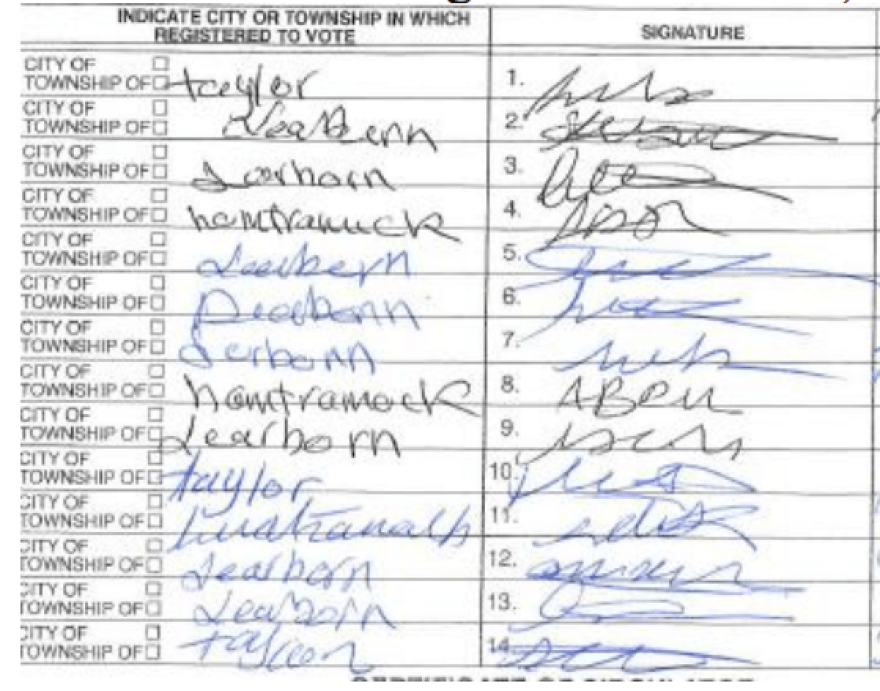
In the lead-up to Michigan’s 2022 elections, several Republican candidates for statewide offices—including governor and attorney general—were removed from the ballot after state officials determined their nominating petitions contained fraudulent or invalid signatures.
Under Michigan law, candidates must submit a required number of valid signatures to qualify for the ballot. In 2022, election officials discovered that thousands of signatures submitted by certain candidates were either forged, duplicated, or otherwise invalid. In some cases, petition circulators allegedly fabricated names and signatures entirely.
The discovery triggered a sweeping investigation that resulted in criminal charges against individuals accused of orchestrating or participating in the fraud.
The Verdicts
This week’s verdicts bring partial closure to the case:
- One defendant was acquitted, with jurors determining prosecutors did not meet the burden of proof.
- Two defendants were convicted, signaling that jurors found sufficient evidence that parts of the operation were knowingly fraudulent.
Prosecutors argued the scheme undermined the integrity of Michigan’s candidate qualification process by flooding campaigns with bogus signatures. Defense attorneys countered that some individuals were scapegoated for broader systemic failures in petition verification and campaign oversight.
Sentencing dates have not yet been announced.
Why This Matters for Election Integrity
This case highlights a lesser-discussed but critical component of election security: ballot access integrity.
While national debates often focus on voter eligibility and ballot counting procedures, candidate qualification processes can be just as vulnerable to abuse. Petition signature fraud can:
- Distort the field of candidates
- Waste taxpayer resources on investigations and litigation
- Erode voter confidence before ballots are even printed
At the same time, critics argue that complex petition requirements create an environment ripe for abuse by professional circulators who are often paid per signature—an incentive structure that can encourage corner-cutting.
The Broader Question
The Michigan case raises several ongoing policy questions:
- Should campaigns bear stricter liability for fraudulent signatures gathered by paid circulators?
- Should states increase oversight of petition-gathering firms?
- Or should ballot access requirements be simplified to reduce reliance on third-party signature contractors?
Both election security advocates and ballot access reformers are watching closely, as similar petition controversies have surfaced in other states in recent years.
A Reminder for 2026 and Beyond
With 2026 midterm cycles already underway in several states, this case serves as a warning: election integrity disputes don’t only happen on Election Day. They can begin months earlier during the candidate qualification phase.
The mixed verdicts reinforce a central truth in election law enforcement—fraud cases are fact-specific, proof-intensive, and rarely politically simple.
As states prepare for the next cycle, ensuring both ballot access fairness and strict compliance with signature rules will remain a delicate balancing act.
Election Desk will continue tracking ballot access cases, signature fraud prosecutions, and election law developments nationwide.
 Election Desk
Leave a comment