
Category: federal elections
-
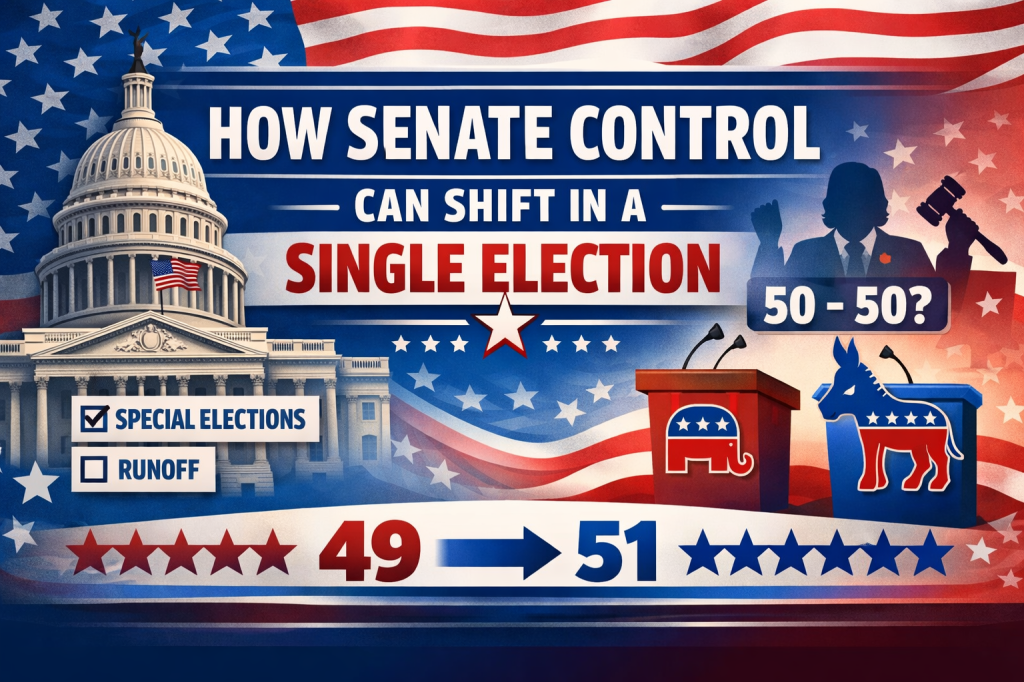
How Senate Control Can Shift in a Single Election
The U.S. Senate, with its staggered six-year terms, features classes of seats contested every two years, which can lead to significant control shifts based on regular and special elections. Vacancies may create crucial opportunities, and a 50-50 split allows the Vice President to cast tie-breaking votes, influencing majority control.
-
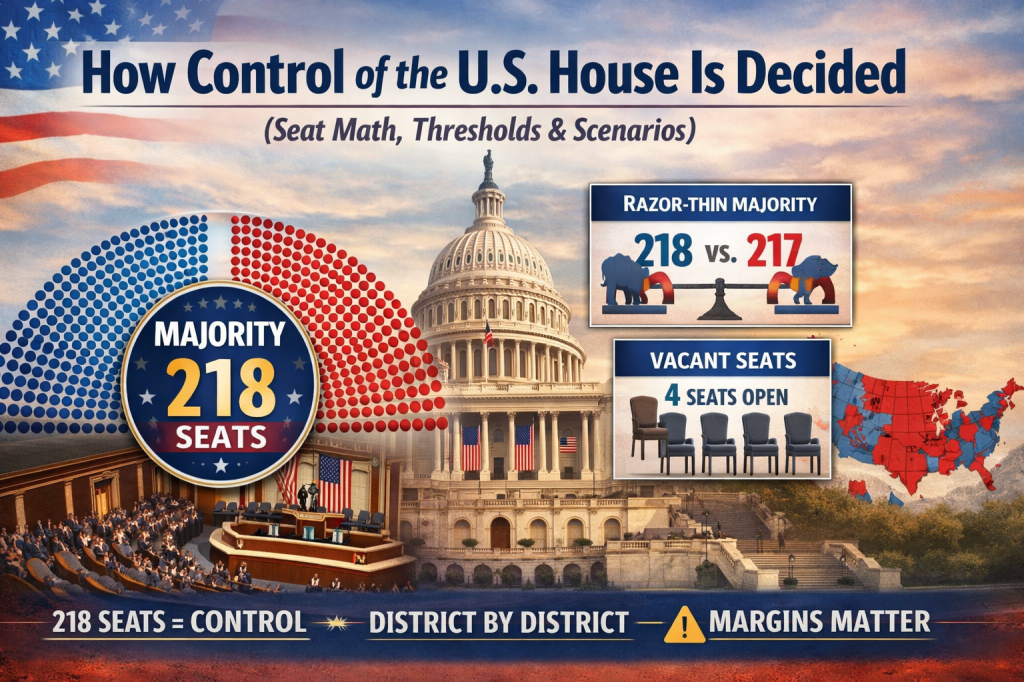
How Control of the U.S. House Is Decided
Control of the U.S. House of Representatives requires 218 seats from 435 total, enabling a party to set the agenda and elect leadership. Real-world scenarios include clear or razor-thin majorities, impacts of vacancies, independents, and why control does not align with the national popular vote. Margins of victory significantly influence legislative power dynamics.

