
Category: U.S. House
-
What Happens If Congress Is Split After an Election? Institutional Consequences Explained
Federal elections often result in a split Congress, where no single party controls both chambers. This scenario can lead to legislative gridlock, necessitating bipartisan negotiation for progress. Institutional mechanics, like tie-breaking votes in the Senate and the lack of a tie-breaking mechanism in the House, complicate governance and hinder productivity.
-
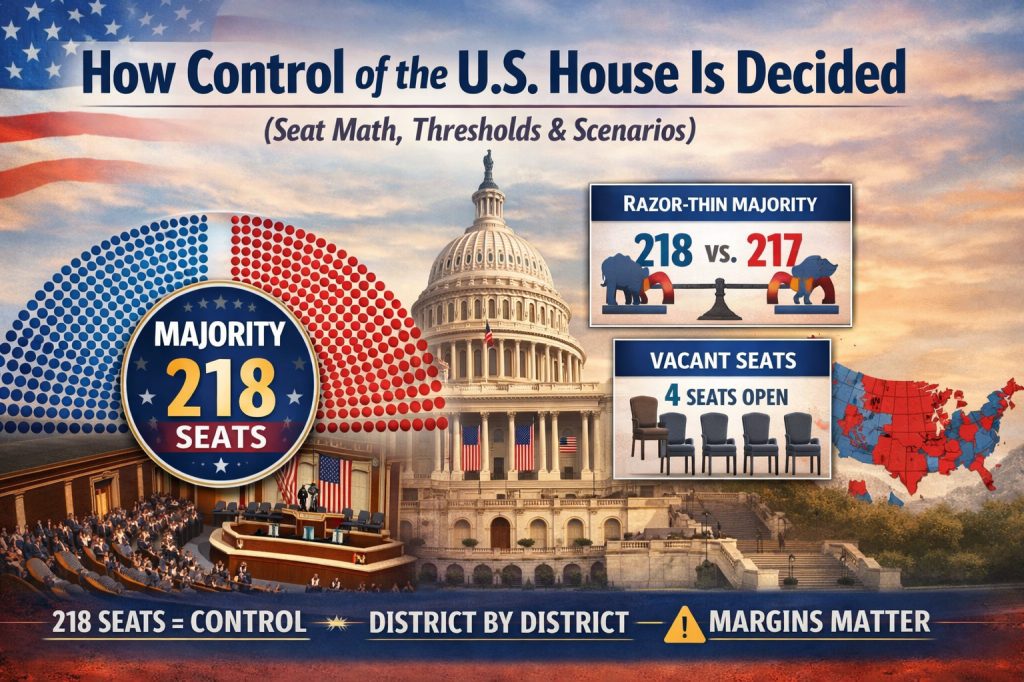
How Control of the U.S. House Is Decided
Control of the U.S. House of Representatives requires 218 seats from 435 total, enabling a party to set the agenda and elect leadership. Real-world scenarios include clear or razor-thin majorities, impacts of vacancies, independents, and why control does not align with the national popular vote. Margins of victory significantly influence legislative power dynamics.
 Election Desk