
Tag: U.S. Senate
-
What Happens If Congress Is Split After an Election? Institutional Consequences Explained
Federal elections often result in a split Congress, where no single party controls both chambers. This scenario can lead to legislative gridlock, necessitating bipartisan negotiation for progress. Institutional mechanics, like tie-breaking votes in the Senate and the lack of a tie-breaking mechanism in the House, complicate governance and hinder productivity.
-
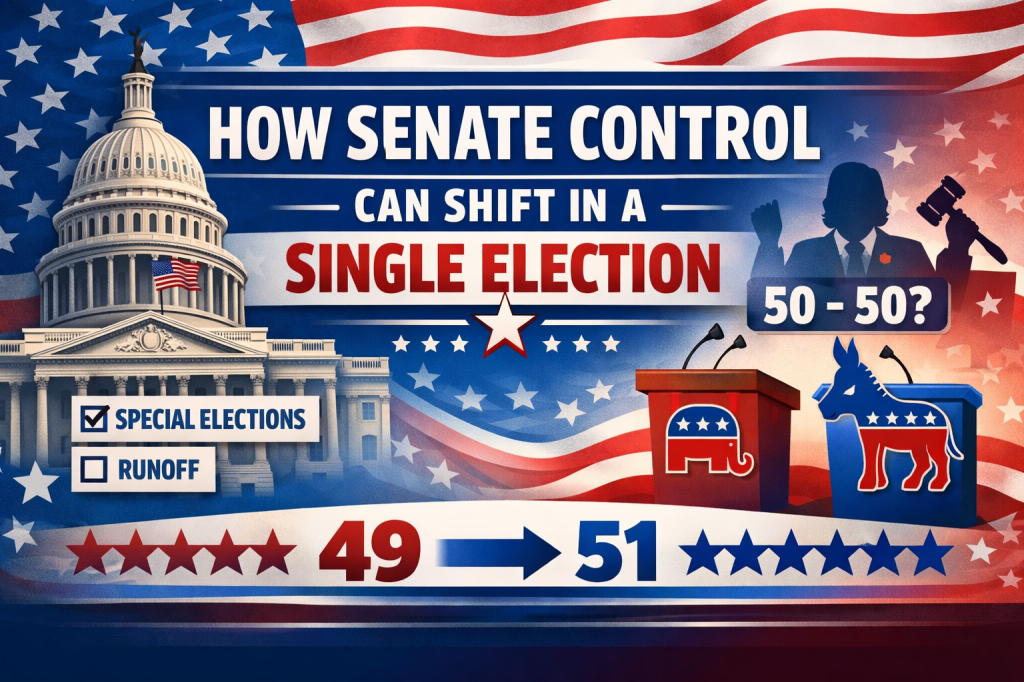
How Senate Control Can Shift in a Single Election
The U.S. Senate, with its staggered six-year terms, features classes of seats contested every two years, which can lead to significant control shifts based on regular and special elections. Vacancies may create crucial opportunities, and a 50-50 split allows the Vice President to cast tie-breaking votes, influencing majority control.
 Election Desk