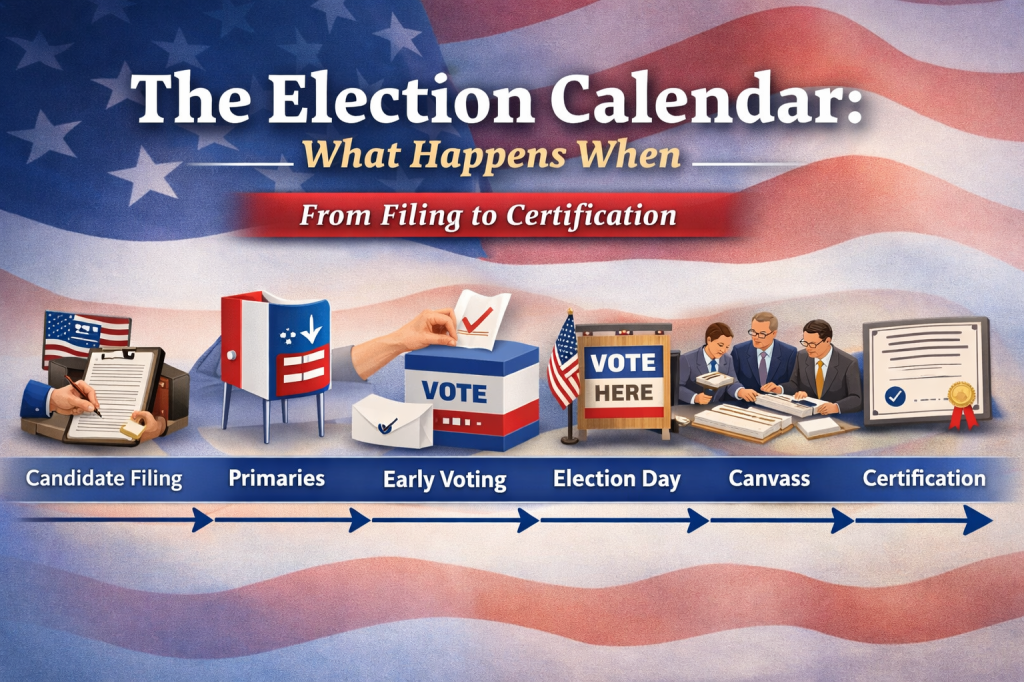
Overview: The Election Timeline at a Glance
- Candidate Filing
- Primaries
- Early Voting & Absentee Voting
- Election Day
- Canvass (Counting & Verification)
- Certification (Results Made Official)
Each phase builds on the last. Skipping or misunderstanding a step can lead to confusion about results, delays, or legal disputes.
1. Candidate Filing
When it happens: Months before the election (deadlines vary by state and office)
What it is:
Candidate filing is the formal process by which individuals declare their intent to run for office. Without filing, a candidate’s name cannot appear on the ballot.
What typically happens:
- Candidates submit paperwork to state or local election officials
- Filing fees are paid or petition signatures are submitted
- Party affiliation is declared (if applicable)
- Eligibility requirements (age, residency, citizenship) are verified
Why it matters:
This step determines who voters can choose from. Filing deadlines are strict; missing one usually ends a campaign before it starts.
2. Primaries
When it happens: Usually spring or summer of the election year
What it is:
Primaries decide which candidates will represent political parties in the general election. Some states also use primaries for nonpartisan races.
Types of primaries:
- Closed: Only registered party members can vote
- Open: Voters can choose which party’s primary to vote in
- Semi-open / Semi-closed: Hybrid systems
- Top-two / jungle primary: All candidates appear on one ballot; top finishers advance
Why it matters:
Primaries shape the final ballot and often determine the ideological direction of a race long before Election Day.
3. Early Voting & Absentee Voting
When it happens: Weeks before Election Day
What it is:
Voters can cast ballots before Election Day either in person (early voting) or by mail (absentee or vote-by-mail).
Key points:
- Ballots must be requested (in some states) by a deadline
- Signature verification and identity checks occur
- Ballots are securely stored until counting begins
- Some states process mail ballots early; others wait until Election Day
Why it matters:
A significant share of votes are now cast before Election Day, affecting how results are reported and why early totals may change over time.
4. Election Day
When it happens: First Tuesday after the first Monday in November (for federal elections)
What it is:
The official day for in-person voting at polling places.
What happens on Election Day:
- Polls open and close at state-set times
- In-person ballots are cast and secured
- Preliminary vote totals are reported after polls close
- Unofficial results are released to the public
Important clarification:
Election Night results are not final. They are preliminary counts meant to inform, not certify.
5. Canvass (Counting & Verification)
When it happens: Days to weeks after Election Day
What it is:
The canvass is the formal review and verification of all ballots cast.
What happens during the canvass:
- Mail ballots received by the deadline are counted
- Provisional ballots are researched and resolved
- Tabulation errors are checked and corrected
- Logic and accuracy audits may occur
- Recounts are triggered if margins are close
Why it matters:
This phase ensures accuracy, legality, and completeness. Delays during the canvass are normal and expected, especially in close races.
6. Certification
When it happens: After the canvass is complete (varies by state)
What it is:
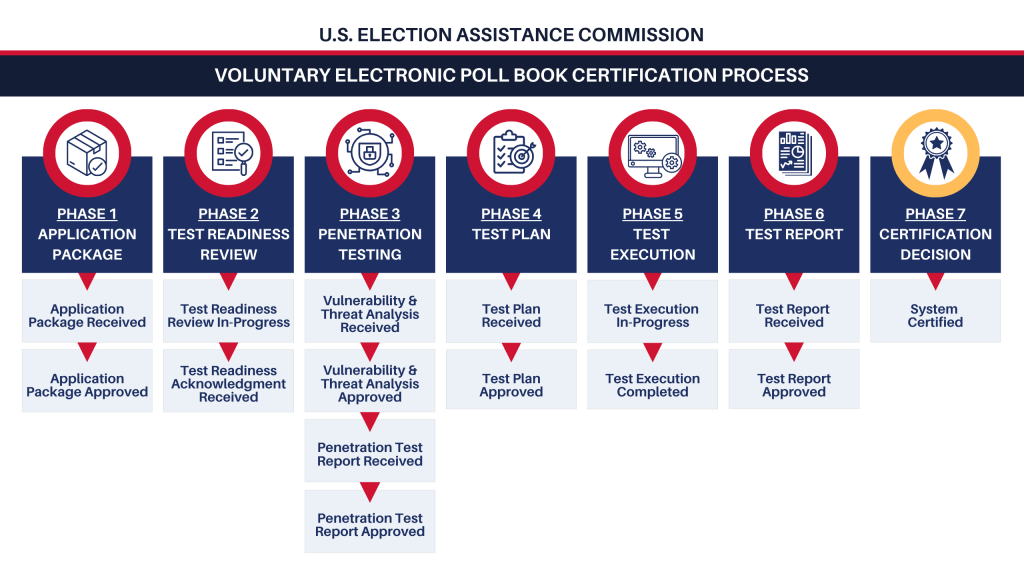
Certification is the official confirmation of election results by authorized election officials.
Who certifies results:
- Local election boards (county or municipal)
- State election authorities
- Governors or secretaries of state (depending on office)
What certification does:
- Makes results legally binding
- Allows winners to take office
- Triggers next steps (such as Electoral College votes in presidential elections)
Key point:
Only certified results are official. Everything before this step is provisional.
Why the Full Timeline Matters
Understanding the election timeline helps explain:
- Why results can change after Election Night
- Why close races take longer to finalize
- How legal challenges fit into the process
- Why patience is part of election integrity
Elections are not a single-day event—they are a structured, multi-stage process designed to balance access, accuracy, and public trust.
 Election Desk
Leave a comment