By Michael Phillips | Election Desk
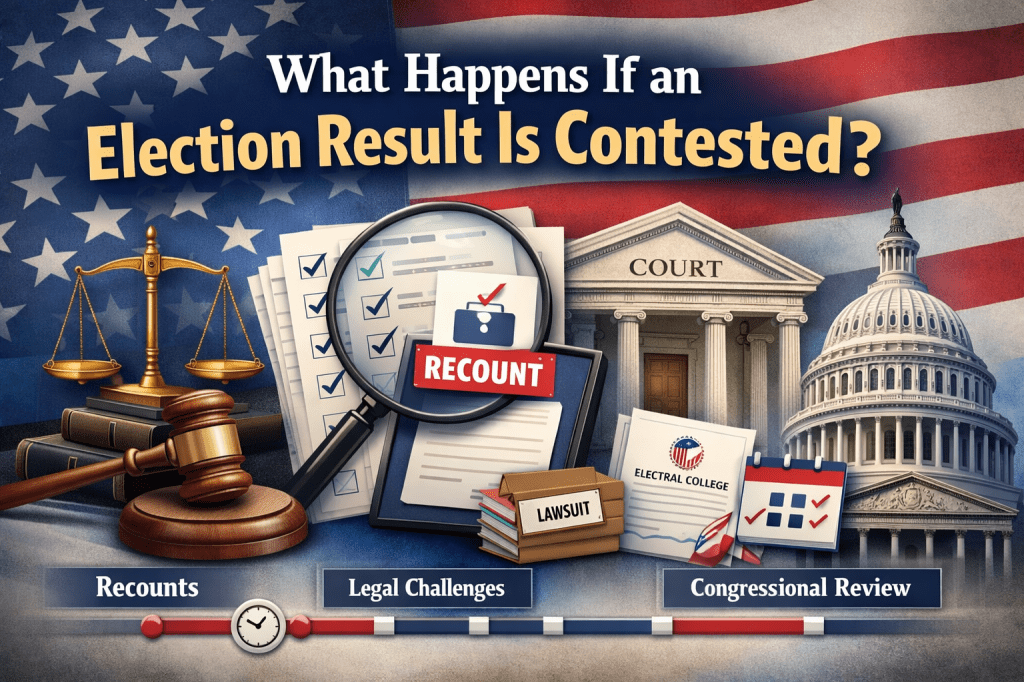
When voters cast ballots on Election Day, initial results are typically unofficial. After that, a multi-step process determines final, certified winners. If the outcome is contested, the process can involve recounts, legal challenges, certification disputes, and — in rare cases — legislative or congressional review.
1. The Post-Election Process (Canvass and Certification)
Canvassing:
After polls close, local election officials count ballots and begin canvassing — a review to ensure all votes are correctly tabulated. This includes resolving provisional ballots, curing signature issues, and other checks.U.S. Election Assistance Commission
Certification:
Certification is the official confirmation of results by election authorities (county and state boards). Until this step, results remain unofficial. Certification deadlines vary by state, usually within days to weeks of the election.NCSL
Once a state certifies the results, those results are generally considered final unless a recount or legal contest is underway.NCSL
2. Recounts
When they occur:
Recounts involve re-tallying ballots to verify accuracy. They may occur:
- Automatically if the margin of victory falls within a narrow threshold set by state law.
- By request from a candidate or campaign, sometimes at the requester’s expense.NCSL
Purpose:
Recounts help ensure all valid ballots were included and counted correctly. They rarely change outcomes in large elections but are more common in tight contests.U.S. Election Assistance Commission
3. Legal Challenges and Lawsuits
If a campaign believes procedural errors, misconduct, or fraud affected the result, it can file lawsuits in state or federal court. These challenges might seek to:
- Set aside or delay certification,
- Invalidate certain ballots, or
- Order inspections or recounts under court supervision.NCSL
Courts review evidence, arguments, and legal standards. Judges typically grant relief only if there is strong proof of errors significant enough to change the outcome. Litigation may proceed through trial courts and appeals, and in rare cases reach the state Supreme Court or U.S. Supreme Court.NCSL
Example (recent):
In a contested state Supreme Court race in North Carolina, the state’s highest court temporarily blocked certification to consider legal challenges to tens of thousands of ballots, delaying the official result.Politico
4. Election Contests by Candidates
In House races, a special procedure exists under the Federal Contested Elections Act. A losing candidate can formally challenge results by filing with the Clerk of the House within statutory deadlines. Such contests are first handled administratively by the House Committee on House Administration, and the full House may ultimately decide disputes over seating members.Wikipedia
Other offices rely on state-defined “election contest” processes that set deadlines and grounds for challenging certified results.NCSL
5. Congressional Role in Presidential Elections
For presidential elections, states send certificates of ascertainment listing electors for the Electoral College. Congress then meets in early January to count electoral votes under the Electoral Count Act. Congress can hear objections to electoral votes, but overturning certified votes requires both chambers to agree — a high bar rarely met in practice.Wikipedia+1
6. Timelines and Constraints
State deadlines:
Each state sets its own timelines for canvassing, certification, recounts, and contests. These may include:
- Deadlines to file recount requests
- Timeframes to begin legal contests
- Certification deadline windows.NASS
States generally require that election contests be resolved promptly so winners can be sworn into office on schedule.NCSL
7. Safeguards and Audits
Many states now conduct risk-limiting audits and other post-election integrity checks. These are statistical audits designed to provide high confidence in the reported result before or alongside certification.Wikipedia
Summary: What Contested Elections Involve
Contesting an election can include one or more of the following:
- Recounts to verify vote totals
- Legal challenges alleging errors or misconduct
- Election contest filings in civil or legislative processes
- Delays or stays in certification by courts
- Congressional consideration of electoral votes in presidential contests.
Each stage involves specified timelines, evidence requirements, and legal standards. Only in rare, evidence-based circumstances do contests change certified outcomes.NCSL
 Election Desk
Leave a comment