A guide to direct democracy in the states
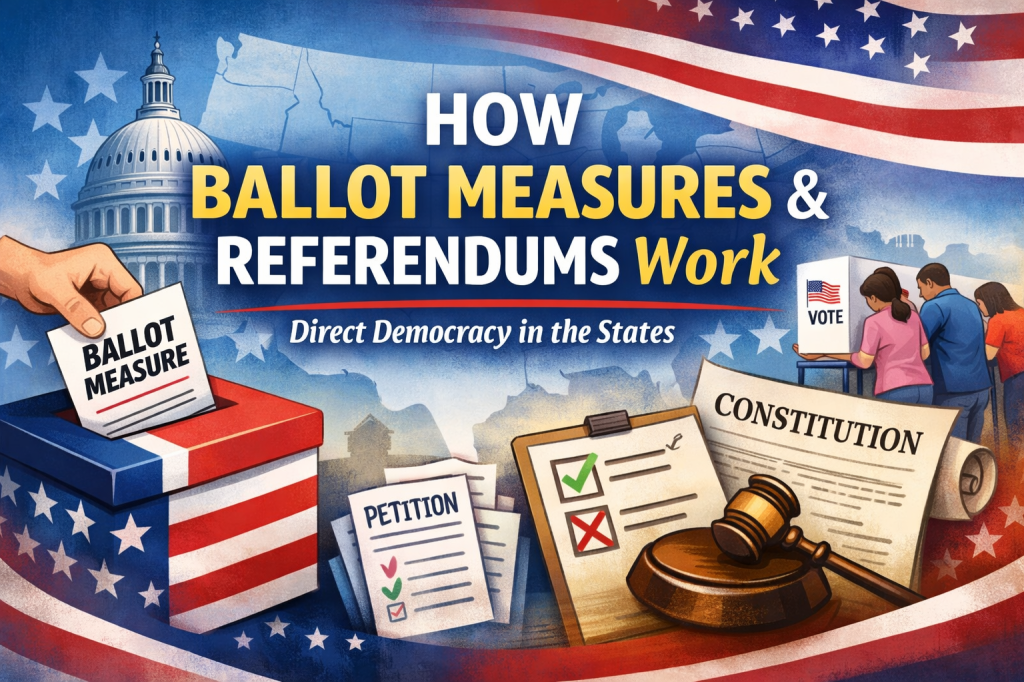
Ballot measures and referendums allow voters to decide public policy directly—bypassing legislatures to approve laws, amend state constitutions, or accept or reject acts passed by lawmakers. They appear on ballots in many states during general elections, primaries, and special elections, often alongside races for office.
This guide explains what ballot measures are, how they get on the ballot, how votes are counted, and why the rules vary so much by state.
What Are Ballot Measures?
A ballot measure (sometimes called a proposition, question, or amendment) is a policy proposal presented to voters for approval or rejection. Outcomes are binding under state law if they meet the required thresholds.
Common policy areas include:
- Taxes and spending limits
- Marijuana, gambling, or alcohol regulation
- Abortion and reproductive rights
- Labor standards and minimum wage
- Criminal justice and sentencing
- Voting rules and election administration
The Three Main Types
1. Initiatives (Citizen-Led)
Initiatives are proposals placed on the ballot by citizens, usually after collecting a required number of valid signatures.
Two subtypes:
- Statutory initiatives create or change state laws.
- Constitutional initiatives amend the state constitution (often with higher thresholds).
Only some states allow citizen initiatives. States like California, Colorado, and Arizona use them frequently.
2. Referendums (Veto Power)
A referendum asks voters to approve or reject a law already passed by the legislature.
Two forms:
- Popular referendum: Citizens gather signatures to challenge a new law.
- Legislative referendum: Lawmakers themselves send a question to voters.
Many tax increases, bond measures, or constitutional changes require legislative referral.
3. Legislative Ballot Measures
Some ballot questions are placed on the ballot automatically when legislatures approve certain actions, such as:
- Constitutional amendments
- Bond authorizations
- Major structural changes to government
In states like Ohio and Maryland, voters routinely decide legislatively referred amendments.
How a Ballot Measure Gets on the Ballot
The process varies by state, but typically includes:
- Drafting the proposal (legal language matters)
- Approval for circulation by a state agency or attorney general
- Signature collection (often tied to a percentage of past voters)
- Verification of signatures
- Ballot title and summary written by state officials
- Placement on the ballot for a specific election
Deadlines can be months—or even more than a year—before Election Day.
How Voting and Approval Work
Ballot Language
Voters usually see:
- A short title
- A summary or explanation
- “Yes” and “No” options
The wording can significantly influence outcomes, which is why it’s often litigated.
Thresholds
Most measures pass with a simple majority (50% + 1), but some states require:
- 60% approval (often for tax-related measures)
- Multiple election approvals for constitutional changes
What Happens After Passage?
If approved:
- Statutory initiatives become law after certification
- Constitutional amendments take effect on a set date or after canvassing
Legislatures may sometimes amend statutory initiatives later, but constitutional changes are much harder to undo.
Court challenges are common—especially over ballot wording, signature validity, or constitutionality.
Why Ballot Measures Matter
Ballot measures can:
- Override legislative gridlock
- Advance policies unpopular with lawmakers but popular with voters
- Lock policies into state constitutions
- Reshape political debates nationwide
Recent cycles have shown voters in both red and blue states using ballot measures to weigh in on abortion rights, drug policy, and voting rules—sometimes cutting across party lines.
Key Differences by State
There is no national standard. States differ on:
- Whether initiatives are allowed
- Signature thresholds
- Geographic distribution requirements
- Approval margins
- Legislative power to amend passed initiatives
This makes ballot measure outcomes highly state-specific, even when addressing similar issues.
The Bottom Line
Ballot measures and referendums are one of the most direct forms of democracy in the United States. While they empower voters, they also involve complex rules, legal battles, and high-stakes campaigns.
Understanding how they work—and how your state’s rules differ—is essential before casting a vote on any proposition or question.
Election Desk publishes nonpartisan explainers on how U.S. elections function—from ballots and certification to recounts and court challenges.
 Election Desk
Leave a comment