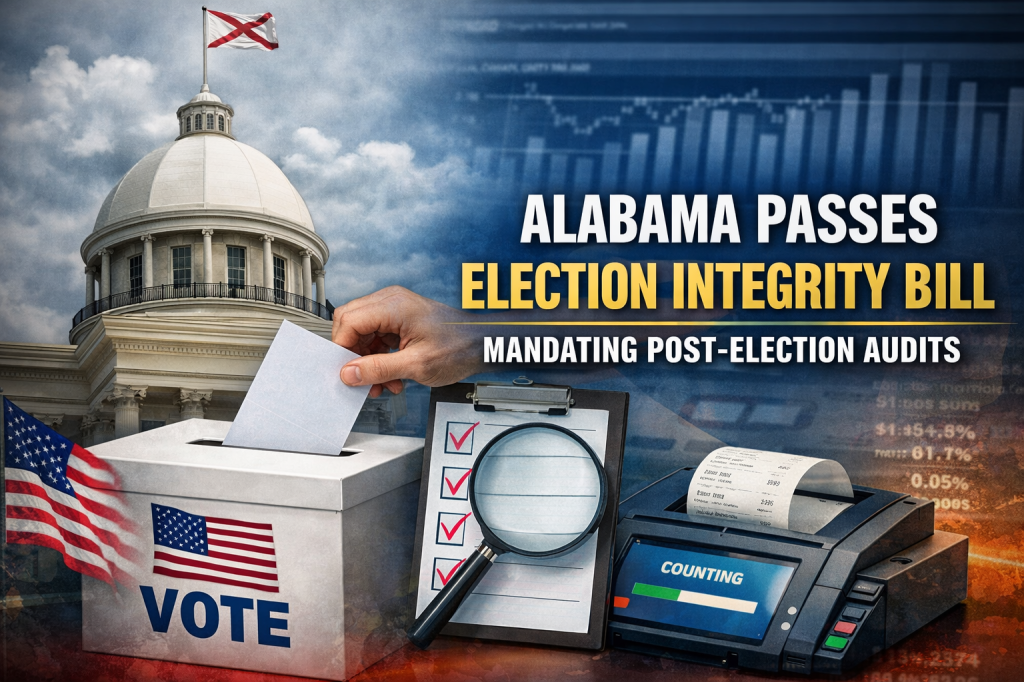
MONTGOMERY, Alabama — In a significant move aimed at expanding election oversight, the Alabama House of Representatives on January 16 passed new legislation that would mandate post-election audits following every county and statewide general election. The measure, House Bill 95, cleared the chamber by a 72–25 vote, with only Democrats opposing it.
What HB 95 Would Do
Under the proposed law, each Alabama county’s probate judge would be responsible for conducting an audit after general elections. The audit would focus on at least one precinct randomly selected in each county, and at least one countywide or statewide race. Judges would determine the time and place for these audits and appoint poll workers to carry them out.
Auditors could conduct the review either by machine or manual tally. If machines are used, the bill requires that at least 30 ballots be randomly chosen and hand-examined to compare manual counts with machine results. The aim of the bill’s authors is to provide additional transparency and bolster public confidence in electoral outcomes without affecting certified results.
The bill now moves to the Alabama Senate as lawmakers continue what has become a broader national conversation about election security and transparency.
Supporters’ Rationale
Supporters of HB 95, led by bill sponsor Rep. Joe Lovvorn (R-Auburn), frame the legislation as a way to ensure accuracy in election administration and reinforce voter confidence. Lovvorn emphasized that the audits aren’t intended to overturn election outcomes but to verify that voting equipment and tabulation processes are functioning correctly.
Alabama’s Secretary of State, Wes Allen, a vocal backer of the measure, noted that audits can strengthen trust in the system and provide a check on election processes.
Criticism and Concerns
House Democrats raised questions during debate, disputing the need for the new requirement. Some lawmakers pointed out a lack of documented election errors in Alabama as justification for additional audits. Others questioned whether conducting audits after the fact would meaningfully improve election integrity or public confidence. Concerns were also voiced about the potential costs and logistical burdens of the program, with estimates suggesting that audits could cost thousands of dollars per day, depending on how many precincts are reviewed.
Opponents argued that if the goal is to prevent issues, auditing before certification or on a risk-based schedule might be more effective, though supporters maintained that post-election reviews still serve an important oversight function.
Context and Broader Election Audit Practices
Post-election audits are used in various forms across the United States as a tool to confirm that reported results match the ballots cast. One common method is known as a risk-limiting audit, which statistically samples ballots to provide a high level of confidence that the reported outcome is correct. Such audits can vary in scope and methodology, and in some jurisdictions are a routine part of election administration.
Alabama’s approach emphasizes random precinct review and public reporting with a statutory framework that would be codified into state election law if the bill becomes law.
Looking Ahead
With passage in the House, HB 95 now heads to the Alabama Senate for consideration. Its progress in the upper chamber and potential changes in committee will be closely watched by election officials, advocates, and political observers concerned both with election integrity and the balance between oversight and administrative burden.
 Election Desk
Leave a comment