
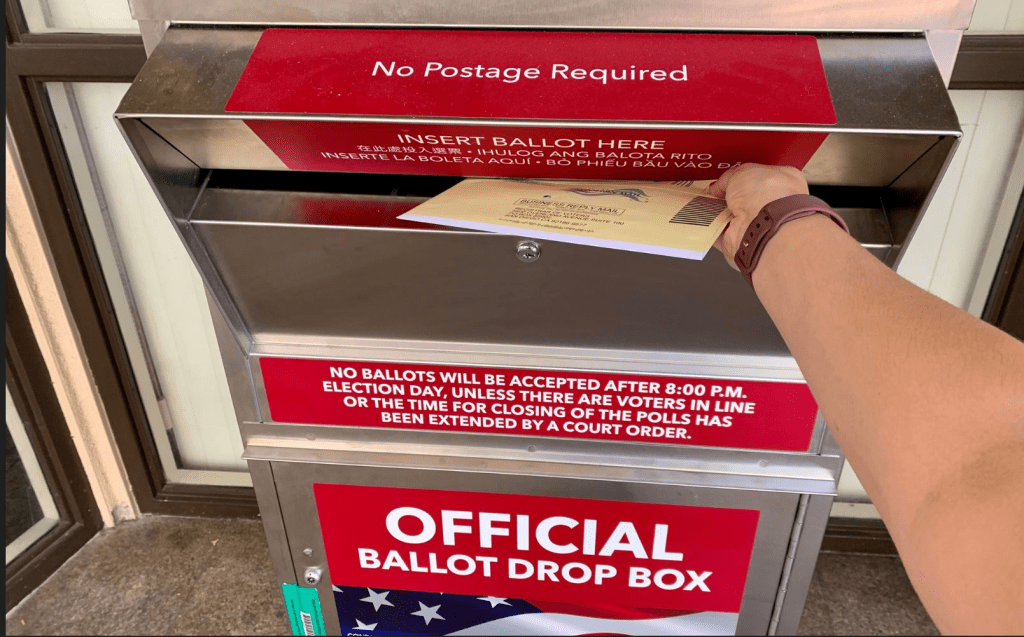
Mail voting and absentee voting are often used interchangeably—but in election law, they are not always the same thing. The differences matter, especially when it comes to who can vote, how ballots are requested, when they must be returned, and how errors are fixed.
Here’s a clear, side-by-side explainer.
1. Eligibility
Absentee Voting
Absentee voting traditionally applies to voters who cannot vote in person on Election Day.
Common eligibility requirements include:
- Being out of town on Election Day
- Illness or disability
- Military or overseas service
- Work conflicts or caregiving responsibilities
Some states still require voters to provide a reason (“excuse-required absentee voting”).
Mail-In Voting
Mail-in voting generally refers to systems where:
- All registered voters are eligible, or
- Ballots are automatically sent to voters without requiring an excuse
States with “universal mail voting” allow any voter to vote by mail without stating a reason.
Key distinction:
Absentee voting is often conditional. Mail-in voting is usually open to all eligible voters.
2. Request Process
Absentee Ballot
Voters typically must:
- Submit a formal request or application
- Meet eligibility rules
- Request by a specific deadline
Requests may be submitted online, by mail, or in person, depending on state law.
Mail-In Ballot
In many mail-voting states:
- No request is required
- Ballots are automatically mailed to active registered voters
In other states, “mail-in ballot” is simply a no-excuse absentee ballot, meaning a request is still required—but no reason is needed.
3. Ballot Return Options
Absentee Ballots
Returned by:
- Secure drop box (where available)
- In-person delivery to election offices
- Sometimes by an authorized agent (limited circumstances)
Mail-In Ballots
Returned by:
- Official drop boxes
- Vote centers or election offices
Mail-voting systems usually include expanded drop-box networks and longer return windows.
4. Signature Verification & Curing
Signature Verification
Both absentee and mail-in ballots typically require:
- A voter signature on the return envelope
- Comparison to the voter’s signature on file
Ballots with missing or mismatched signatures may be flagged.
Signature Curing
“Curing” allows voters to fix errors, such as:
- Missing signatures
- Signature mismatches
- Incomplete information
Curing rules vary by state:
- Some states notify voters and provide days to fix issues
- Others reject ballots if problems aren’t corrected quickly
Mail-voting states often have more formalized curing processes, while absentee-only systems may be stricter.
5. Deadlines
Absentee Voting Deadlines
Key deadlines include:
- Request deadline (often days or weeks before Election Day)
- Return deadline (usually by Election Day or earlier)
Some states require ballots to be received by Election Day.
Mail-In Voting Deadlines
Deadlines are often more flexible:
- Ballots may count if postmarked by Election Day and received later
- Drop boxes may close at polls-close time
Universal mail states often pair mail voting with extended processing timelines.
Bottom Line
| Feature | Absentee Voting | Mail-In Voting |
|---|---|---|
| Eligibility | Often limited or conditional | Usually open to all voters |
| Request Required | Yes | Sometimes no |
| Ballot Delivery | Upon request | Often automatic |
| Curing Process | Varies, sometimes limited | Often standardized |
| Deadlines | Typically stricter | Often more flexible |
In short:
All mail-in ballots are absentee ballots in a technical sense—but not all absentee ballots are part of a mail-voting system.
Understanding the difference helps voters avoid missed deadlines, rejected ballots, and confusion during high-turnout elections.
Election Desk — explaining how voting rules actually work.
 Election Desk
Leave a comment