
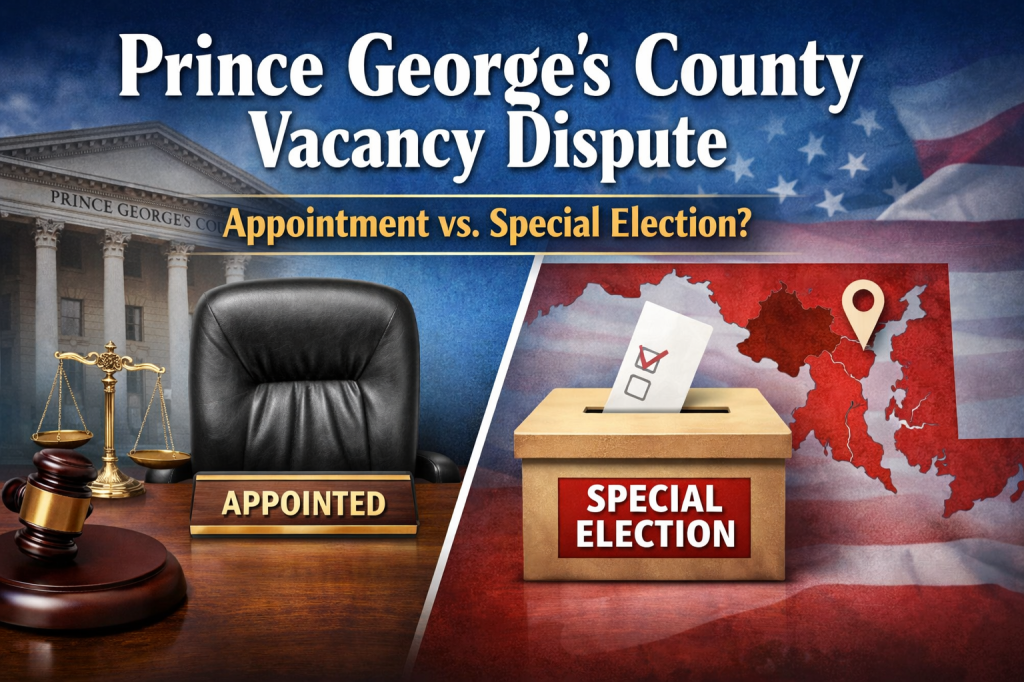
A lawsuit filed by Prince George’s County residents is drawing attention to how vacancies on local legislative bodies are filled — and whether appointment procedures comply with county charter requirements.
The suit challenges a recent decision by the Prince George’s County Council to appoint a replacement to an at-large council seat rather than conduct a special election. Plaintiffs argue the council’s action violated the county charter or improperly interpreted its vacancy provisions.
Background on the Vacancy
The at-large seat became vacant following the departure of the previous officeholder, prompting the council to initiate an appointment process. County officials have maintained that the charter authorizes appointments under certain timing conditions, particularly when vacancies occur close to the end of a term.
The plaintiffs dispute that interpretation, asserting that voters were entitled to select the replacement through a special election. The lawsuit seeks declaratory and injunctive relief, not monetary damages.
Legal and Procedural Questions
At issue is how Prince George’s County’s charter language should be read — specifically:
- When appointment authority applies
- Whether the timing of the vacancy triggers a mandatory election
- How broadly the council may interpret its own vacancy powers
Maryland counties vary in how they handle legislative vacancies. Some require special elections unless a vacancy occurs late in a term; others allow appointments under broader circumstances. Courts typically look to charter language, legislative intent, and past practice when resolving these disputes.
Why This Matters for Election Administration
Although the case centers on a single council seat, its implications extend beyond Prince George’s County. Vacancy rules affect:
- Voter participation and representation
- Continuity of governance
- Predictability of election administration
- Precedent for future resignations or appointments
If the court sides with the plaintiffs, local governments may need to revisit how vacancy timelines are calculated and when elections are required. A ruling in favor of the council could reinforce discretionary appointment authority where charter language is ambiguous.
What Happens Next
The case is pending in Prince George’s County Circuit Court. A ruling could clarify how county charters across Maryland should be interpreted when elected officials leave office mid-term.
Election Desk will continue monitoring the case for developments affecting election law, charter governance, and local representation standards.
 Election Desk
Leave a comment