By Tech Bay News Staff
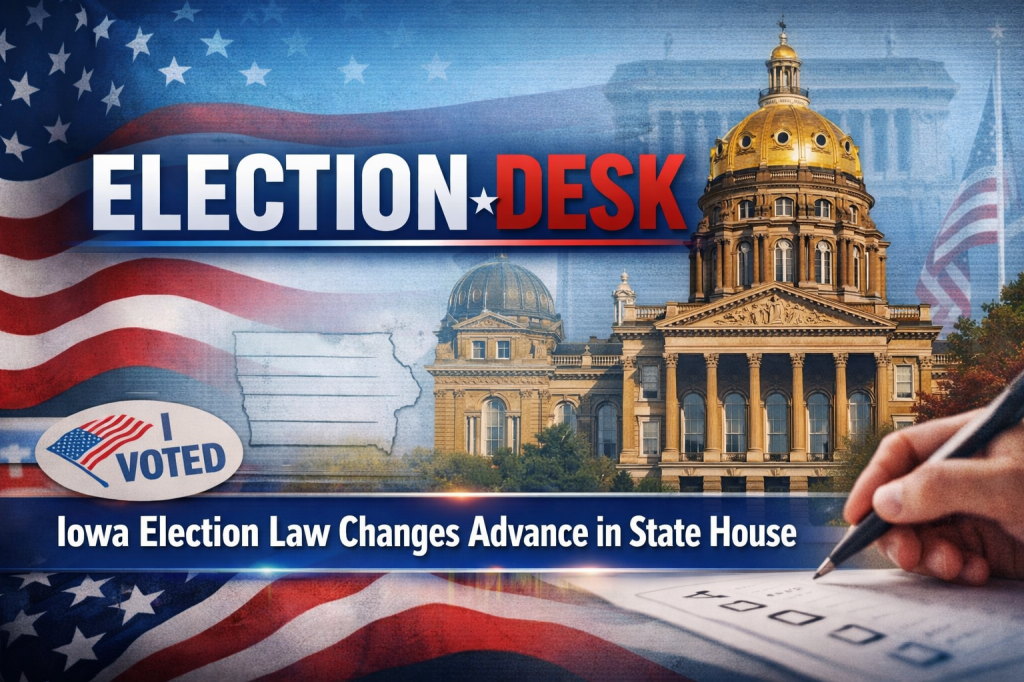
DES MOINES — A package of relatively modest but significant changes to Iowa’s election laws cleared its first legislative hurdle in the Iowa House on February 5, advancing out of committee as the 2026 session gains steam. The proposal, championed by Secretary of State Paul Pate, is framed by supporters as necessary “tweaks” to existing procedures affecting local candidates and election administration, though observers say it also reflects broader concerns about election integrity and efficiency ahead of the 2026 election cycle.
At the heart of the bill is a procedural adjustment for nominees in city and school board contests. Under current law, school board secretaries and city clerks traditionally file petition paperwork that puts candidate names on ballots. The legislation would shift that responsibility instead to county auditors, centralizing the process within the offices that manage local elections. Supporters argue this change would reduce administrative errors after dozens of local candidates were left off November ballots when clerks missed filing deadlines in multiple counties.
Cerro Gordo County Auditor Adam Wedmore, president of the Iowa State Association of County Auditors, testified in support of the proposal, telling lawmakers it “cleans up some of the things that we have found over the last few elections.” He and other backers say consolidating petition management with county auditors streamlines administration and enhances accountability.
The bill also clarifies procedures related to bond election recounts that require 60 percent approval, an issue that has generated confusion in past local contests. Additionally, it would grant county auditors discretion to determine when boards convene to begin absentee ballot counting on election day in low-turnout elections. While statewide and federal election absentee boards would still begin at the current statutory start time of 9 a.m., local contests such as school board votes — which typically attract fewer absentee ballots — could see counting begin later if auditors decide it is appropriate. Supporters say this flexibility respects local conditions without compromising the integrity of vote counting.
Critics of election law reforms sometimes argue that even procedural changes can have political implications, particularly in a year when both statewide and federal offices are on the ballot. Iowa’s 2026 election calendar includes competitive contests for secretary of state — where Pate, a Republican, is seeking a fifth term — and other statewide posts, as well as races for the Iowa legislature and congressional delegation.
The bill’s passage out of the House marks only the first of several steps needed before enactment. It will still need consideration by the full House and approval by the Iowa Senate before it can reach the governor’s desk. Given the legislature’s active docket — with scores of bills across education, public health, and government operations already moving through committees — election law adjustments remain among a suite of measures that may shape how Iowans cast ballots and engage at the local level this year.
Why This Matters
Election laws shape not just who can vote, but how elections are administered at the local level. While Iowa’s proposed changes are largely procedural, they affect the behind-the-scenes mechanics that determine whether candidates appear on the ballot, how recounts are handled, and when votes are counted.
By shifting certain filing responsibilities to county auditors, lawmakers aim to reduce administrative errors that have previously led to candidates being left off ballots. Clarifying recount procedures and allowing flexibility in absentee ballot counting for low-turnout local elections may also help election officials manage resources more efficiently.
Supporters say these adjustments improve clarity and consistency without changing voter eligibility or access. Critics caution that even technical changes deserve scrutiny, particularly in a highly polarized election environment. As the bill advances, it highlights the ongoing tension between efficiency, oversight, and public trust in election administration.
 Election Desk
Leave a comment