The Alabama Legislature moved swiftly Thursday to alter how voter registration data is handled in the state, approving a bill that would fundamentally change what personal information appears on official voter lists and how much those lists can cost.
What the Bill Does
The Alabama House of Representatives overwhelmingly passed House Bill 67, sponsored by Republican State Rep. Jamie Kiel (R-Russellville). The legislation would:
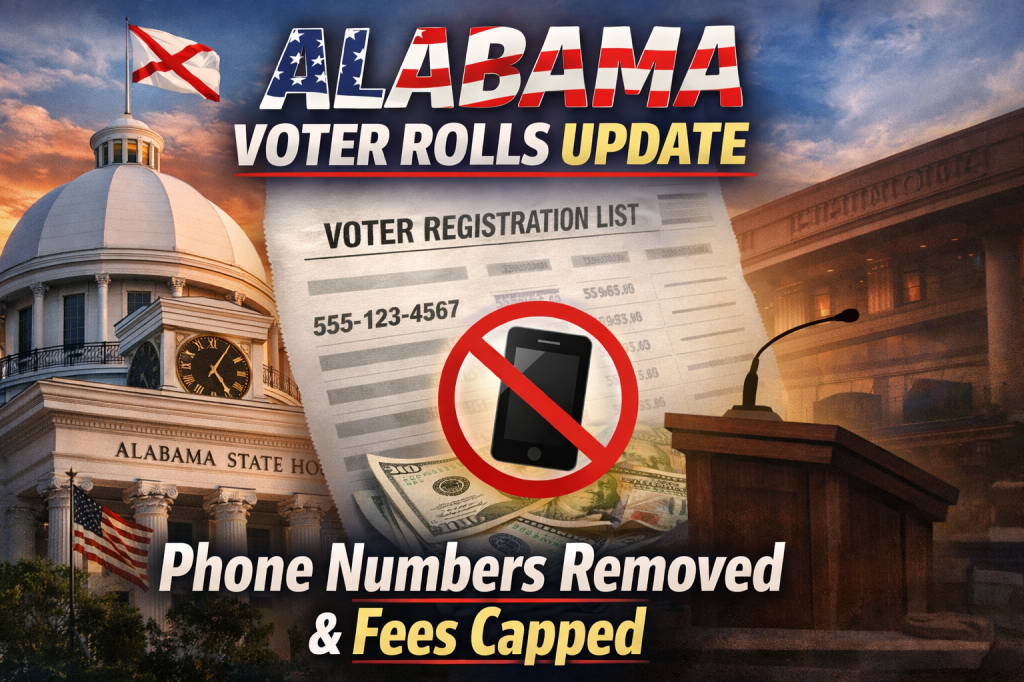
- Remove phone numbers from voter registration lists so that they are no longer automatically included in the voter rolls.
- Prohibit the sale of those phone numbers for commercial purposes, aiming to curtail robocalls and unsolicited marketing to Alabama voters.
- Cap the price that the Secretary of State’s office can charge for access to the voter list at $1,000 total—a significant reduction from the current structure, which charges per voter and can amount to tens of thousands of dollars.
Under existing law, almost all voter registration information—except Social Security numbers—is included in publicly purchasable lists. HB 67 would make phone numbers optional and restrict commercial use, seeking to balance privacy concerns with transparency.
Lawmakers Debate Privacy vs. Access
Rep. Kiel told colleagues on the floor that his constituents are overwhelmed by robocalls and that the state should not be “complicit” in facilitating that outreach by selling phone numbers.
The bill drew bipartisan debate. Some Democrats objected to losing access to phone numbers because they rely on the contact information to engage with constituents on policy and local issues. In response to that concern, lawmakers amended the bill to allow voters to opt in if they want their phone numbers included on publicly accessible rolls.
Opponents also pressed for language to clarify that campaign communications are not treated as “commercial use,” a change incorporated during the House’s floor negotiations.
The final House vote was 85-16, a strong bipartisan majority, and the bill now heads to the Alabama Senate for consideration.
The Broader Context on Voter Data
Alabama’s action comes amid a national conversation over voter privacy, data access, and election integrity.
In many states, voter registration lists are publicly accessible for political, commercial, and research purposes. Some privacy advocates and election officials argue that detailed contact data—especially phone numbers—can be misused or expose voters to spam and targeted disinformation campaigns.
At the same time, there are ongoing federal-level efforts related to elections and voter data. For example, the Safeguard American Voter Eligibility Act (SAVE Act) passed the U.S. House in the last Congress, which would require documentary proof of citizenship to register to vote in federal elections. Supporters say the measure would protect ballot integrity, while critics contend it could create barriers for eligible voters without ready access to certain documents.
Moreover, there has been attention on efforts by the U.S. Department of Justice to obtain sensitive voter files from states—a move that has prompted legal disputes and privacy concerns about how personally identifiable information is managed and safeguarded.
What’s Next
As the bill moves through the Alabama Senate, legislators will face decisions about whether to preserve the House’s provisions or propose further amendments. If passed by both chambers, the measure would signal Alabama taking a statewide stance on voter privacy that could influence other states weighing similar reforms.
Election Desk will continue to monitor developments in Alabama and across the country on legislative actions affecting voter registration data and election policy.
 Election Desk
Leave a comment