
Tag: voting
-
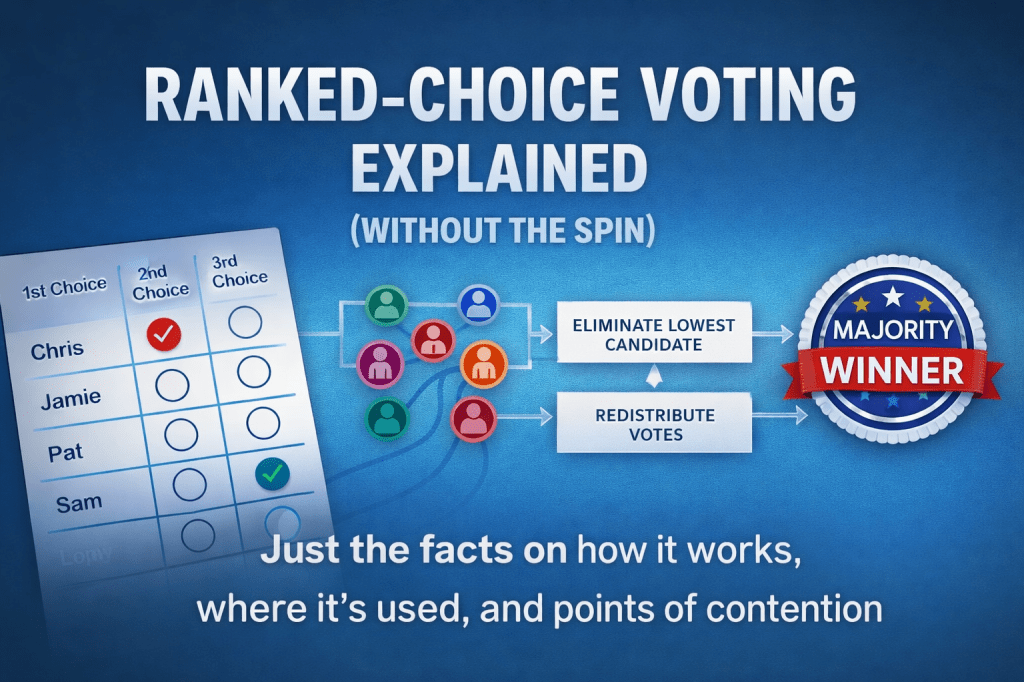
Ranked-Choice Voting Explained (Without the Spin)
Ranked-choice voting (RCV) allows voters to rank candidates by preference, enhancing democracy by reducing spoilers and encouraging broader appeal. However, it introduces complexity and potential confusion for some voters, along with longer counting times and transparency issues. Its effectiveness depends on implementation and voter education. RCV is used in various U.S. states and cities.
-
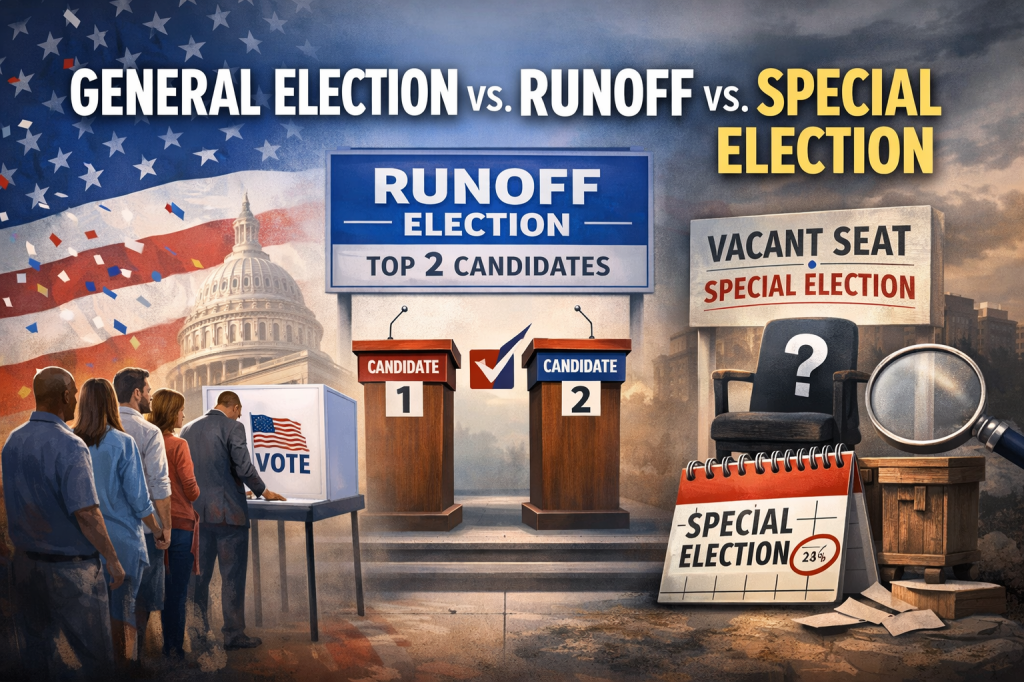
General Elections vs. Runoffs vs. Special Elections — What’s the Difference?
Elections serve different purposes: general elections select officeholders, runoff elections ensure a majority winner when initial votes are inconclusive, and special elections fill unexpected vacancies. Voter turnout varies, with general elections attracting the most participants, while special elections typically see the least. Understanding these dynamics is crucial for comprehending electoral outcomes.
-
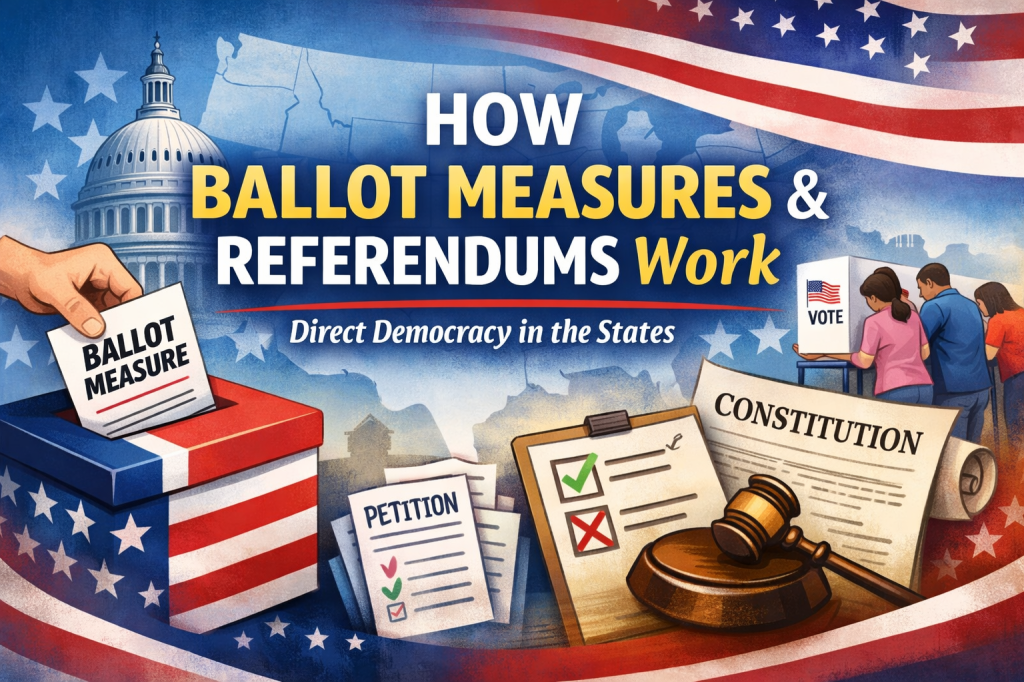
How Ballot Measures and Referendums Work
This guide explains direct democracy through ballot measures, enabling voters to directly influence public policy. It covers definitions, types (initiatives, referendums, legislative measures), the process for ballot placement, voting mechanics, and state-specific rules. Voters can shape legislation on various issues, highlighting the complexities of state-level governance and voter empowerment.
-
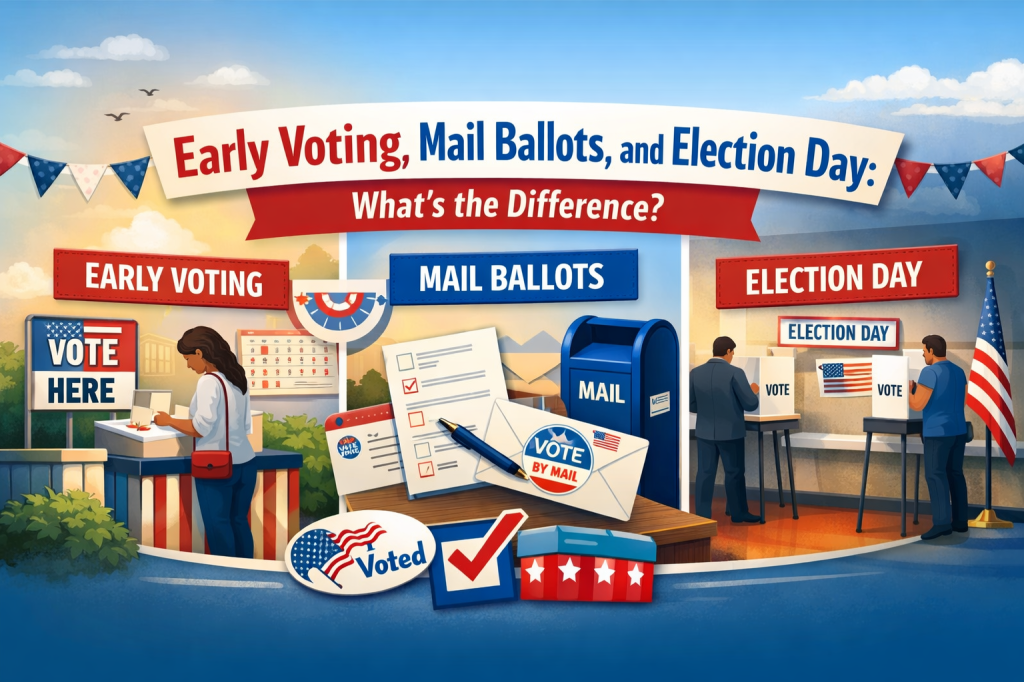
Early Voting, Mail Ballots, and Election Day: What’s the Difference?
Elections in the U.S. offer three voting methods: Election Day voting, early voting, and mail ballots. Each method differs in timing, location, and procedure. Early voting provides flexibility, while mail ballots enhance accessibility. Understanding these options and their rules is crucial for voters to ensure their participation and voice in democracy.
-
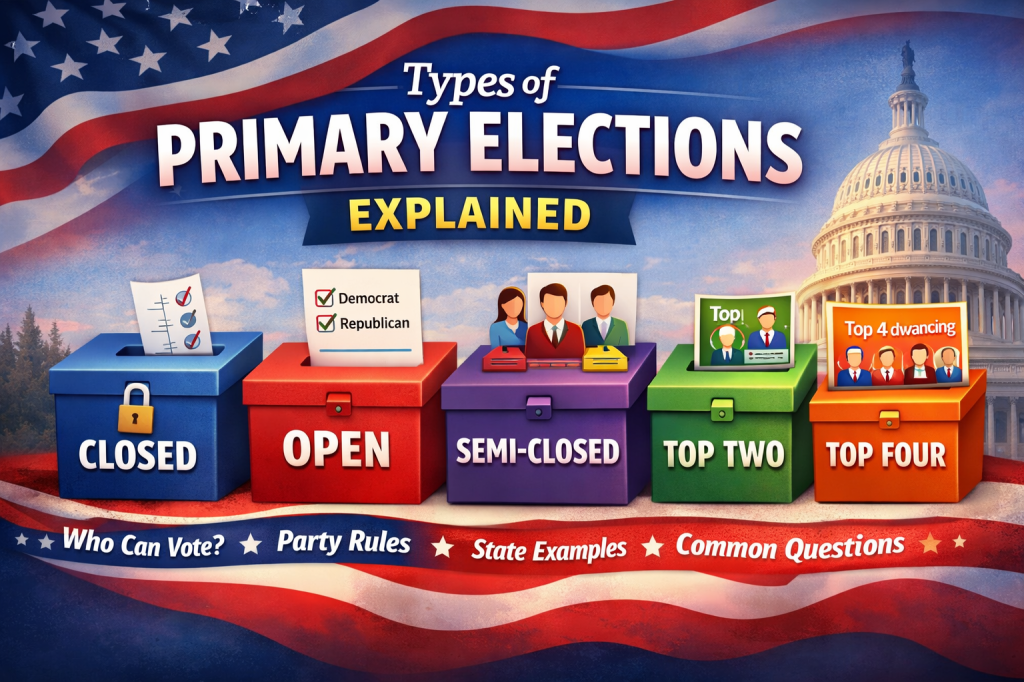
Primary Elections Explained: Closed, Open, Semi-Closed, Top-Two, Top-Four
Primary elections in the U.S. determine candidates for the general election, varying by state and party. There are five main systems: Closed, Open, Semi-Closed, Top-Two, and Top-Four Primaries. Each system affects voter access and candidate strategies. Understanding these systems is crucial for informed voting and recognizing primary significance.
-
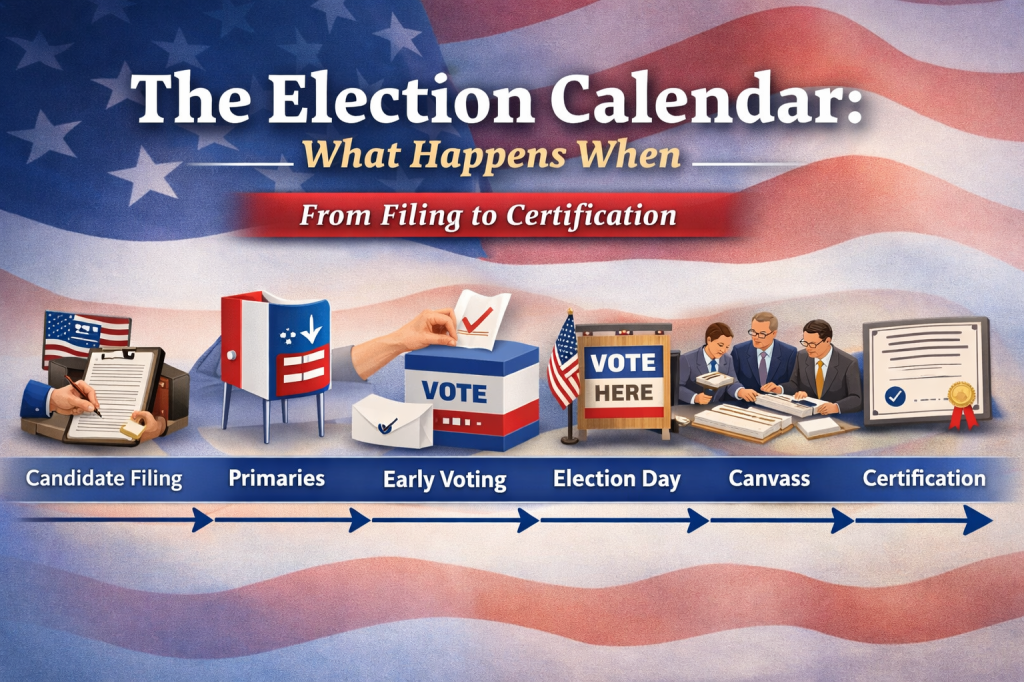
The Election Calendar: What Happens When (From Filing to Certification)
The election timeline comprises six key phases: candidate filing, primaries, early and absentee voting, Election Day, canvass for counting verification, and certification of results. Each phase is crucial for ensuring election accuracy and legality, impacting voter choice and procedural integrity while explaining delays and changing results in close races.
 Election Desk