
By Michael Phillips | Election Desk
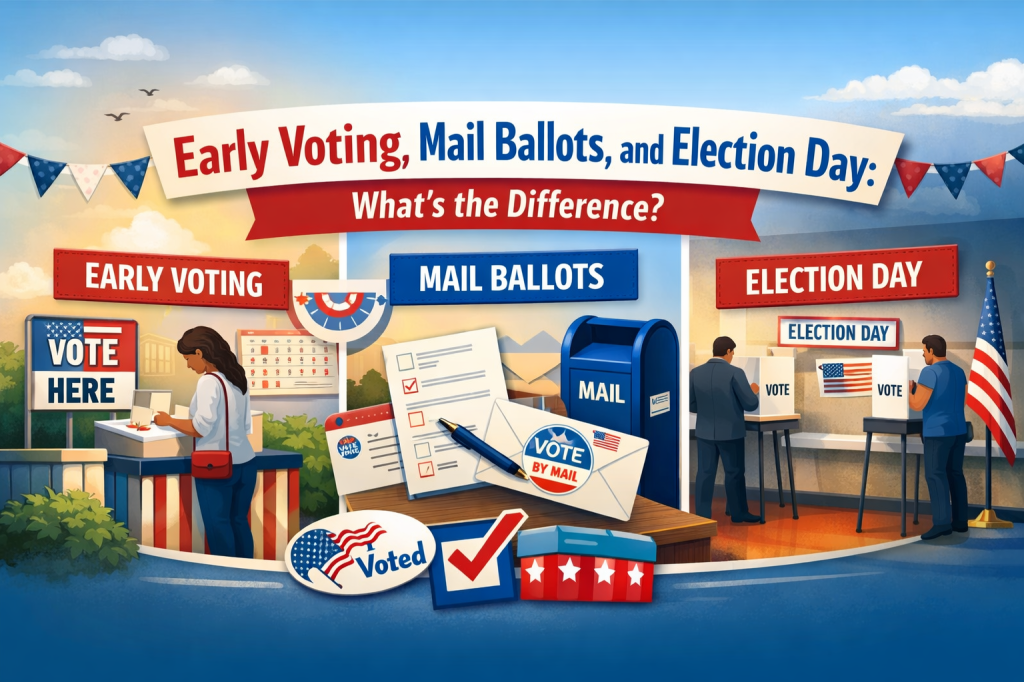
Elections in the United States give voters several ways to cast a ballot: early voting, mail ballots, and traditional Election Day voting. Though all are legitimate methods for participating in democracy, they differ in when, where, and how a voter casts their vote. Understanding those differences helps voters plan ahead and avoid confusion or missed deadlines.
What Is Election Day Voting?
Election Day refers to the official date set by law for most federal, state, and local elections. In the U.S., general elections are held on the first Tuesday after the first Monday in November. On this day, voters go to assigned polling places — typically schools, libraries, community centers, or municipal buildings — to cast ballots in person. Polling places are staffed by election officials, and voters usually mark a paper ballot or use a machine that records their selections. Wikipedia
Election Day voting is the traditional method and remains essential to the electoral system, but it’s not the only way to vote.
What Is Early Voting?
Early voting allows voters to cast their ballot in person before Election Day at designated polling locations. Early voting periods vary by state and local jurisdiction, but most begin weeks before the election and may last for several days, including weekends. These votes are cast and processed very much like on Election Day — voters check in, receive a ballot, and have it counted after polls close on Election Day. Congress.gov+1
Key aspects of early voting:
- It takes place at official polling sites that open ahead of Election Day.
- Voters cast ballots in person, with election workers present.
- It provides flexibility for people who may be unavailable on Election Day.
More than 45 states and Washington, D.C., offer early voting options in federal elections, with start dates often between several weeks and several days before Election Day. Election Innovation & Research
What Are Mail Ballots?
Mail ballots — also known as mail-in ballots or absentee ballots — refer to voting by mail rather than in person. Voters request a ballot from their local election office, receive it by mail, fill it out at home, and return it either through the postal system, in a secure ballot drop box, or in person at an election office or polling location. USAGov+1
There are two common setups:
- No-excuse mail voting: Voters can request a mail ballot without providing a reason.
- Absentee voting requiring an excuse: Some states historically required a reason (such as illness or travel), though many have moved to no-excuse mail voting. USAGov
In all cases, mail ballots must be completed and returned according to state-specific deadlines. Some states require ballots to be received by Election Day, while others count ballots that arrive after Election Day if they were postmarked on or before that date. Election Innovation & Research (NOTE: postal practices, like how postmarks are applied, can affect whether ballots meet deadlines. San Francisco Chronicle)
How They Compare
| Feature | Election Day | Early Voting | Mail Ballots |
|---|---|---|---|
| When | On Election Day | Before Election Day | Before Election Day (mail at voter’s timeline) |
| Where | Polling place | Designated early voting sites | Home, postal service, drop box |
| In-person? | Yes | Yes | Optional (return in person) |
| Deadline Issues | N/A | Votes cast and counted as part of Election Day totals | Must meet return/postmark deadlines that vary by state |
| Flexibility | Least | Moderate | Most for timing |
Why These Options Matter
Offering multiple ways to vote addresses different needs in the electorate. Early and mail voting help:
- Increase accessibility for people who can’t easily vote on Election Day.
- Reduce lines and demand on Election Day resources.
- Provide flexibility for voters with travel, work, or health constraints. Congress.gov
At the same time, each method has its own rules and deadlines, and voters should check with their local election officials well before an election to ensure their ballot will count. Vote.gov
Bottom line: All three methods — early voting, mail ballots, and Election Day — are valid ways to participate in civic life. Understanding the practical differences helps voters choose the method that best fits their needs and ensures their voice is heard.
 Election Desk
Leave a comment