ANNAPOLIS — A bill that would require a toll-free voter hotline for incarcerated residents and alter eligibility rules for people serving felony sentences has become a flashpoint in the early weeks of Maryland’s 2026 legislative session.
House Bill 52 in the House and Senate Bill 89 in the Senate — both titled the Election Law — Incarcerated Individuals — Voter Hotline and Voting Eligibility (Voting Rights for All Act) — would direct the Maryland State Board of Elections to set up a hotline for incarcerated people to get election information, request materials such as registration forms or ballots, and report alleged voting-rights violations. The measures would also change who is qualified to register to vote by allowing individuals convicted of a felony and serving a prison sentence to register and vote while incarcerated.
The bills were pre-filed in late 2025 and introduced in January 2026. Both have had a first reading in their respective chambers and are slated for committee hearings, including a Senate hearing scheduled for February 11.
Republican Response
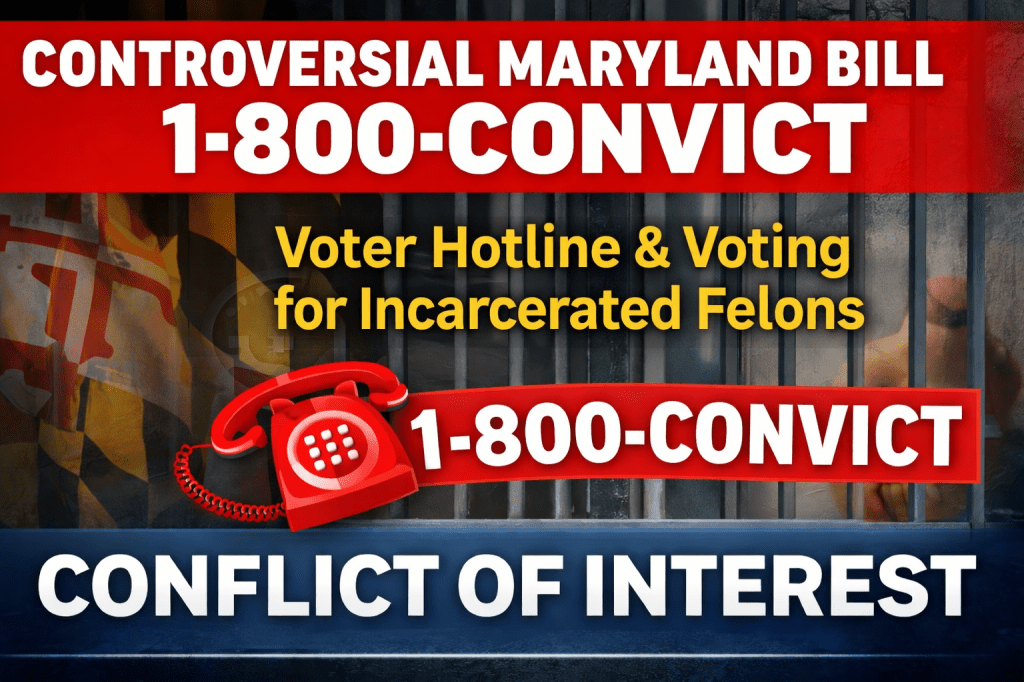
The legislation has drawn sharp criticism from Republicans in Maryland, who say it raises concerns about election integrity and priorities. State Delegate Mark Fisher (R-Calvert) took to X (formerly Twitter) to mock the proposal, referring to it as “1-800-CONVICT” and labeling it the “Dumbest Bill in America.” Fisher and other GOP lawmakers argue that establishing a state-funded hotline for incarcerated individuals to access voting materials and report alleged election issues represents a conflict of interest and could undermine public confidence in elections.
In his posts, Fisher emphasized that the hotline’s dual role — both facilitating voting access and serving as a channel for reporting rights violations — could, in his view, create incentives for misuse. Critics frame the issue as part of a broader debate over expanding voting rights versus maintaining election security.
Bill Supporters’ Position
Proponents of the bill, including its Democratic sponsors, argue that the legislation would reduce disenfranchisement and help incarcerated residents exercise their constitutional rights. Supporters often note that felony disenfranchisement disproportionately affects minority communities and that improving access to voting materials and information — even behind bars — is an important step toward a more inclusive democracy.
Advocates also point out that in a small number of U.S. jurisdictions, including Maine and Vermont, people convicted of felonies are allowed to vote from prison — a practice viewed by supporters as a model for civic engagement rather than a threat to election integrity.
Where It Stands
As of early 2026, neither chamber has advanced the bill out of committee. Lawmakers on both sides are preparing for hearings where testimony from advocates, election officials, and legal experts will shape the next stage of debate. With Maryland’s election calendar and ongoing national conversations about voting access and security, the bill is likely to remain in the spotlight as the General Assembly session progresses.
Keep Election Desk Explainings Free
Election Desk exists to explain how elections actually work — from voting rules and ballot procedures to certification, recounts, and court challenges — without spin or partisan framing.
If this explainer helped you understand the process or cleared up confusion, reader support makes it possible to keep producing clear, accessible election reporting.
 Election Desk
Leave a comment