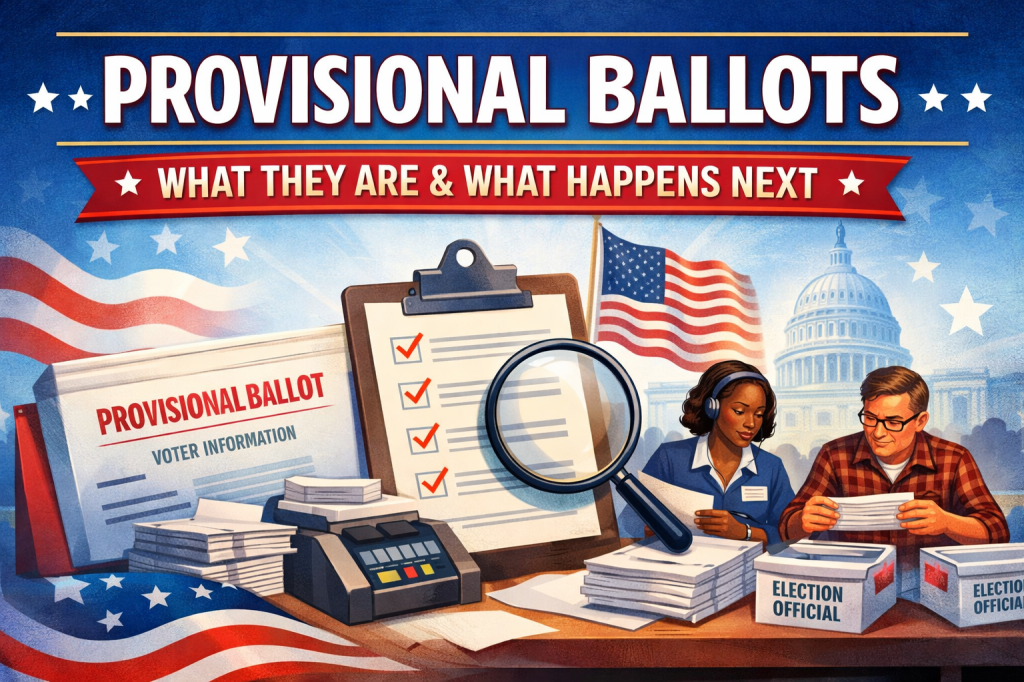
When voters hear that they cast a provisional ballot, it can sound alarming—like their vote might not count. In reality, provisional ballots are a normal, legally required part of U.S. elections. They exist to protect voters when there’s a question about eligibility at the polling place.
Here’s what a provisional ballot is, why it’s issued, and what happens after Election Day.
What Is a Provisional Ballot?
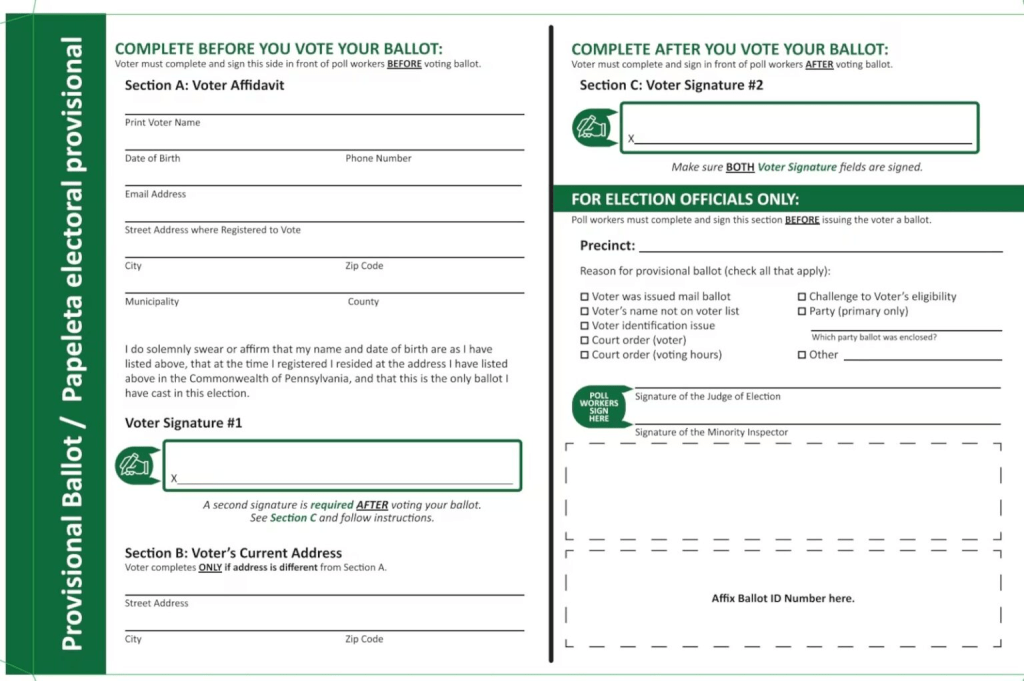
A provisional ballot is a ballot cast when election officials cannot immediately confirm a voter’s eligibility. Instead of turning the voter away, the ballot is set aside and reviewed later.
Federal law requires provisional ballots under the Help America Vote Act (HAVA), ensuring eligible voters are not disenfranchised due to administrative errors or missing information.
Why Are Provisional Ballots Issued?
Provisional ballots are most commonly issued when:
- Registration can’t be verified immediately (name not found or listed incorrectly)
- Address or precinct issues (voter went to the wrong polling location)
- ID questions (required identification not presented)
- Mail ballot conflicts (records show a mail ballot was issued but not yet returned)
- First-time voter verification issues
- Clerical or database errors
Importantly, many of these situations are caused by paperwork or system timing—not voter wrongdoing.
What Happens During Verification?
After Election Day, local election officials review each provisional ballot individually. This process typically includes:
- Confirming voter registration status
- Verifying eligibility for that election and precinct
- Checking whether any conflicting ballots were cast
- Reviewing voter-provided documentation (if required)
Oversight procedures vary by state, but all must follow state law and federal election standards. Guidance often follows best practices outlined by the U.S. Election Assistance Commission.
Deadlines Matter
Provisional ballots are not counted automatically. Voters may need to take action:
- Some states require voters to “cure” their ballot (for example, by showing ID).
- Deadlines range from a few days to over a week after Election Day, depending on the state.
- If the issue is resolved by the deadline, the ballot is counted.
Failing to meet the deadline usually means the ballot is rejected—even if the voter was otherwise eligible.
How Provisional Ballots Are Counted
If election officials determine the voter was eligible:
- The ballot is added to the official certified results
- It is counted after Election Day, during canvassing
- It is included before final certification
If only part of the ballot is valid (for example, the voter was eligible for federal races but not local ones), partial counting may occur in some states.
Common Myths About Provisional Ballots
Myth 1: Provisional ballots are “throwaway” votes
False. Millions of provisional ballots are counted nationwide each election cycle.
Myth 2: Provisional ballots are only for fraud cases
False. They are primarily used to protect lawful voters when records are unclear.
Myth 3: Provisional ballots favor one party
False. They are a neutral administrative tool governed by state law.
Myth 4: Being given a provisional ballot means you did something wrong
False. Most provisional ballots result from administrative or clerical issues.
Why Provisional Ballots Matter
Provisional ballots are a safeguard—not a punishment. They balance two core election principles:
- Ballot access for eligible voters
- Integrity of the voter rolls and results
Understanding how they work helps voters stay informed, confident, and empowered—especially in close or highly scrutinized elections.
Bottom Line
If you cast a provisional ballot:
- Your vote is not ignored
- Verification happens after Election Day
- Following up quickly can make the difference between counting and rejection
For voters, the key is simple: know your state’s cure process and deadlines.
What to Do If You Cast a Provisional Ballot: Quick Checklist
Before you leave the polling place
- ☐ Ask for your provisional ballot receipt (or tracking number)
- ☐ Confirm the reason your ballot was provisional (ID, registration, precinct, mail ballot issue)
Within 24–48 hours after Election Day
- ☐ Check your ballot status online via your state or county election office
- ☐ Write down cure deadlines (they can be very short)
If your state requires a “cure”
- ☐ Submit required ID or paperwork (online, by mail, or in person—state rules vary)
- ☐ Keep copies/screenshots of everything you submit
- ☐ Verify receipt if confirmation is available
Before the deadline
- ☐ Follow up if your status hasn’t updated
- ☐ Contact your county election office for clarification or help
- ☐ Ask whether partial counting applies (some races may still count)
After canvassing
- ☐ Check final status to confirm your ballot was counted
- ☐ Report issues if you believe your ballot was wrongly rejected
Helpful tips
- Provisional ballots are reviewed individually—don’t assume the outcome.
- Deadlines are strict; earlier is better.
- Procedures follow guidance from the U.S. Election Assistance Commission, but details are set by state law.
Keep Election Desk Explainings Free
Election Desk exists to explain how elections actually work — from voting rules and ballot procedures to certification, recounts, and court challenges — without spin or partisan framing.
If this explainer helped you understand the process or cleared up confusion, reader support makes it possible to keep producing clear, accessible election reporting.
 Election Desk
Leave a comment