
Why “Down-Ballot” Races Quietly Matter More Than the Top of the Ticket
Every four years, voters obsess over the presidential race. Cable news countdown clocks. Campaign rallies. Poll trackers.
But the truth is quieter — and more consequential.
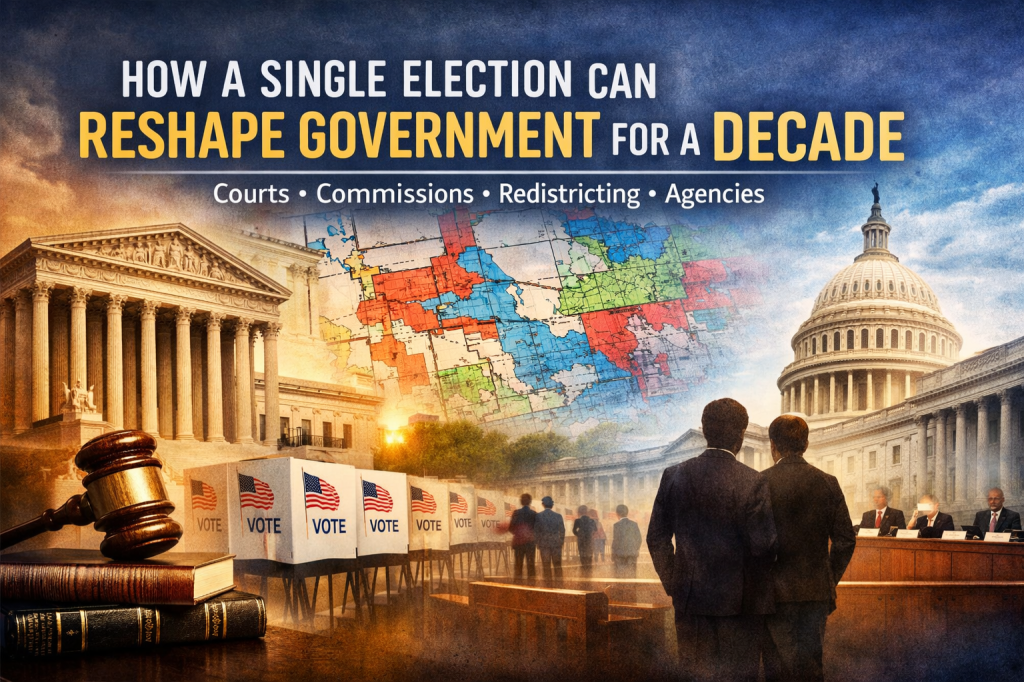
One single election cycle can quietly reshape government for ten years or more — not because of who wins the White House, but because of who wins the offices most voters barely notice.
Courts.
Commissions.
Redistricting boards.
Attorneys general.
Secretaries of state.
Regulators.
These positions often determine how power is exercised long after the top-of-ticket candidate leaves office.
1. Courts: Decisions That Outlast Presidents

Judicial races — or the elections that determine who appoints judges — can shape public policy for decades.
Consider:
- The composition of the Supreme Court of the United States
- State supreme courts in battleground states
- Federal appellate courts
- Trial-level judges overseeing election disputes
A single Senate majority can confirm dozens of lifetime federal judges in just two years. Those judges rule on:
- Voting laws
- Executive authority
- Environmental regulations
- Gun rights
- Abortion policy
- Administrative agency power
Even state-level judicial races matter. State supreme courts frequently decide redistricting challenges, ballot access disputes, and election administration conflicts.
The voters may focus on the presidential headline. But the Senate majority that confirms judges may prove more lasting.
2. Redistricting: Drawing the Map Is Drawing the Future

Every ten years, after the census, district lines are redrawn.
The party that controls state legislatures and governorships during that redistricting window often locks in structural advantages for an entire decade.
Who controls:
- State houses
- State senates
- Governorships
- Redistricting commissions
…determines the shape of congressional maps and legislative districts.
A wave election in a census year can:
- Protect incumbents
- Create safe districts
- Flip competitive seats
- Alter partisan balance for ten years
Most voters do not realize that the “boring” midterm two years before redistricting can be the most important election of the decade.
3. Election Administration: The Referees Matter

Secretaries of state, election boards, and county clerks rarely receive national attention.
Yet they:
- Certify election results
- Interpret ballot access rules
- Oversee voter roll maintenance
- Implement ID requirements
- Manage early voting systems
These officials become especially consequential during disputed elections.
A governor elected in an “off year” may later appoint election commissioners who oversee a presidential contest. That appointment can shape legal interpretations, procedural rules, and recount standards.
The referee often matters as much as the teams on the field.
4. Regulatory Agencies: Quiet Power Centers
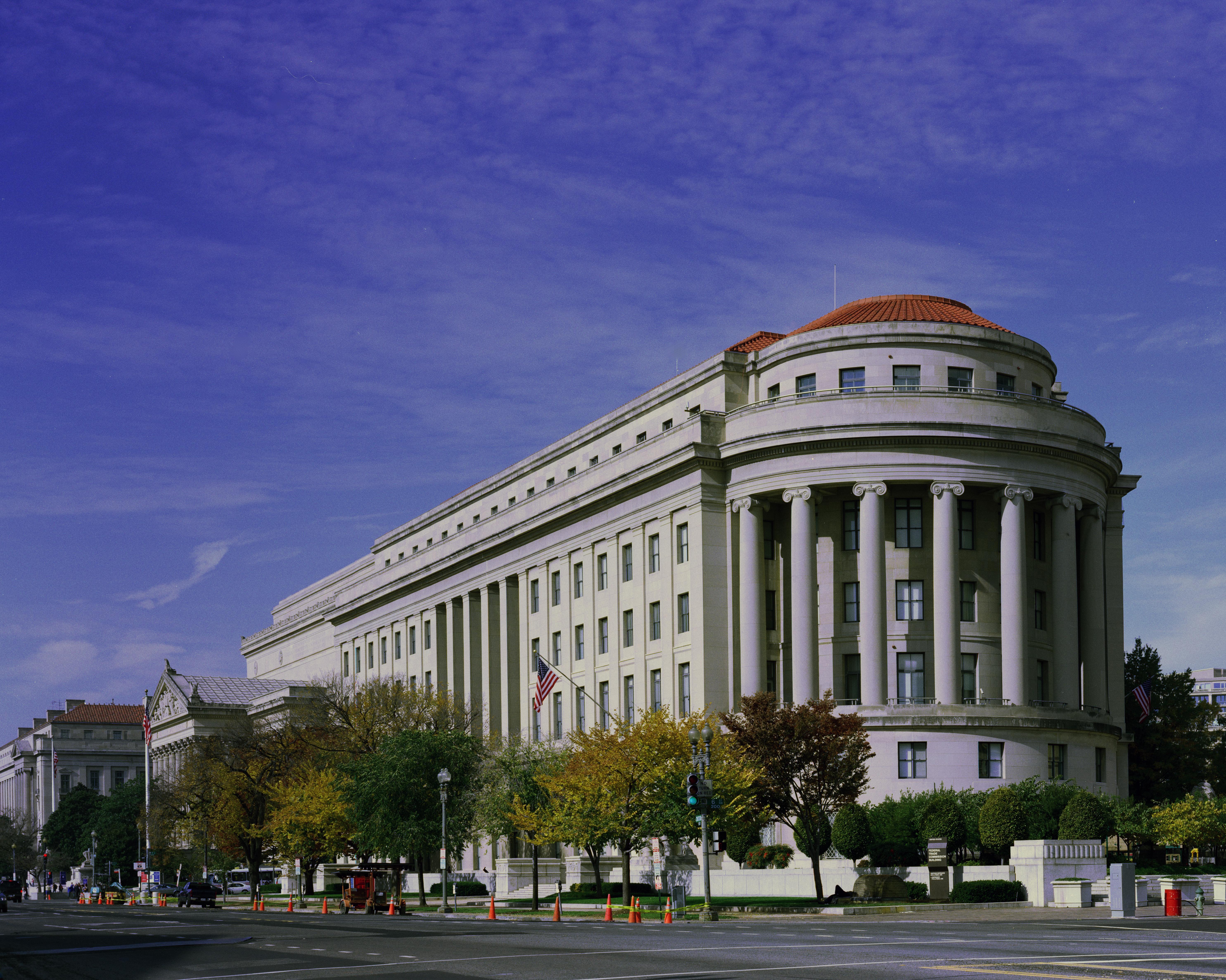
Many voters do not realize how much policy is made by agencies rather than legislators.
Control of:
- Public utility commissions
- Environmental boards
- Labor boards
- Education boards
- State public service commissions
…can determine energy rates, school standards, environmental rules, and business regulations.
In some states, these positions are elected. In others, they are appointed by governors who were elected in low-turnout cycles.
A governor elected in a “sleepy” year may shape regulatory policy for eight years — well beyond the political lifespan of a single congressional term.
5. Attorneys General: The Multi-State Lawsuit Strategy
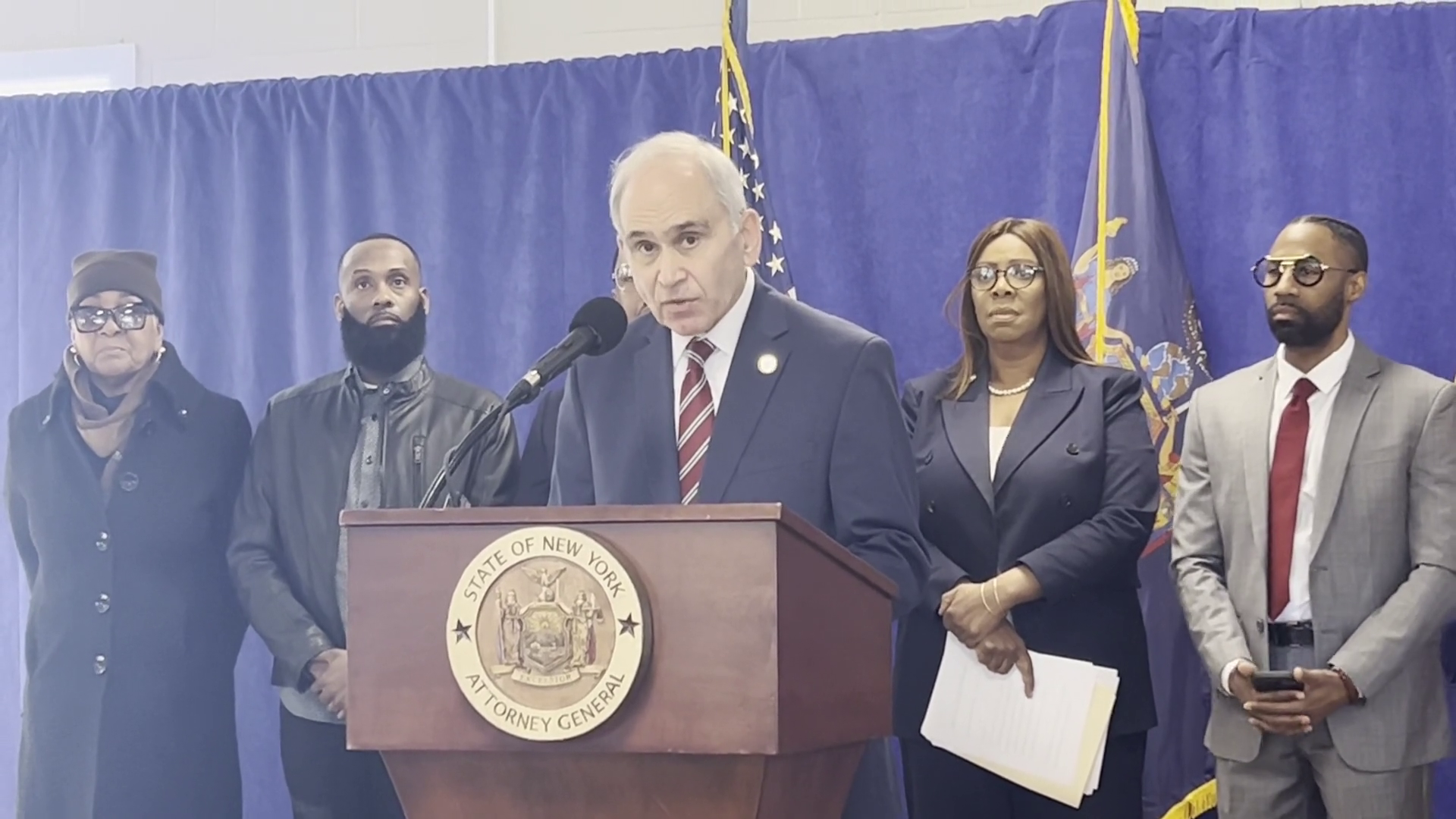
State attorneys general have become some of the most powerful political actors in America.
They:
- Challenge federal policies
- Defend state laws
- Join multi-state coalitions
- Initiate constitutional litigation
A coordinated group of attorneys general can freeze national policy in court — or defend it aggressively.
These races are often down-ballot and frequently overlooked.
Yet they can define national legal battles for years.
Why Down-Ballot Races Matter More Than You Think
Presidents serve four years (or eight).
Governors serve four years (sometimes eight).
But:
- Judges may serve decades.
- Maps last ten years.
- Agency rules can shape markets long after administrations change.
- Election systems built today govern the next cycle.
In many cases, voters fixate on personalities at the top of the ballot while structural power is quietly decided further down.
The Decade Effect
Political power compounds.
One election can:
- Secure a legislative majority before redistricting
- Confirm lifetime judges
- Install regulators
- Shape election oversight
- Influence constitutional interpretation
And those decisions often outlast the news cycle — and even the presidency itself.
The most transformative elections are not always the loudest ones.
They are the ones that determine who writes the rules, draws the maps, appoints the referees, and interprets the Constitution.
 Election Desk
Leave a comment