
Tag: history
-
How Ballot Measures and Referendums Work
This guide explains direct democracy through ballot measures, enabling voters to directly influence public policy. It covers definitions, types (initiatives, referendums, legislative measures), the process for ballot placement, voting mechanics, and state-specific rules. Voters can shape legislation on various issues, highlighting the complexities of state-level governance and voter empowerment.
-
What Does “Election Certification” Really Mean?
Election certification is a crucial, legal process confirming the accuracy of election results after vote counting. It is mandatory for officials and does not allow for altering outcomes or resolving disputes. Certification ensures a consistent conclusion to elections, upholding democratic integrity and distinguishing between counted results and official outcomes.
-
What the 2026 Election Cycle Signals About Voter Behavior
As the 2026 midterm elections approach, American voter behavior reflects widespread dissatisfaction with both major parties. Dissident sentiments towards governance emphasize accountability, with economic issues dominating priorities. A motivating gap appears, particularly among Democrats, while demographic shifts highlight independence. Voters seek competent candidates, focusing on tangible results over partisan loyalty.
-

How Election Lawsuits Actually Work
Election-related lawsuits are integral to American democracy, governed by legal standards like standing, timely filings, and available remedies. Plaintiffs must demonstrate concrete injuries, causation, and timeliness in filing claims. Many lawsuits fail due to lack of standing, missed deadlines, or speculative claims, emphasizing the importance of legal rigor in electoral processes.
-
Why State Elections Matter More Than Most Voters Realize
State elections play a critical role in Americans’ daily lives, influencing laws, education, taxation, and judicial outcomes more directly than federal elections. Governors hold significant power during crises, while state legislatures shape the judiciary. As states test policies, voter participation in state races is crucial for accountability and ensuring fair governance.
-
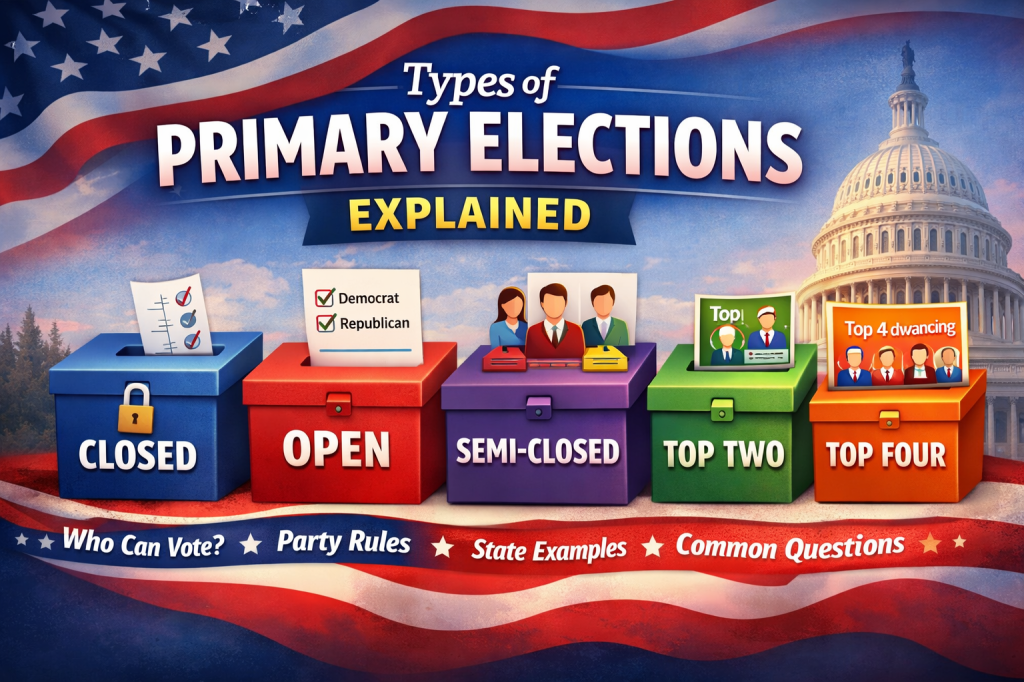
Primary Elections Explained: Closed, Open, Semi-Closed, Top-Two, Top-Four
Primary elections in the U.S. determine candidates for the general election, varying by state and party. There are five main systems: Closed, Open, Semi-Closed, Top-Two, and Top-Four Primaries. Each system affects voter access and candidate strategies. Understanding these systems is crucial for informed voting and recognizing primary significance.
 Election Desk