Tag: How elections work
-
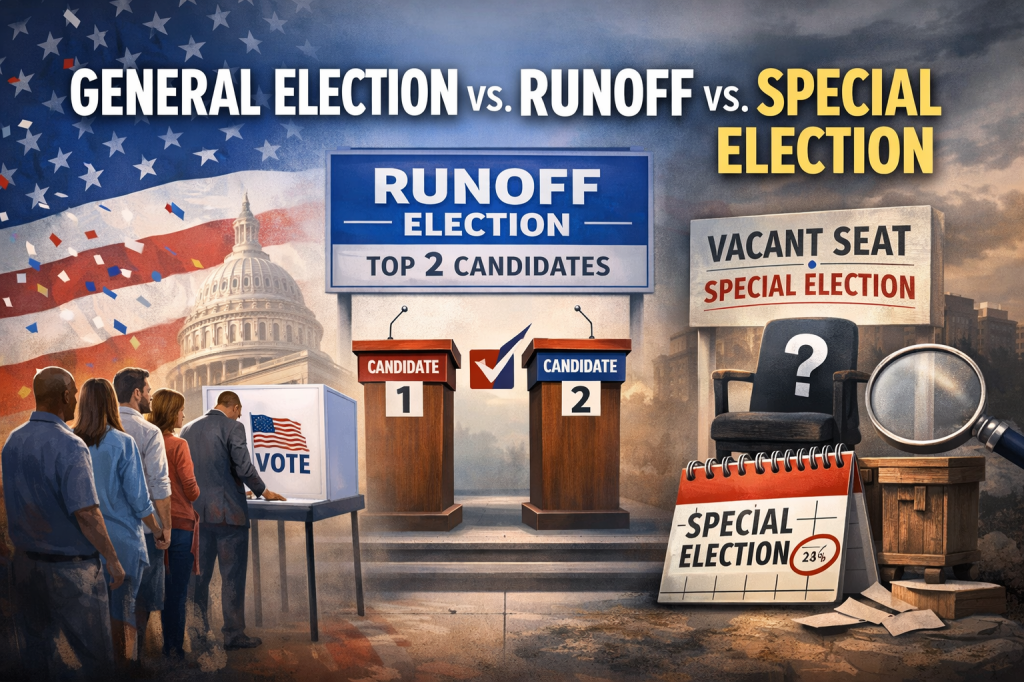
General Elections vs. Runoffs vs. Special Elections — What’s the Difference?
Elections serve different purposes: general elections select officeholders, runoff elections ensure a majority winner when initial votes are inconclusive, and special elections fill unexpected vacancies. Voter turnout varies, with general elections attracting the most participants, while special elections typically see the least. Understanding these dynamics is crucial for comprehending electoral outcomes.
-

How Election Lawsuits Actually Work
Election-related lawsuits are integral to American democracy, governed by legal standards like standing, timely filings, and available remedies. Plaintiffs must demonstrate concrete injuries, causation, and timeliness in filing claims. Many lawsuits fail due to lack of standing, missed deadlines, or speculative claims, emphasizing the importance of legal rigor in electoral processes.
-
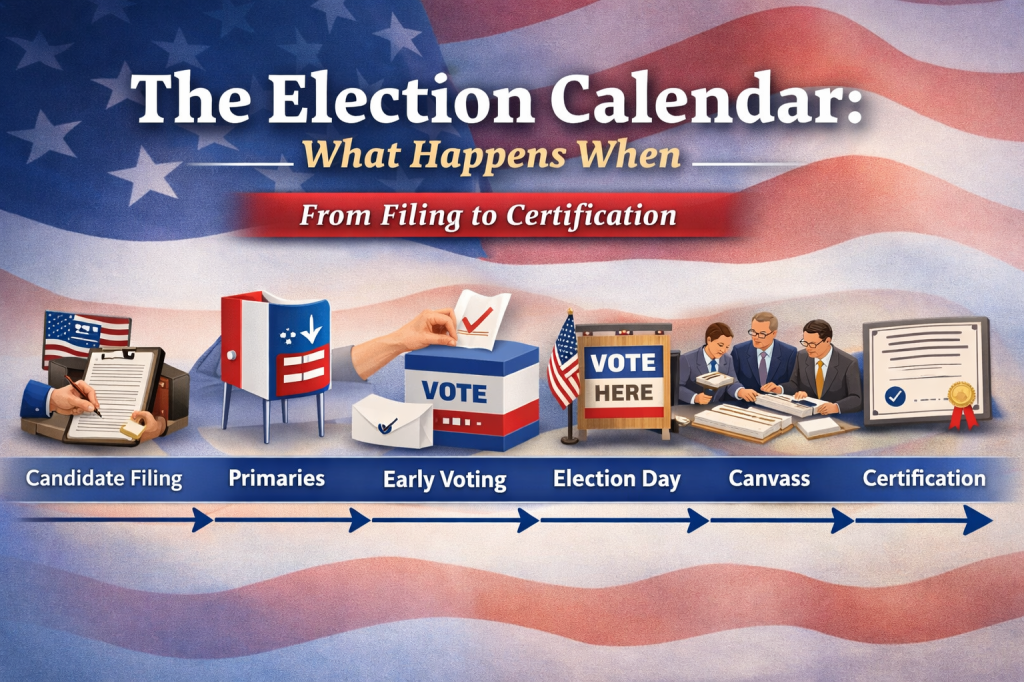
The Election Calendar: What Happens When (From Filing to Certification)
The election timeline comprises six key phases: candidate filing, primaries, early and absentee voting, Election Day, canvass for counting verification, and certification of results. Each phase is crucial for ensuring election accuracy and legality, impacting voter choice and procedural integrity while explaining delays and changing results in close races.
 Election Desk