By Election Desk Staff
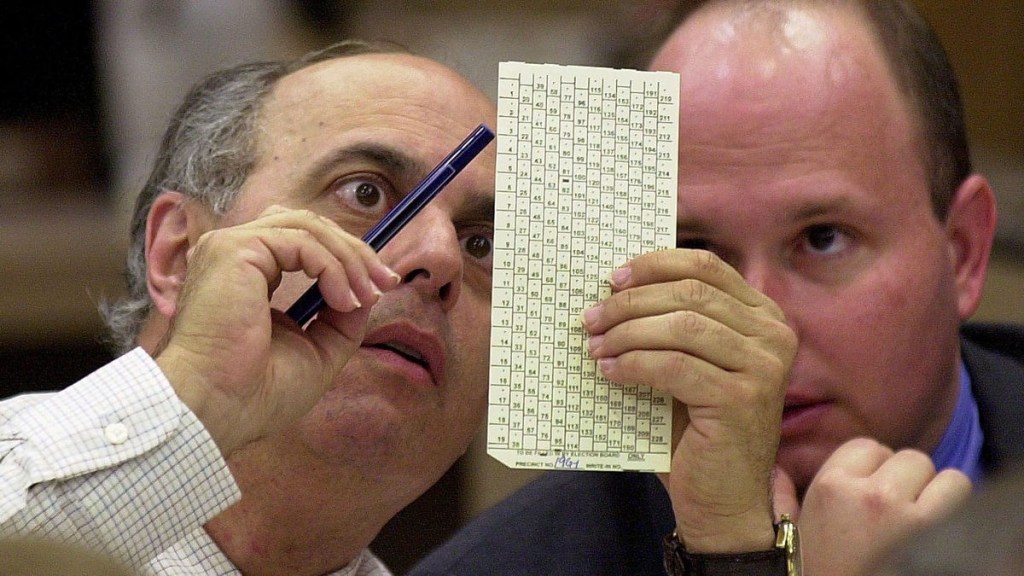
Twenty-five years after the Supreme Court halted Florida’s presidential recount, the legacy of Bush v. Gore still shapes how Americans vote, how states run elections, and how courts intervene when disputes arise.
A new analysis from the Brennan Center for Justice argues that the decision’s influence has never really faded. Instead, it hardened a system where election rules are increasingly litigated, outcomes are more frequently challenged, and the judiciary plays a larger—often controversial—role in electoral outcomes.
A Decision Meant to Be “Limited” — But Wasn’t
When the Supreme Court of the United States issued its ruling in December 2000, the majority famously claimed the decision was “limited to the present circumstances.” The Court stopped Florida’s recount, effectively awarding the presidency to George W. Bush.
But as the Brennan Center notes, that disclaimer did little to prevent long-term consequences. Instead, Bush v. Gore became a reference point—sometimes explicit, sometimes implicit—for later disputes over recounts, ballot standards, and judicial authority in elections.
The ruling sent a clear signal: federal courts could step into the mechanics of election administration when they believed constitutional principles were at stake.
The Rise of Election Litigation
One of the most enduring impacts of Bush v. Gore has been the normalization of post-election lawsuits. Before 2000, election challenges existed, but they were rarer and often confined to narrow procedural issues.
Today, litigation is routine. Campaigns prepare legal teams in advance. Courts are asked to rule on ballot access, signature verification, drop boxes, recount standards, and certification timelines—sometimes in real time as votes are being counted.
According to the Brennan Center, Bush v. Gore helped open the door to this environment by demonstrating that courts could decisively influence electoral outcomes, not just resolve technical disputes.
Federalism Under Strain
Traditionally, states have wide authority to administer elections. That balance has grown more fragile over the past quarter century.
Since 2000, federal courts have weighed in more frequently on state election rules, often under equal protection or due process theories. Critics argue this undermines state control and creates inconsistent standards nationwide. Supporters counter that judicial oversight is necessary to protect voters from arbitrary or unequal treatment.
Either way, the post–Bush v. Gore era has blurred the line between state discretion and federal intervention—especially during high-stakes national elections.
The Confidence Problem
Perhaps the most consequential legacy is not legal, but cultural.
The 2000 election introduced the idea that razor-thin margins, administrative discretion, and judicial rulings—not just voters—can decide who wins the presidency. That perception has only intensified in the decades since.
The Brennan Center warns that repeated legal battles, conflicting court rulings, and last-minute changes to election rules risk eroding public trust. When courts become central actors in elections, many voters are left questioning whether outcomes are truly final—or fundamentally political.
Still Searching for Clarity
Twenty-five years later, Bush v. Gore remains unresolved in one key sense: the country still lacks a clear, stable framework for handling close elections.
Congress has made incremental reforms, and states have modernized voting systems, but the underlying tension persists. Courts continue to face pressure to act quickly, often with limited guidance, in politically charged environments.
As the Brennan Center argues, the lesson of Bush v. Gore is not just about one election. It’s about how fragile democratic systems can become when legal uncertainty, political polarization, and judicial power collide.
Why It Still Matters
With contested elections no longer unthinkable—and legal challenges now expected—Bush v. Gore remains a cautionary tale. It reminds Americans that election law is not abstract. It determines how votes are counted, how disputes are resolved, and ultimately, how legitimate outcomes appear to the public.
A quarter century later, the shadow of 2000 still looms over every close race—and the system has yet to fully step out from under it.
Election Desk covers election law, voting rules, ballot access, and the institutions that shape American democracy—without the spin.
 Election Desk
Leave a comment