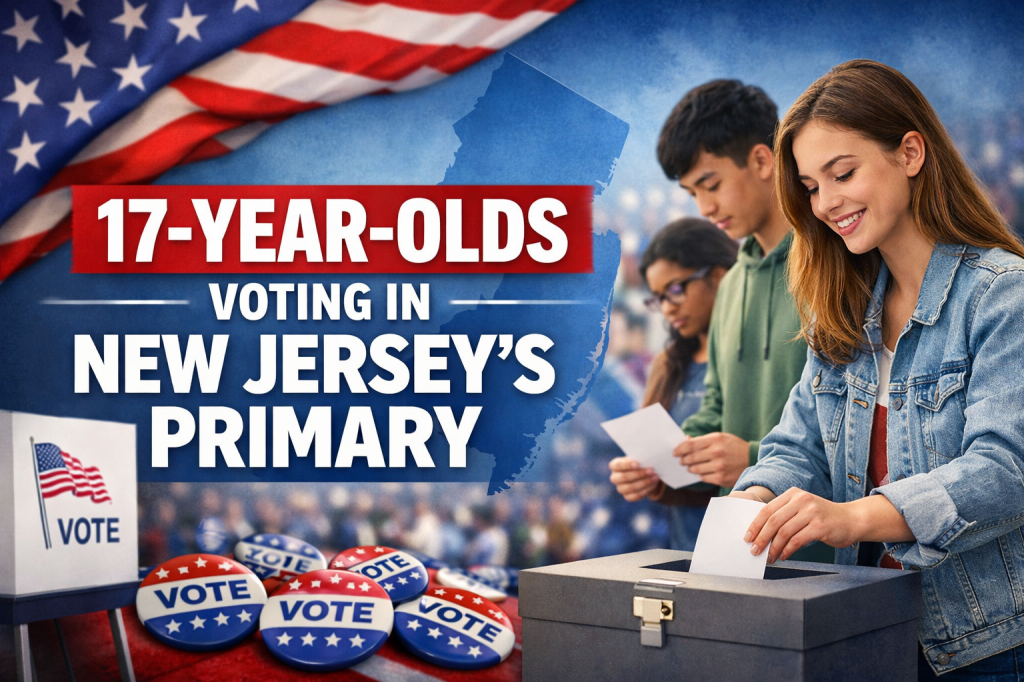
New Jersey is breaking new ground in youth participation in American elections this year, as a state law passed in 2024 goes into effect for the first time in a special congressional primary. Seventeen-year-olds who will be 18 by the general election are eligible to vote in the Feb. 4, 2026 primary to fill the U.S. House seat vacated by Mikie Sherrill after her election as governor.
A New Voter Law in Practice
Under the New Voter Empowerment Act, signed by Governor Phil Murphy, New Jersey expanded primary voting eligibility so that some 17-year-olds can cast ballots — provided they will be of legal voting age by the subsequent general election. The law went into effect Jan. 1, 2026, marking its first real test in the Garden State’s special election cycle.
The special primary in the 11th Congressional District has drawn extra attention not just because of the competitive field of candidates, but because it gives thousands of high school seniors a chance to exercise the franchise sooner than before. Students like 17-year-old Saanvi Kulkarni of Livingston are among the first cohort able to vote, with plans to participate both in the upcoming primary and the special general election on April 16, 2026.
Aimed at Civic Engagement
Supporters of the change, including election officials and civic groups, argue that allowing 17-year-olds to participate in primaries can strengthen democratic engagement and encourage lifelong voting habits. Proponents say that engaging young people in the electoral process earlier — when they are still in school and perhaps more connected to community issues — can lead to higher overall participation rates over time.
Beth Thompson, president of the New Jersey Association of Election Officials, explained that the law is designed to “make teens aware of their civic duties and get them involved with the democratic process.” Advocates from the League of Women Voters of New Jersey and Rutgers University’s Eagleton Institute echoed the view that early involvement fosters enduring civic habits.
A Broader Trend
New Jersey is part of a broader trend among states. According to election law experts, about one-third of U.S. states — along with the District of Columbia — already allow 17-year-olds to vote in primaries if they will turn 18 by the general election. These laws aim to reduce barriers to voting and normalize participation among younger cohorts.
Critics of lowering voting age thresholds generally argue that younger voters lack sufficient life experience or political knowledge. But proponents counter that civic engagement education and early participation can help bridge those gaps, making the electorate more representative and inclusive.
Real-World Impact
In the 11th District, more than 1,500 newly eligible 17-year-olds are poised to vote in the primary, and many more will be eligible by the general election. The district’s voter registration processes opened in advance of the primary, with county boards offering both in-person and online registration options.
With issues like climate policy, economic opportunity, and education topping the list of concerns for many young voters, advocates say involving these new voters can change the tone of local and national politics over time. How much impact this cohort will have in New Jersey’s special election — and whether similar laws will spread to other states — remains an open question as the 2026 election cycle unfolds.


Leave a comment