Tag: elections
-
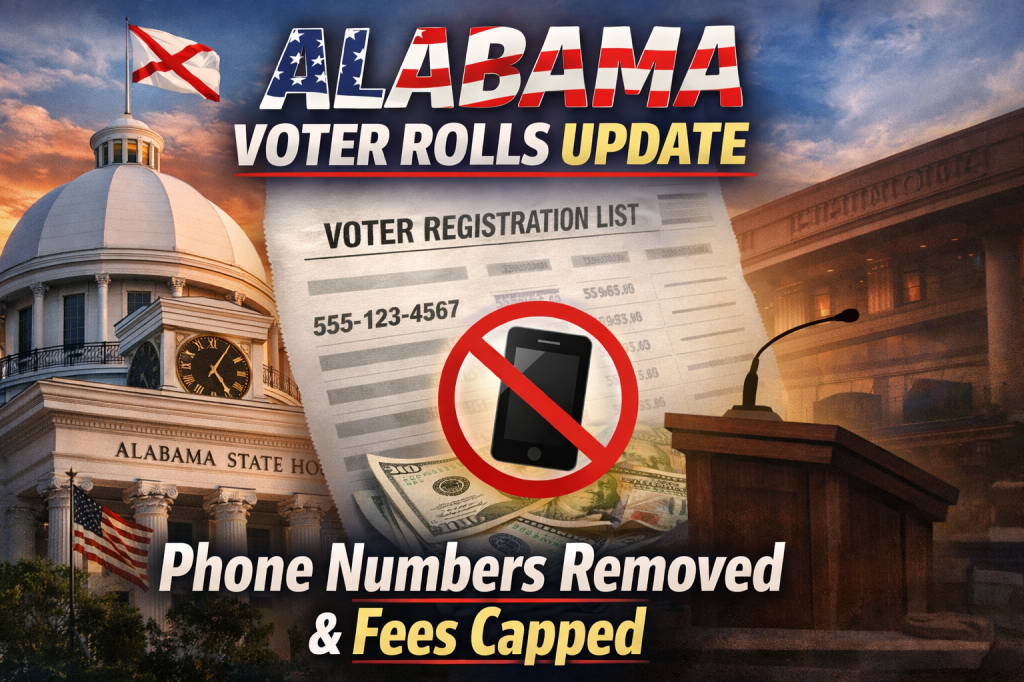
Alabama House Advances Bill to Strip Phone Numbers from Voter Rolls
The Alabama Legislature passed House Bill 67, altering voter registration data handling by removing phone numbers from official lists and capping access costs at $1,000. The bill, aimed at protecting voter privacy and reducing robocalls, allows voters to opt in for phone number inclusion. It now goes to the Senate for consideration.
-
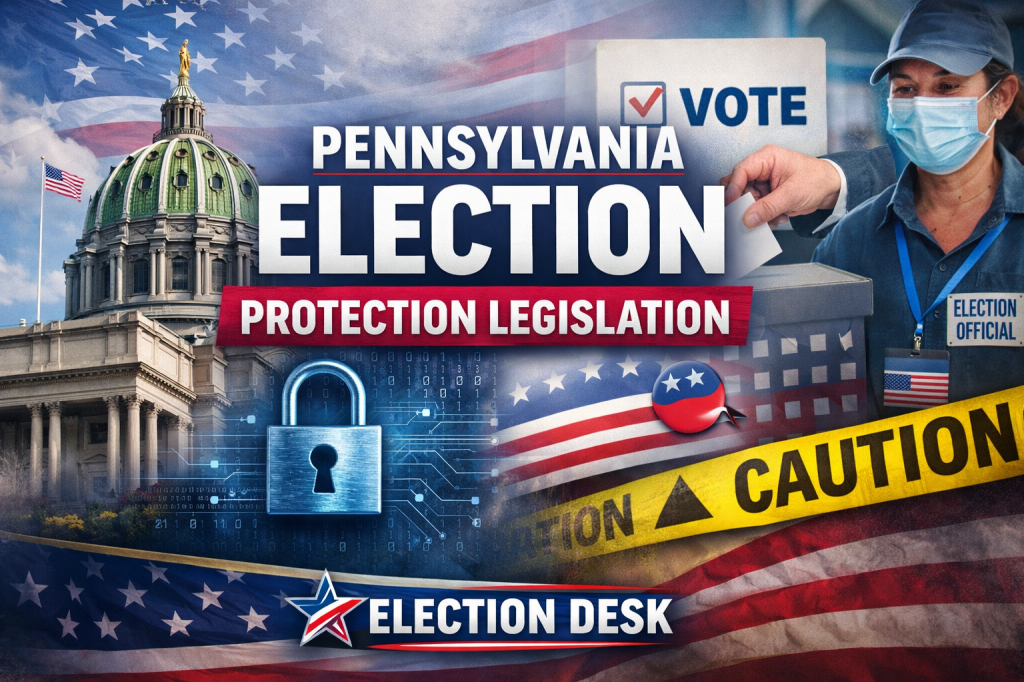
Pennsylvania Lawmakers Propose Election Protection Bill to Guard Voter Data and Shield Election Workers
A bipartisan group of Pennsylvania legislators has introduced the Protecting Voter Privacy and Pennsylvania Elections from Political Interference Act. This bill aims to secure voter privacy, state control over election systems, and shields election officials from political intimidation. It seeks to restore public confidence in elections amid ongoing debates about election integrity.
-

Secret Money, Loud Consequences: How Dark Cash Is Warping Democratic Primaries
Key Democratic primaries are increasingly influenced by secret money from Super PACs and outside spending groups, undermining voter agency and accountability. Despite Democrats’ public opposition to big money, these entities exploit opaque funding to shape electoral outcomes, raising concerns about the connection between candidates and constituents and the overall integrity of democracy.
-

Michigan Group Claims Enough Signatures to Put Citizenship, Voter ID Question on 2026 Ballot
A conservative group in Michigan, Secure MI Vote, has gathered enough signatures for a proposed constitutional amendment to appear on the 2026 ballot. The amendment requires proof of U.S. citizenship and photo ID for voting. Supporters believe it enhances election security, while opponents fear it may restrict access and invite legal challenges.
-
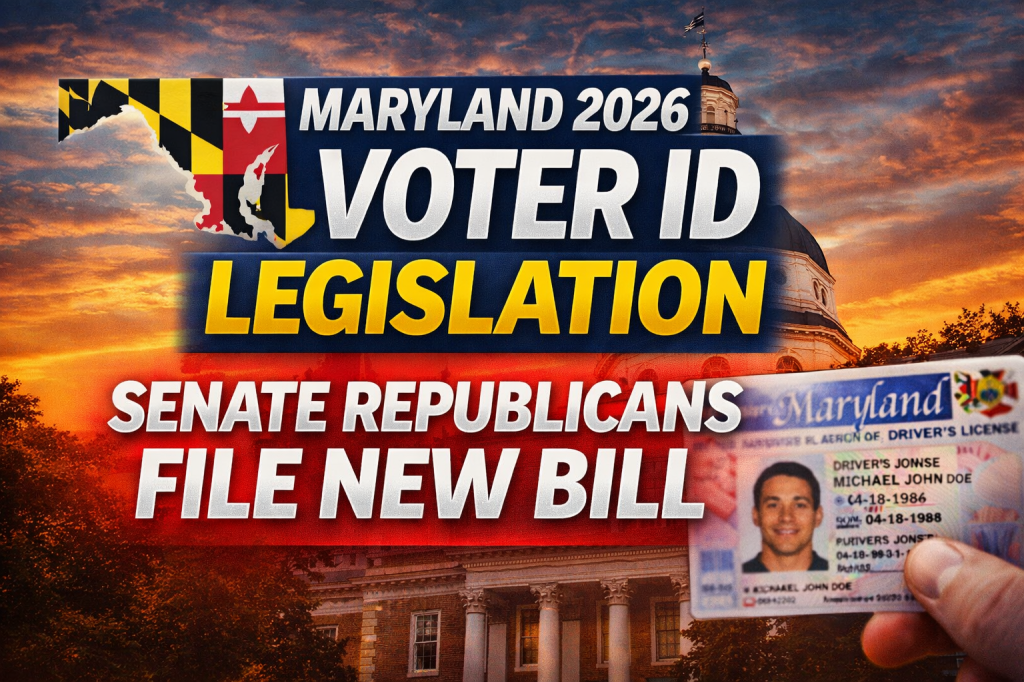
Maryland Voter ID Debate Returns as Republicans File New Bill
Maryland’s current voting laws do not require photo ID for most voters, but a new Republican proposal seeks to change this by mandating government-issued identification before voting. Supporters argue it enhances election security, while critics warn it may disenfranchise marginalized voters. The bill awaits further legislative action.
-
Iowa Election Law “Tweaks” Advance Through State House Amid Broader 2026 Legislative Activity
A bill proposing changes to Iowa’s election laws has advanced in the House, aiming to streamline candidate petition processes by shifting responsibility to county auditors. Advocates emphasize efficiency and integrity ahead of the 2026 elections, while critics express concerns about the political implications. The proposal still requires further legislative approval.
-
Florida Lawmakers Move to Add Citizenship Verification to Voter Registration
Florida legislators are advancing House Bill 985, which mandates citizenship verification for voter registration and introduces stricter ID requirements. Proponents argue it ensures election integrity, while opponents view it as unnecessary and potentially suppressive. This measure reflects national trends on voter eligibility, emphasizing the ongoing debate between election security and access.
-
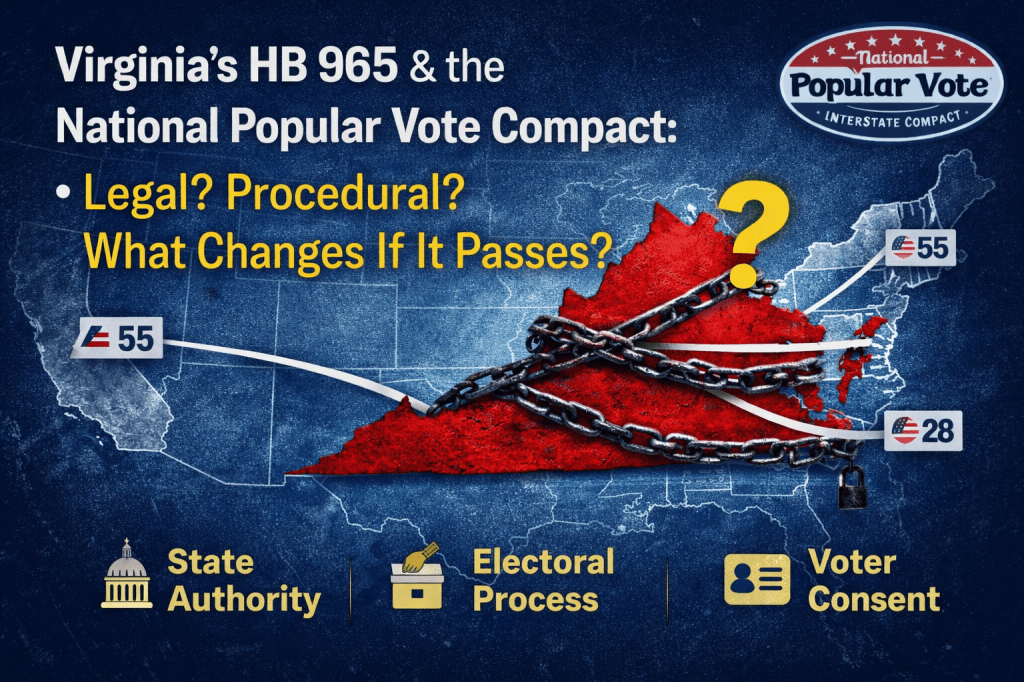
Virginia’s HB 965 and the National Popular Vote Compact: How It Works—and What Changes If It Passes
Virginia lawmakers are considering HB 965, which would allow the state to join the National Popular Vote Interstate Compact. This agreement aims to elect presidents based on the national popular vote instead of the Electoral College system. Critics voice concerns about voter consent and the shift in electoral authority from states to a national standard.
-
Washington Legislature Moves to Clarify What Counts as an “Election” After Court Reverses Double-Voting Conviction
Washington state lawmakers are advancing Senate Bill 6084 to clarify the definition of an “election” after a court ruling raised questions about double voting. The bill would ensure that ballots cast on the same day in different states are considered the same election, aiming to uphold election integrity and prevent ambiguity ahead of the 2026…
-
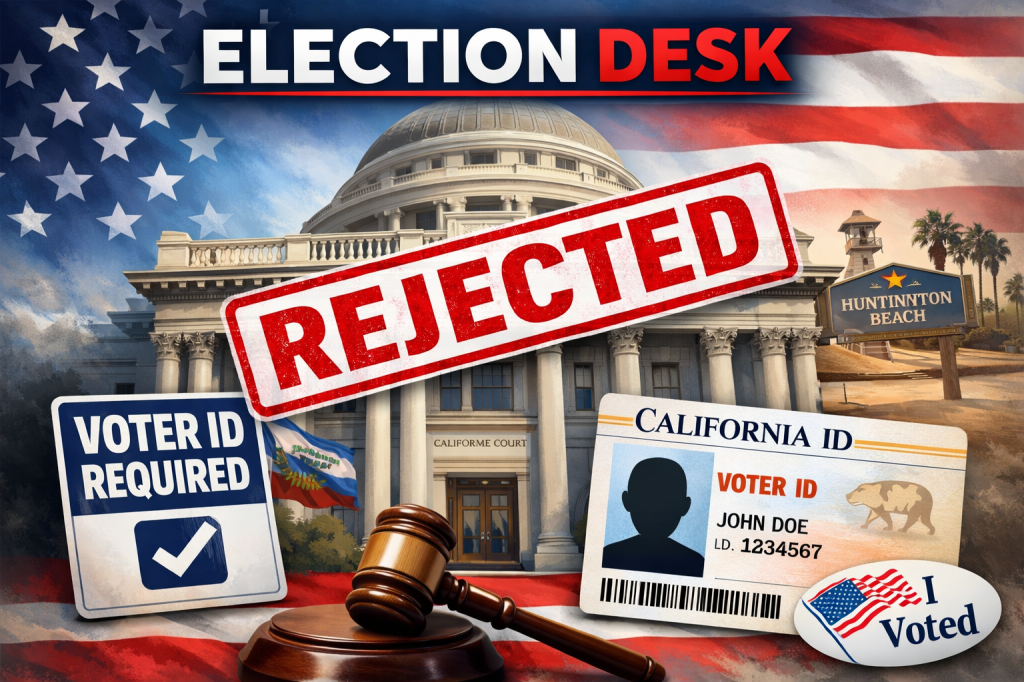
California Supreme Court Ends Huntington Beach’s Voter ID Law Fight
The California Supreme Court’s decision not to review an appeal from Huntington Beach has invalidated a voter ID requirement approved by local voters in 2024. The ruling affirms state authority over election laws, halting local efforts that critics say could suppress voter turnout while advocates argue they enhance election integrity. A new statewide initiative may…
 Election Desk