
Category: Virginia
-

Virginia Democrats Unveil Aggressive 10–1 Congressional Map as Courts Weigh Redistricting Authority
Virginia Democrats have proposed a “10–1 map” to reshape congressional districts, aiming to secure 10 of 11 House seats. This proposal comes amid legal uncertainty as Virginia’s courts question their role in redistricting. The outcomes may significantly influence the 2026 elections and future redistricting processes nationally.
-
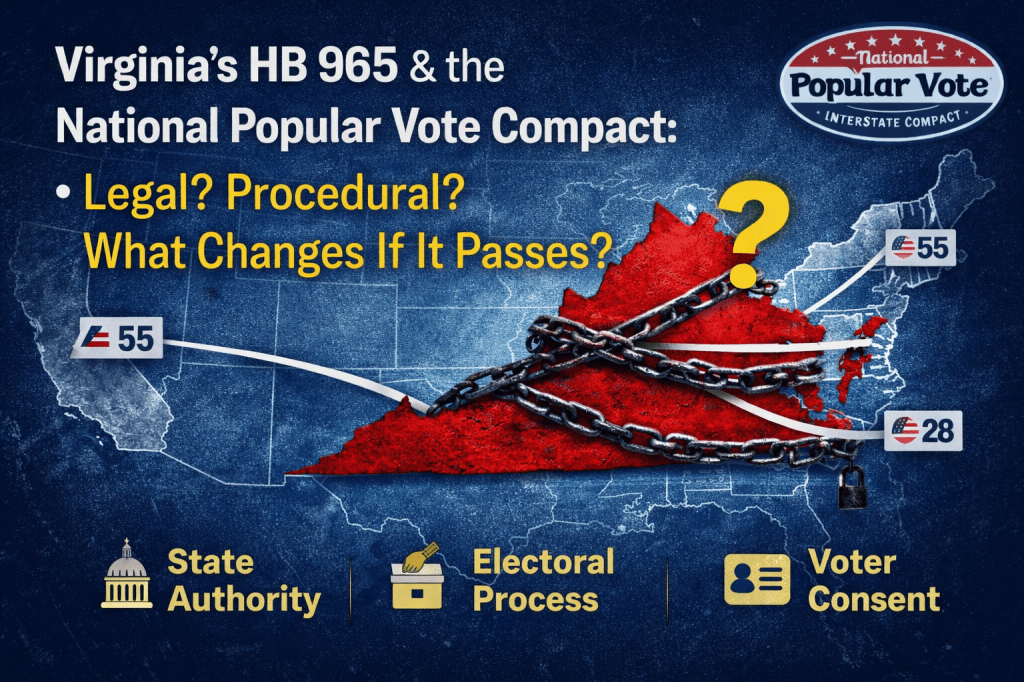
Virginia’s HB 965 and the National Popular Vote Compact: How It Works—and What Changes If It Passes
Virginia lawmakers are considering HB 965, which would allow the state to join the National Popular Vote Interstate Compact. This agreement aims to elect presidents based on the national popular vote instead of the Electoral College system. Critics voice concerns about voter consent and the shift in electoral authority from states to a national standard.
-
Federal Judge Blocks Virginia Voting Restrictions, Revives Reconstruction-Era Law
A federal judge has blocked parts of Virginia’s voting restrictions, citing likely violations of federal law related to voter eligibility. The ruling, referencing the Virginia Readmission Act of 1870, revives historical protections and may influence future election law by affecting similar statutes in other states, especially concerning voting rights for felons.
-
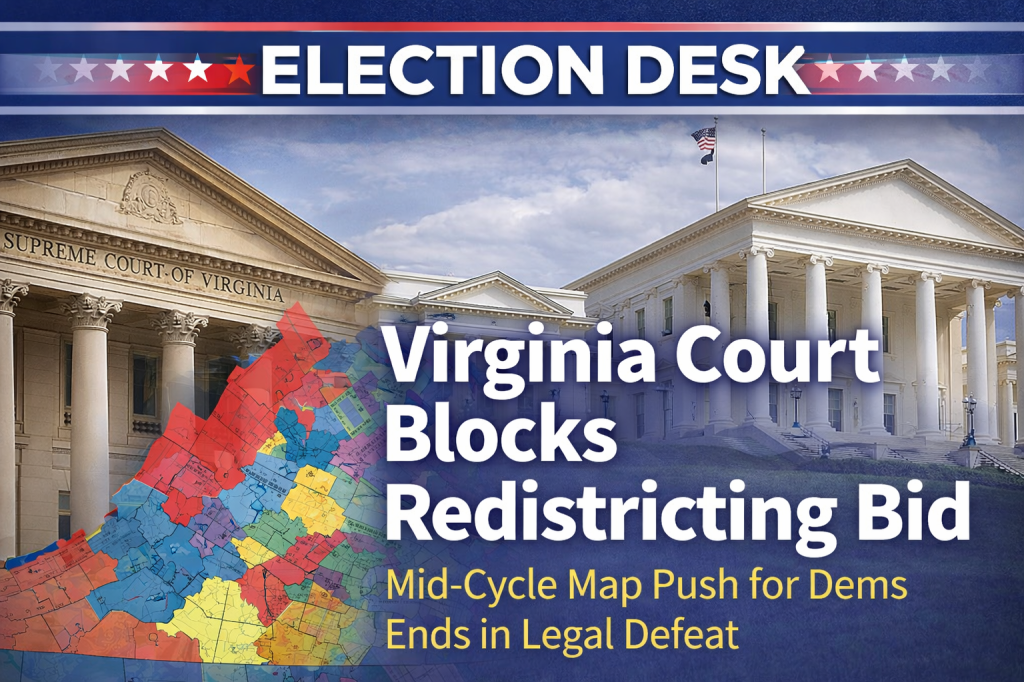
Virginia Court Stops Mid-Cycle Redistricting Push
A Virginia court has blocked a Democratic proposal for a mid-decade redistricting amendment intended for the 2026 elections, citing noncompliance with state constitutional procedures. Judge Jack Hurley Jr. found that the amendment failed to meet required notice and timing obligations. Democrats plan to appeal, but current congressional maps will remain unchanged for 2026.
-

Why Virginia Governors Can Serve Only One Term
Virginia has a unique gubernatorial term-limit, allowing governors only one four-year term without immediate re-election. This constitutional rule aims to prevent consolidation of power and promote leadership turnover, resulting in open-seat elections and shifting political control. Understanding this structure is crucial for evaluating Virginia’s distinct political landscape.
 Election Desk