
Tag: congressional elections
-
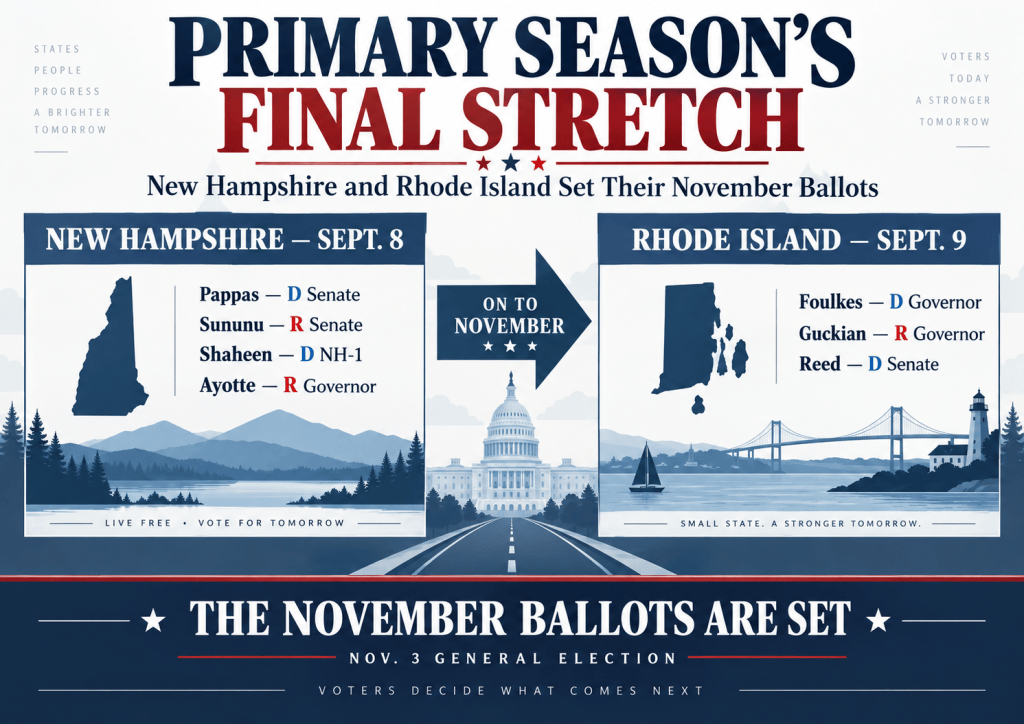
New Hampshire and Rhode Island Set Their November Ballots as Primary Season Closes
New Hampshire and Rhode Island concluded their primary elections, finalizing nominations for key Senate, gubernatorial, and House races. In New Hampshire, Chris Pappas and John E. Sununu will compete for an open Senate seat, while in Rhode Island, Helena Buonanno Foulkes defeated incumbent Gov. Dan McKee. General elections are set for November 3.
-
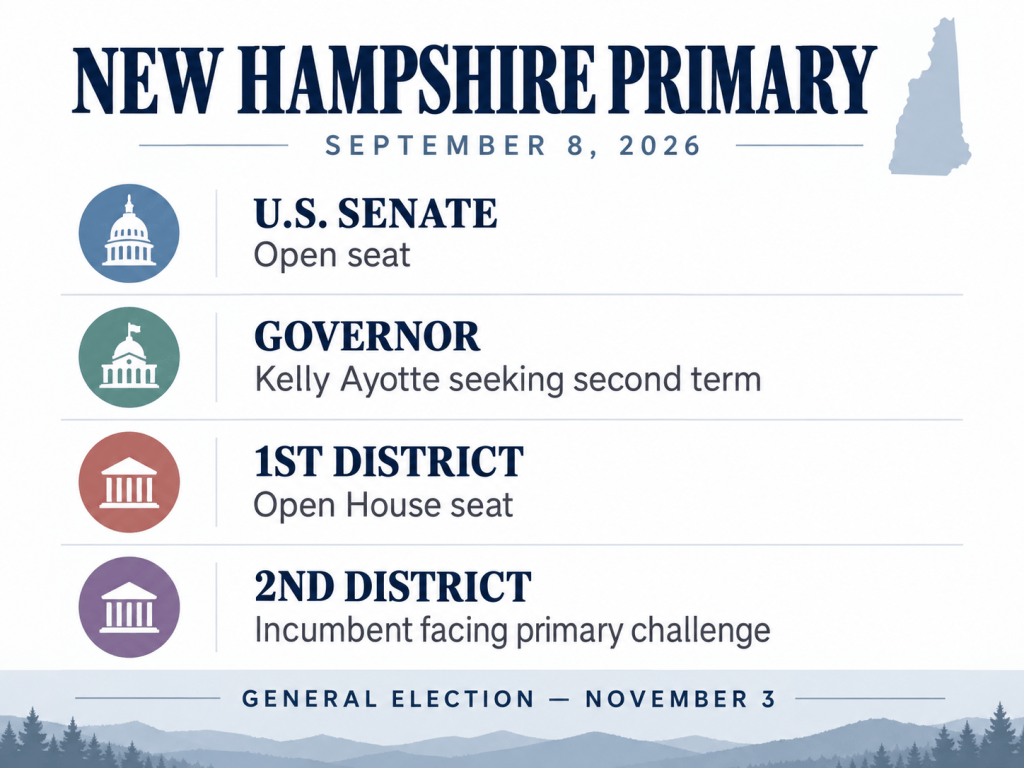
New Hampshire voters set party nominees Tuesday in first open U.S. Senate race in nearly two decades
New Hampshire’s state primary on September 8 will determine nominees for an open U.S. Senate seat, a reelection bid by Gov. Kelly Ayotte, and two U.S. House races. With no incumbent for the first time since 2008, nine Democrats are vying for the 1st District, while both parties face various challengers statewide.
-
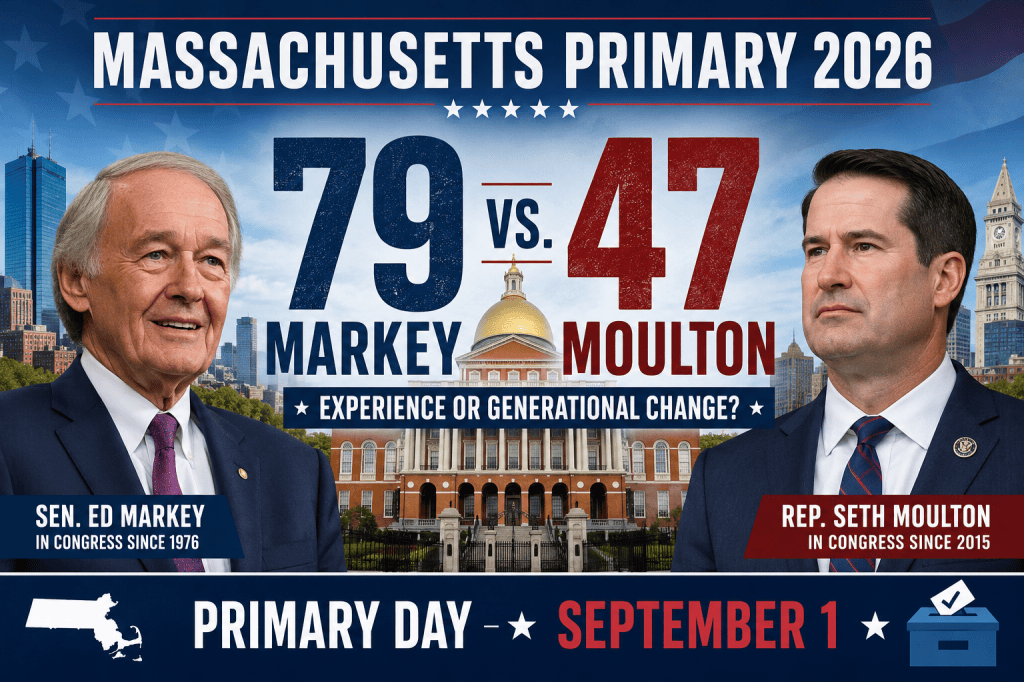
Massachusetts Heads Into a Sept. 1 Primary Dominated by a Generational Fight Over Ed Markey’s Senate Seat
Massachusetts voters will decide in a primary election on September 1 if 79-year-old Sen. Ed Markey should be renominated over Rep. Seth Moulton, who advocates for generational change. Early voting is from August 22-28, with registration closing August 22. The election includes races for governor, U.S. House, and district attorney positions, amid various ballot questions…
-
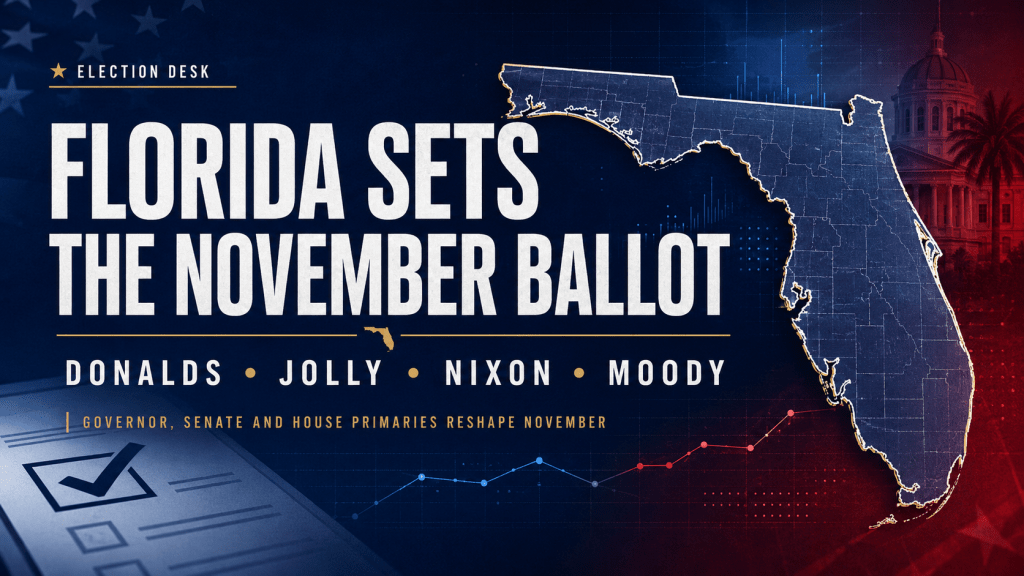
Donalds, Jolly Advance in Florida Governor’s Race; Nixon Upsets Vindman in Senate Primary as GOP Incumbent Falls in FL-07
Florida’s primary elections on August 18 featured significant developments, including Byron Donalds and David Jolly securing nominations for governor. Senator Ashley Moody and Democrat Angie Nixon also advanced in their races. A new congressional map influenced primaries, culminating in notable incumbent losses, especially in the 7th District, shaping the upcoming November elections.
-

When the Court Steps Aside: California’s Mid-Decade Redistricting and Its National Implications
The U.S. Supreme Court allowed California’s revised congressional map to take effect for the 2026 elections, highlighting ongoing issues in redistricting. While it declined to rule on mid-cycle redistricting’s constitutionality, the decision may encourage other states to explore similar changes. Future challenges will likely focus on concrete violations rather than partisan motives.
-
What the 2026 Election Cycle Signals About Voter Behavior
As the 2026 midterm elections approach, American voter behavior reflects widespread dissatisfaction with both major parties. Dissident sentiments towards governance emphasize accountability, with economic issues dominating priorities. A motivating gap appears, particularly among Democrats, while demographic shifts highlight independence. Voters seek competent candidates, focusing on tangible results over partisan loyalty.
-
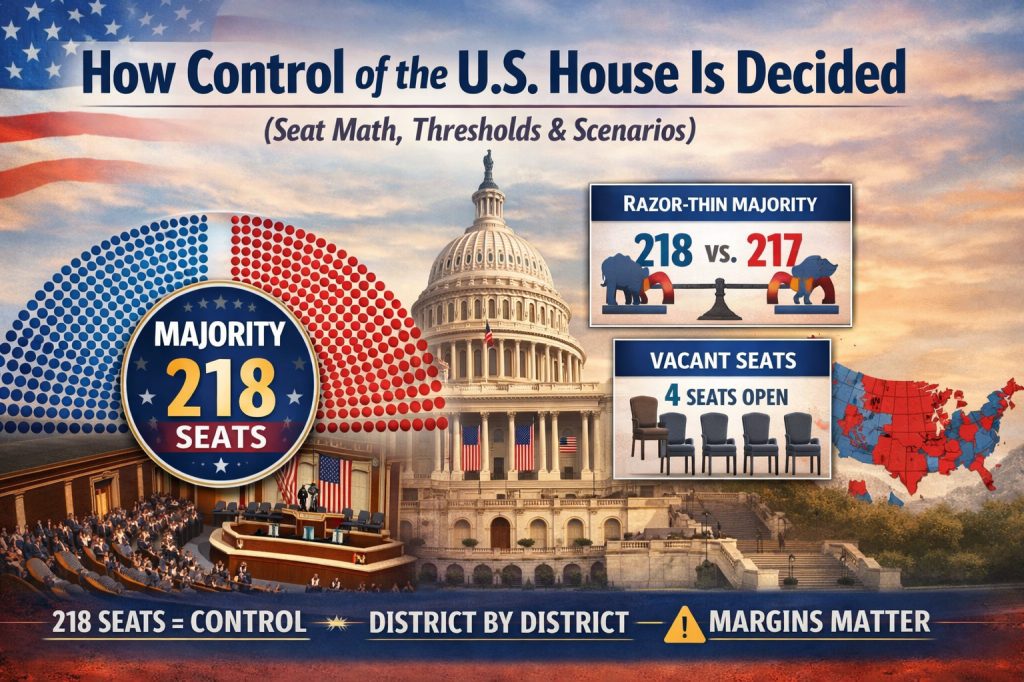
How Control of the U.S. House Is Decided
Control of the U.S. House of Representatives requires 218 seats from 435 total, enabling a party to set the agenda and elect leadership. Real-world scenarios include clear or razor-thin majorities, impacts of vacancies, independents, and why control does not align with the national popular vote. Margins of victory significantly influence legislative power dynamics.

