Tag: campaign finance
-
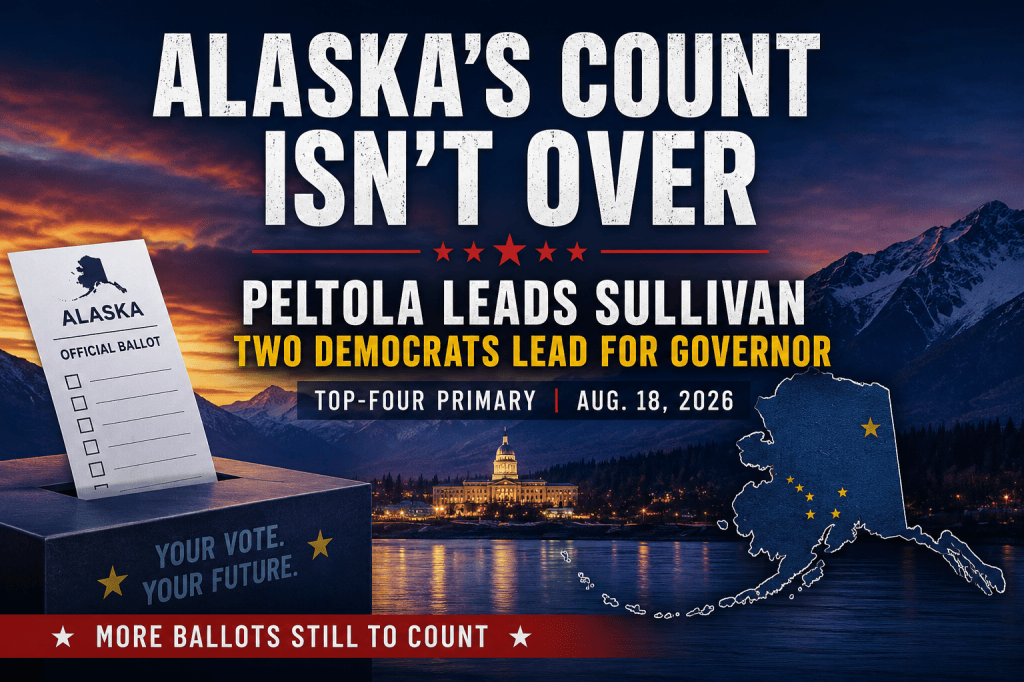
Two Democrats Lead Crowded Alaska Governor Field; Peltola Tops Sullivan as Both Advance
Alaska’s recent nonpartisan primary elections highlighted competitive Senate and House races, with counting ongoing in a crowded governor’s race. Former Rep. Mary Peltola leads incumbent Sen. Dan Sullivan, while Rep. Nick Begich III maintains a lead over independent Bill Hill. Voter support for reinstating campaign contribution limits is strong, with about 70% in favor.
-
The 2028 Field Is Forming Without a Frontrunner — Here’s How the Process Actually Works
As the 2028 presidential election approaches, no major candidates have officially launched campaigns, marking the first time since 1884 that consecutive elections will occur without an incumbent. Current discussions revolve around candidate speculation and polling, with actual campaign activity expected to ramp up after the 2026 midterms.
-
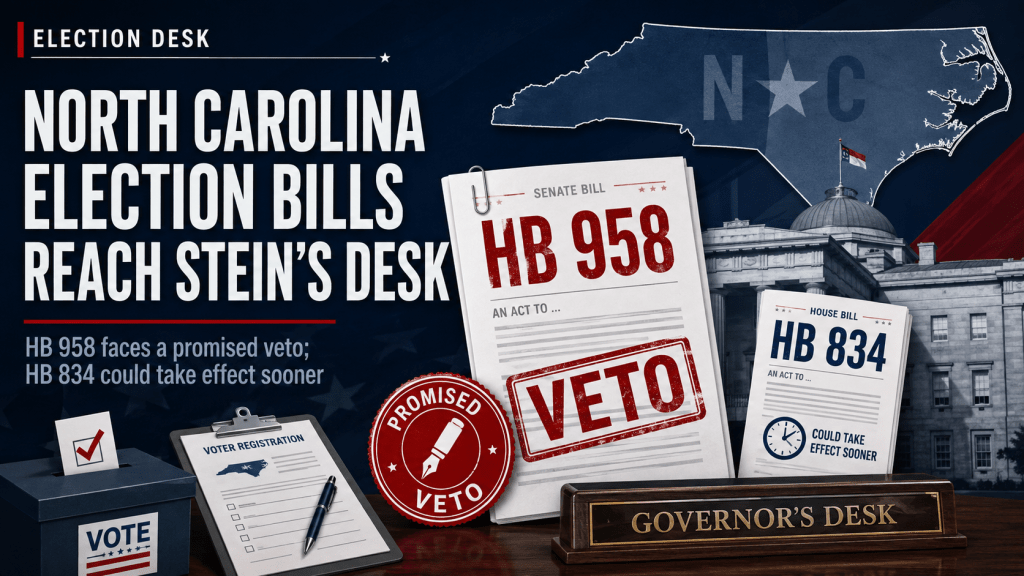
North Carolina Lawmakers Send Two Election Bills to Stein’s Desk; Governor Signals Veto of the Larger One
On August 4, North Carolina’s General Assembly approved two election bills, HB 958 reducing early voting and HB 834 focusing on administrative changes. Governor Josh Stein plans to veto HB 958, citing voter access concerns, while HB 834 faces no veto threat. Most of HB 958’s provisions will start in 2027.
-
Colorado’s Governor’s Race: A 2,500-Vote Primary, an Automatic-Recount Threshold, and a Campaign Finance Investigation
The 2026 Colorado governor’s race features a Democratic primary win by Phil Weiser and a contentious Republican primary where Victor Marx narrowly topped Barbara Kirkmeyer. Marx faces a campaign finance investigation for exceeding contribution limits, while his claims about personal history have come under scrutiny. Weiser is favored in the general election.
-
Tennessee’s Republican Primary for Governor Narrows Ahead of Thursday’s Vote
Tennessee Republicans will select their gubernatorial nominee on August 6, with U.S. Sen. Marsha Blackburn, U.S. Rep. John Rose, and state Rep. Monty Fritts as major contenders. Blackburn leads in polls and fundraising, while Rose relies on personal loans. Fritts advocates limited government and has controversial proposals. The winner faces the Democratic nominee on November…
-
Florida’s Open Governor’s Race: Where Things Stand Three Weeks Before the Primary
Florida is gearing up for its first open governor’s race in eight years, with Republican frontrunner Byron Donalds significantly leading the primary, backed by substantial fundraising and Trump’s endorsement. The Democratic primary has solidified around David Jolly after rival Jerry Demings withdrew. The primary is set for August 18, with the general election on November…
-

Possible Elections Law Violation Flagged in Godwin Commissioner Race
A local commissioner race in Godwin, North Carolina, is being reviewed for potential violations of campaign finance laws. Discrepancies in campaign filings prompted oversight from election officials, but no formal charges or penalties have been made yet. The situation underscores the importance of compliance in maintaining public trust in elections.
-
Secret Money, Loud Consequences: How Dark Cash Is Warping Democratic Primaries
Key Democratic primaries are increasingly influenced by secret money from Super PACs and outside spending groups, undermining voter agency and accountability. Despite Democrats’ public opposition to big money, these entities exploit opaque funding to shape electoral outcomes, raising concerns about the connection between candidates and constituents and the overall integrity of democracy.
-
Maryland Campaign Finance Explained: How Exploratory Committees Became a Regulatory Blind Spot
Maryland’s campaign finance system, known for its structured disclosure requirements, faces scrutiny regarding the exploratory phase of candidacy. Currently, regulations allow fundraising without registration or donor disclosure prior to official declarations. Proposed bills HB 157 and SB 65 aim to define exploratory committees, enforce transparency, and align pre-candidacy fundraising with existing rules.
-
Small-Dollar Donations, Big Questions: What FEC Data Can—and Can’t—Tell Us
Federal campaign finance relies heavily on online small-dollar donations, which raise transparency issues in FEC data. Current donation reporting lacks clarity, creating gaps in understanding. Fragmented oversight complicates anomaly analysis and accountability. Suggested reforms include risk-based verification and standardized reporting to enhance system clarity without restricting fundraising practices, ensuring public confidence.

